FLC Announces “Kōzaburō Yoshimura: Tides of Emotion,” a Retrospective of Overlooked Filmmaker from the Golden Age of Japanese Cinema, December 5–11
November 4, 2025

The Naked Face of Night, A Woman’s Uphill Battle, Undercurrent, Night Butterflies, The Ball at the Anjo House
Film at Lincoln Center announces “Kōzaburō Yoshimura: Tides of Emotion,” a retrospective of 13 films by one of the most accomplished yet underappreciated figures of the golden age of Japanese cinema, running from December 5 through December 11, 2025. While he never achieved the international recognition of generational peers such as Akira Kurosawa and Yasujirō Ozu, Yoshimura collaborated with many of the biggest writers, cinematographers, and actors in midcentury Japan to make stylistically ambitious, emotionally complex films that boldly defied Japanese convention.
Spanning from his earliest surviving feature in 1939 to the early 1960s, this series presents Yoshimura’s films on 35mm and 16mm prints rarely seen outside Japan, alongside a 4K digital restoration of his most internationally celebrated work, Undercurrent (1956), honoring a director whose work has grown even more beautiful and profound with time.
Kōzaburō Yoshimura (b. 1911, d. 2000) began his career with the revered production company Shochiku in the 1930s, where he formed a pivotal partnership with the screenwriter (and legendary director in his own right) Kaneto Shindō, and would continue working into the 1970s. Along the way, Yoshimura and Shindō would found an influential independent production company, Kindai Eiga Kyokai, while at the same time, Yoshimura directed some of the period’s finest dramas for leading film studio Daiei.
Yoshimura’s wide-ranging work often depicted the plight of women throughout Japanese history, but especially in the postwar era, as tensions between the old and the new rumble beneath the placid, traditional surfaces of Japanese society and the winds of change are always blowing. A formidable director of actresses, Yoshimura consistently anchored his films—particularly those of the 1950s—with indelible female performances from the likes of Machiko Kyō, Mariko Okada, and Fujiko Yamamoto, among others. His proclivity for focusing on the female experience frequently earned him comparisons to his peer, Kenji Mizoguchi.
By showcasing Yoshimura’s diverse body of work—anchored in realist drama, acute social observation, and sensitivity toward his female protagonists—this retrospective underscores the enduring relevance and beauty of his cinema.
Presented in partnership with the Japan Foundation, New York. Organized by Dan Sullivan.
Special Thanks: National Film Archive of Japan; Kadokawa Corporation.
Tickets will go on sale on Wednesday, November 5 at 2pm, with an early access period for FLC Members starting on Wednesday, November 5 at noon. Tickets are $17; $14 for students, seniors (62+), and persons with disabilities; and $12 for FLC Members. See more and save with an $89 All Access Pass ($59 for Students) or a 3+ Film Package ($15 for GP; $12 for students, seniors (62+), and persons with disabilities; and $10 for FLC Members).
An opening night reception in the Furman Gallery at the Walter Reade Theater, held on December 5 between the 6:30pm screening of Undercurrent and 9:00pm screening of On This Earth, will be open to ticket holders for both screenings.
FILM DESCRIPTIONS
All films screen at the Walter Reade Theater (165 W 65th Street) except where noted at the Elinor Bunin Munroe Film Center (144 W 65th Street)
Warm Current
Kōzaburō Yoshimura, 1939, Japan, 35mm, 124m
Japanese with English subtitles
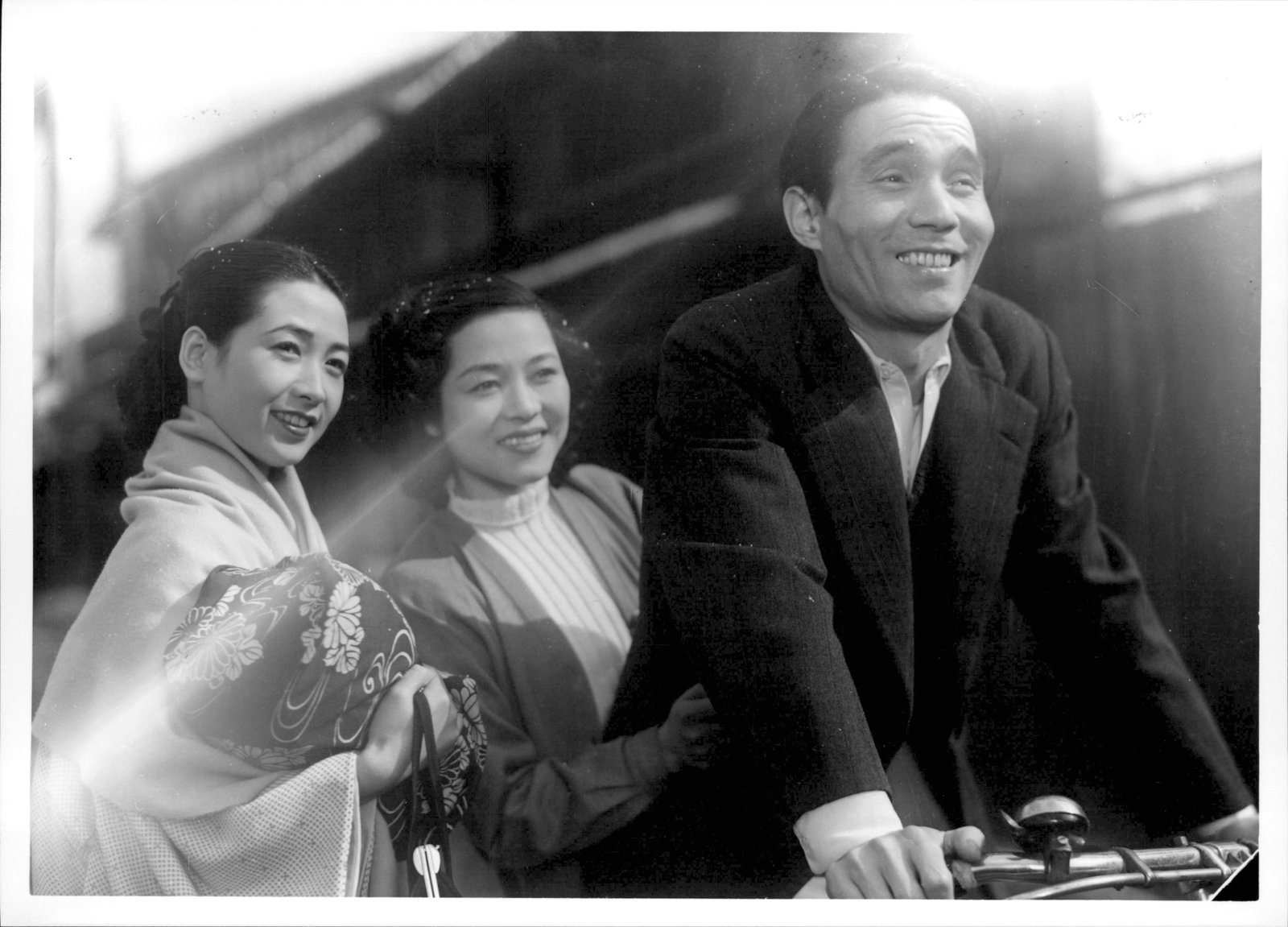
Sisters of Nishijin. ©1952 Kadokawa Pictures
Kōzaburō Yoshimura’s second (and earliest surviving) feature announces some of the main concerns that would mark his work going forward, here following the private lives of a small group of hospital employees, with concealed attractions and simmering emotions rumbling in the background as a power struggle unfolds among the hospital’s administration. Later remade in less soapy fashion in 1957 by Yasuzō Masumura, the sentimentality, studio-bound artifice, and borderline overripe emotions of Yoshimura’s original are very much the point: spotlighting the desires of women who hope to marry for love rather than social/familial obligation, Warm Current is a sneakily modern take on new directions in Japanese society, and an understated declaration of Yoshimura’s artistic vision. Print courtesy of the Japan Foundation.
Sunday, December 7 at 6:00pm
Monday, December 8 at 12:30pm
The Ball at the Anjo House
Kōzaburō Yoshimura, 1947, Japan, 16mm, 89m
Japanese with English subtitles
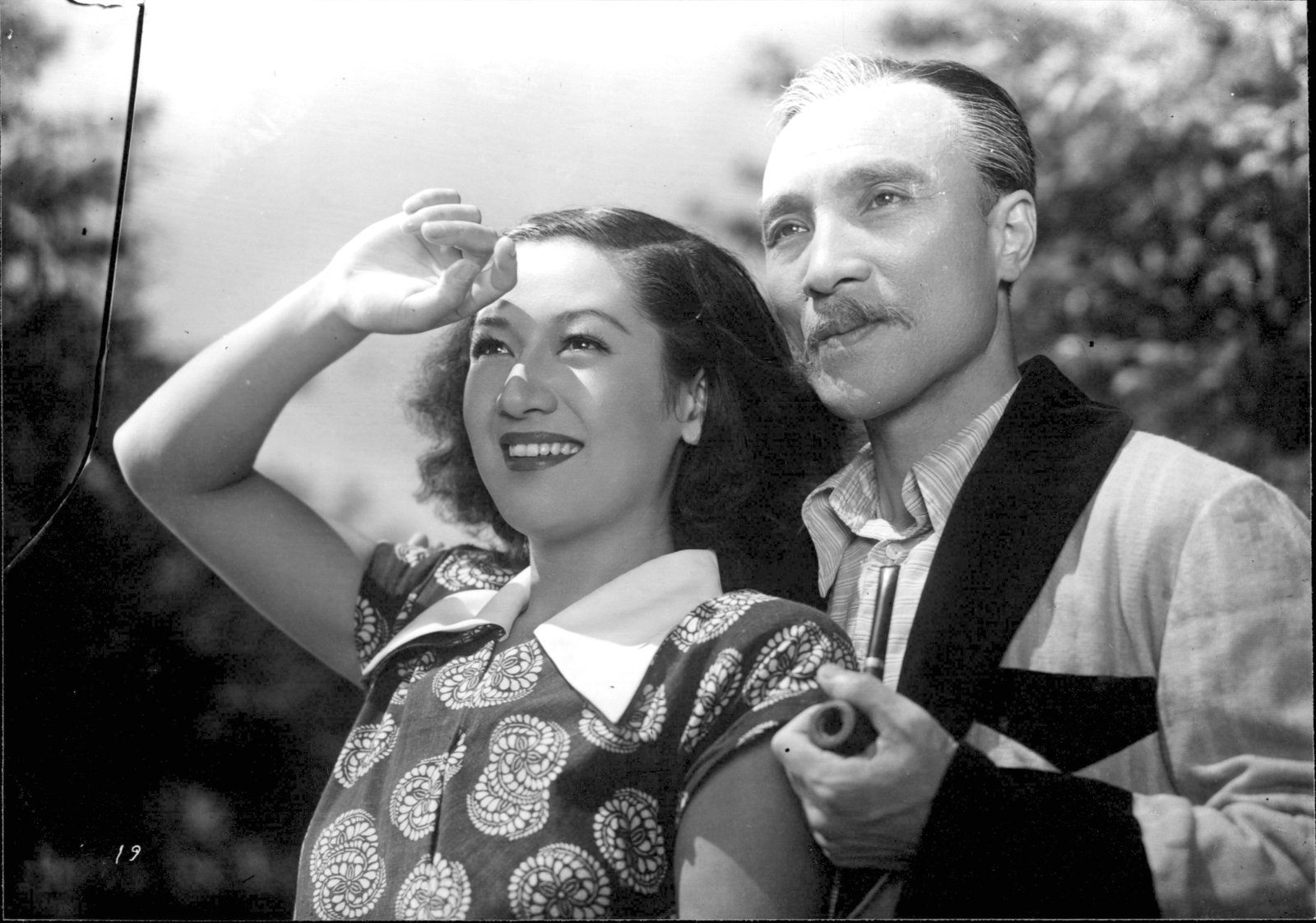
The Ball at the Anjo House. ©1947 Shochiku Co., Ltd.
Starring legendary actors Setsuko Hara and Masayuki Mori, this especially acclaimed effort from Kōzaburō Yoshimura (working with his frequent scribe Kaneto Shindō) chronicles the fallout from Japan’s defeat in World War II and its effects on a single family. While the family mourns that their old way of life and its attendant comforts are gone forever, the eldest son plans one final ball at the family’s home, where a slew of tensions, resentments, and confessions boil over. The historian Donald Richie has compared Shindō’s script to Chekhov, but it’s the precision of Yoshimura’s camera and mise-en-scène that have elevated this film to endure as a key Japanese film of the immediate postwar period. Print courtesy of the Japan Foundation.
Tuesday, December 9 at 9:00pm – Francesca Beale Theater
Thursday, December 11 at 6:30pm – Francesca Beale Theater
The Disguise
Kōzaburō Yoshimura, 1951, Japan, 35mm, 103m
Japanese with English subtitles
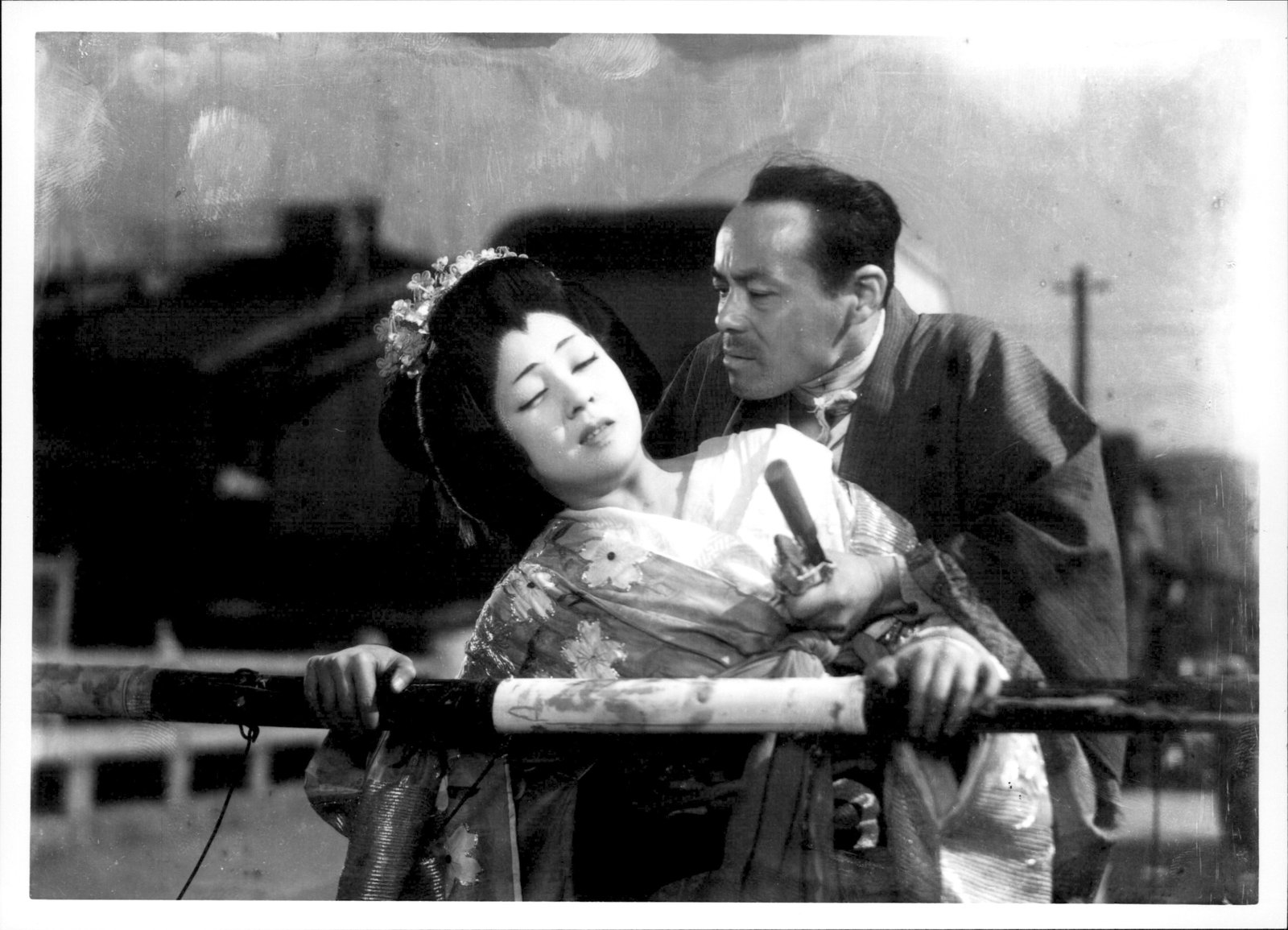
The Disguise. ©1951 Kadokawa Pictures
The conflict between two sisters—one a geisha, one a salarywoman—becomes a powerful parable about the clash of the old and the new in Kōzaburō Yoshimura’s immaculate melodrama, with a script by Kaneto Shindō. Machiko Kyō (who starred in Rashomon a year earlier) captivates as a hardheaded Gion District geisha whose coming to terms with a new era powers this meditation on the postwar experience in all of its complexity. Print courtesy of the Japan Foundation.
Sunday, December 7 at 1:00pm
Monday, December 8 at 3:00pm
The Tale of Genji
Kōzaburō Yoshimura, 1951, Japan, 35mm, 124m
Japanese with English subtitles
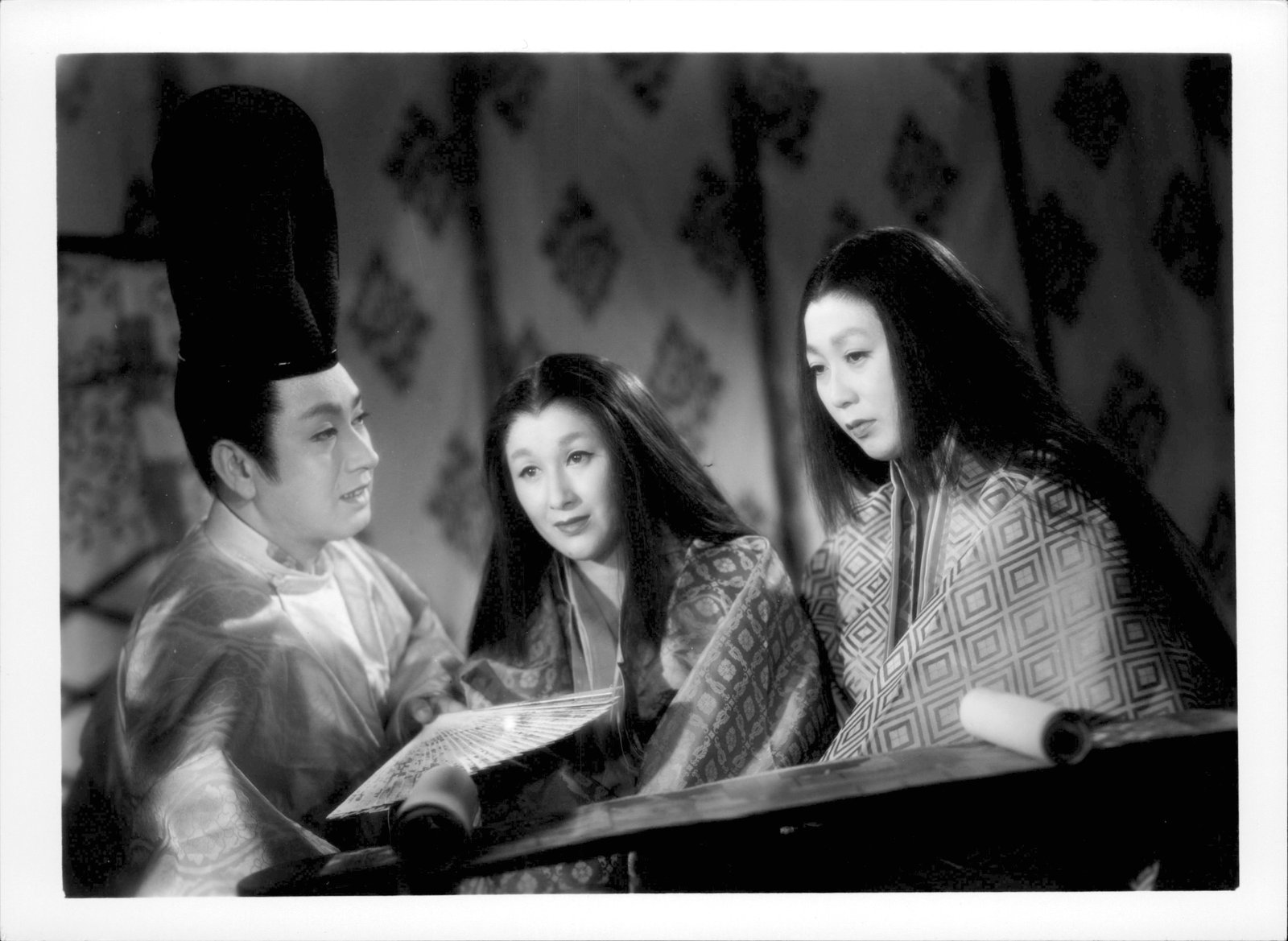
The Tale of Genji. ©1951 Kadokawa Pictures
Adapting Murasaki Shikibu’s early-11th-century novel—among the first novels ever written—Kōzaburō Yoshimura and Kaneto Shindō again teamed up for another striking portrait of social tension and the mysterious, complicated place of erotic desire in the development of Japan. Kazuo Hasegawa stars as the titular prince, the emperor’s womanizing bastard son who cannot shake his fascination with his father’s young bride. A moving and admirable attempt to adapt what is often regarded as an unadaptable novel, Yoshimura’s film zeroes in the destructive force of desire amid a rigid, socially stratified Japan in the Heian period. Print courtesy of the Japan Foundation.
Saturday, December 6 at 8:15pm
Wednesday, December 10 at 9:15pm
Sisters of Nishijin
Kōzaburō Yoshimura, 1952, Japan, 35mm, 110m
Japanese with English subtitles
Sisters of Nishijin. ©1952 Kadokawa Pictures
A father’s suicide financially imperils his family of textile workers in Kōzaburō Yoshimura’s powerful social drama, again scripted by Kaneto Shindō and set in the Nishijin district in Kyoto. Movingly tracing the side effects of modernization through the struggles of a single family of traditional artisans, Sisters of Nishijin is an entrancing female-led ensemble piece (Kenji Mizoguchi’s muse Kinuyo Tanaka being perhaps the biggest name in the cast), and it is once again shot by frequent Yoshimura collaborator Kazuo Miyagawa, who himself was a year removed from shooting Akira Kurosawa’s Rashomon and a year away from shooting Kenji Mizoguchi’s Ugetsu. Print courtesy of the Japan Foundation.
Friday, December 5 at 4:00pm
Saturday, December 6 at 1:00pm
Cape Ashizuri
Kōzaburō Yoshimura, 1954, Japan, 16mm, 108m
Japanese with English subtitles
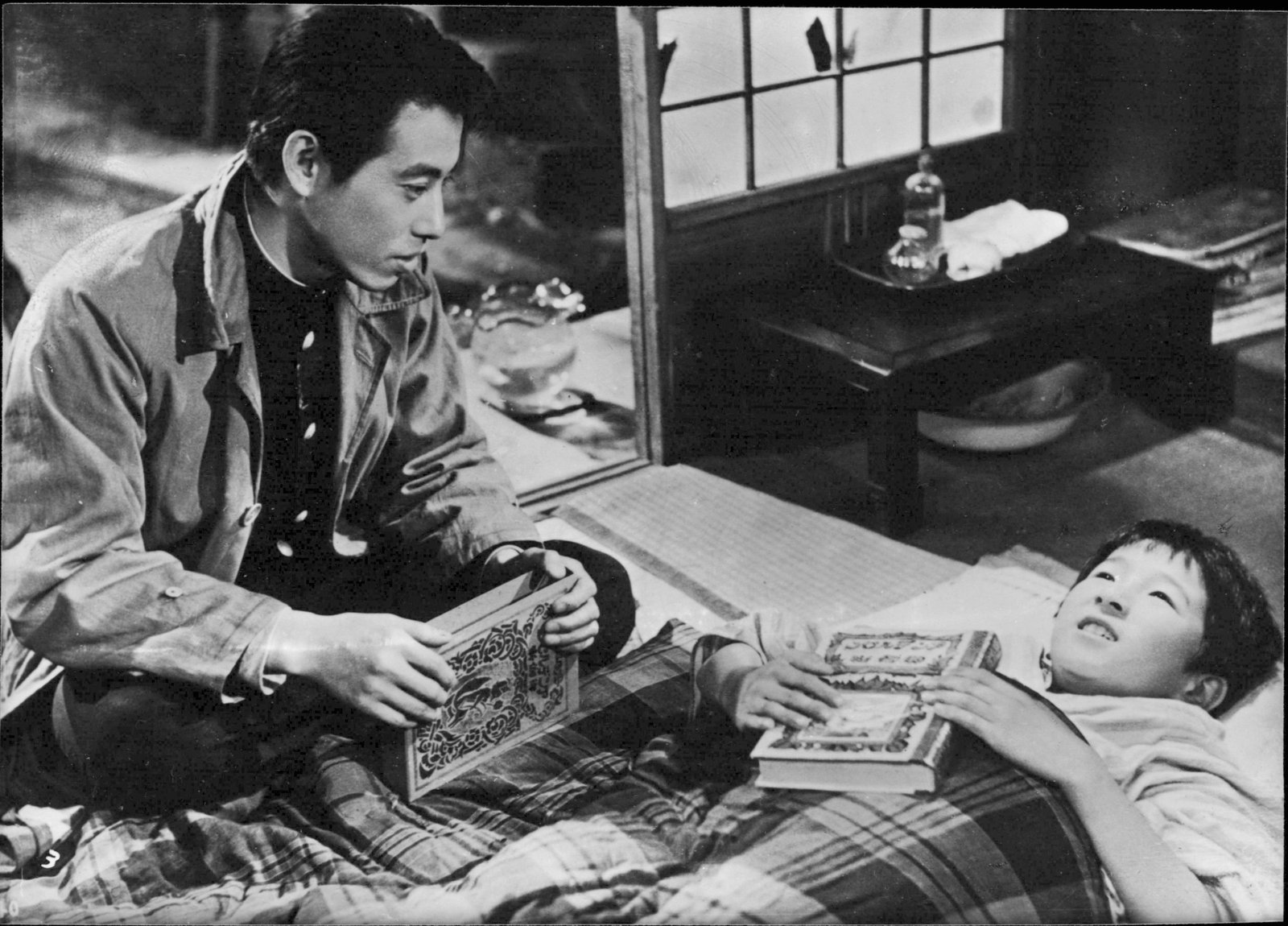
Cape Ashizuri. ©1954 Kindai Eiga Kyokai Co., Ltd.
Among Kōzaburō Yoshimura’s complex and political works, this episodic film (written by Kaneto Shindō) adapts three autobiographical stories by the writer Tamiya Torahiko. Set in the early 1930s, Cape Ashizuri chronicles the life of a young left-wing student activist (Isao Kimura). Disenchanted by the increasingly hawkish state of Japanese society and by his comrades’ failures, he returns to his hometown, where he expects to eventually die, only to form a curious and perhaps redemptive connection with a woman (Keiko Tsushima) and her younger brother. Print courtesy of the Japan Foundation.
Tuesday, December 9 at 6:30pm – Francesca Beale Theater
Thursday, December 11 at 3:30pm – Francesca Beale Theater
4K Restoration
Undercurrent
Kōzaburō Yoshimura, 1956, Japan, 104m
Japanese with English subtitles
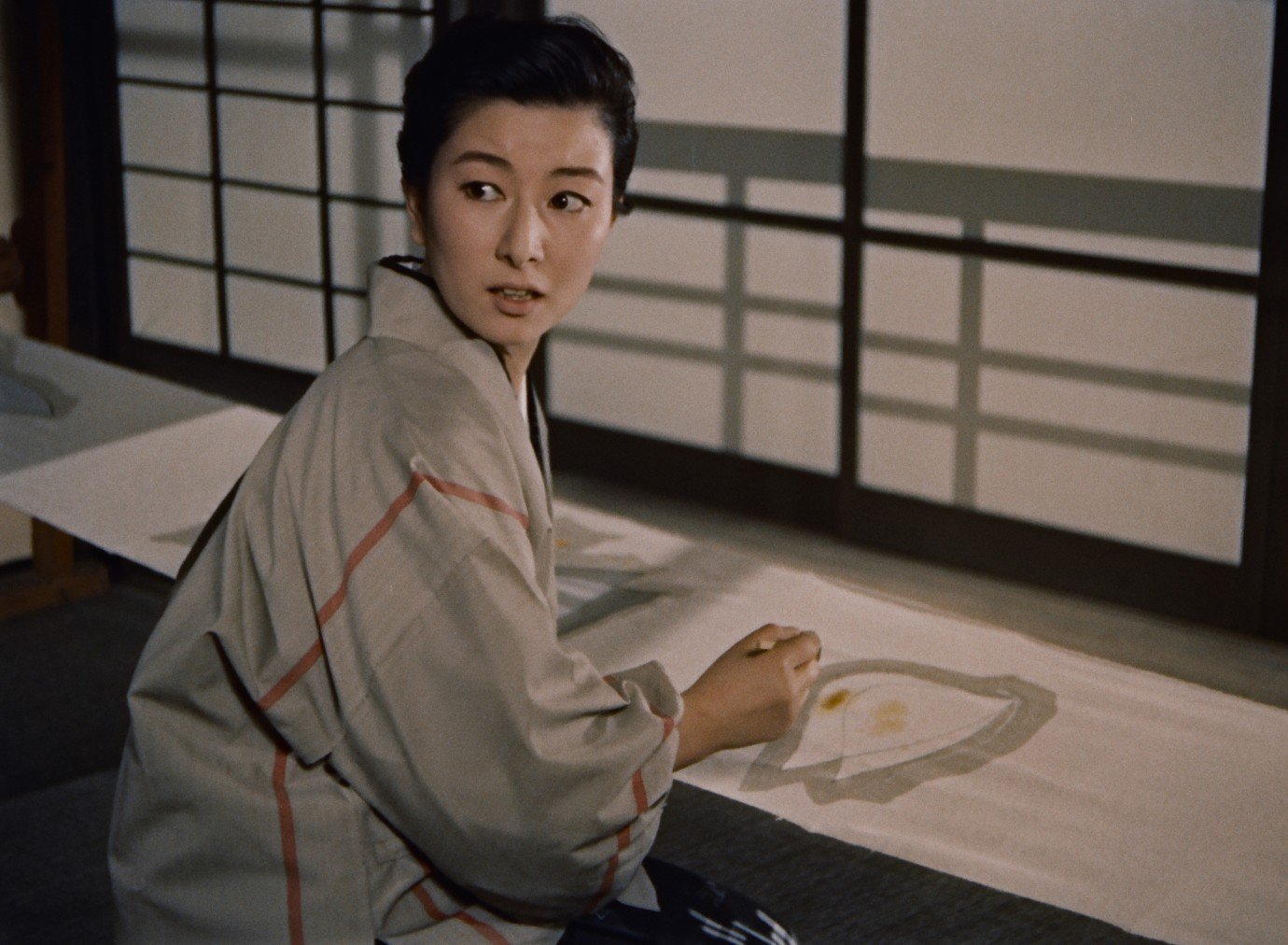
Undercurrent
Arguably Kōzaburō Yoshimura’s masterpiece, this delicate, dimensional melodrama—lensed in resplendent color by Kazuo Miyagawa—tracks the overheated affair between a kimono designer and a married entomologist in postwar Kyoto. A feast for both the eyes (the protagonist’s workshop abounds with artisanal silken wares) and the emotions, Undercurrent is a deeply moving, gleefully overwrought chronicle of a woman confronting her own old-school values in a rapidly modernizing, socially fluid Japan. 4K digital restoration by Kadokawa Corporation; courtesy of Janus Films.
Friday, December 5 at 6:30pm – Reception for ticket holders following the screening
Sunday, December 7 at 8:30pm
Thursday, December 11 at 1:00pm – Francesca Beale Theater
An Osaka Story
Kōzaburō Yoshimura, 1957, Japan, 35mm, 96m
Japanese with English subtitles

An Osaka Story.Courtesy of the Kadokawa Corporation.
An economic tragicomedy adapted from a story by the Edo-era satirist Ihara Saikaku, this film was originally meant to be the final project of Kenji Mizoguchi, to whom Kōzaburō Yoshimura had been compared throughout his career. In Yoshimura’s hands, An Osaka Story is a wry, humorous, and unsentimental parable on the perils of capitalism, following the schemes and blowups of a peasant family on their journey to ill-gotten, deranging wealth. Print courtesy of the National Film Archive of Japan.
Saturday, December 6 at 6:00pm
On This Earth
Kōzaburō Yoshimura, 1957, Japan, 35mm, 98m
Japanese with English subtitles
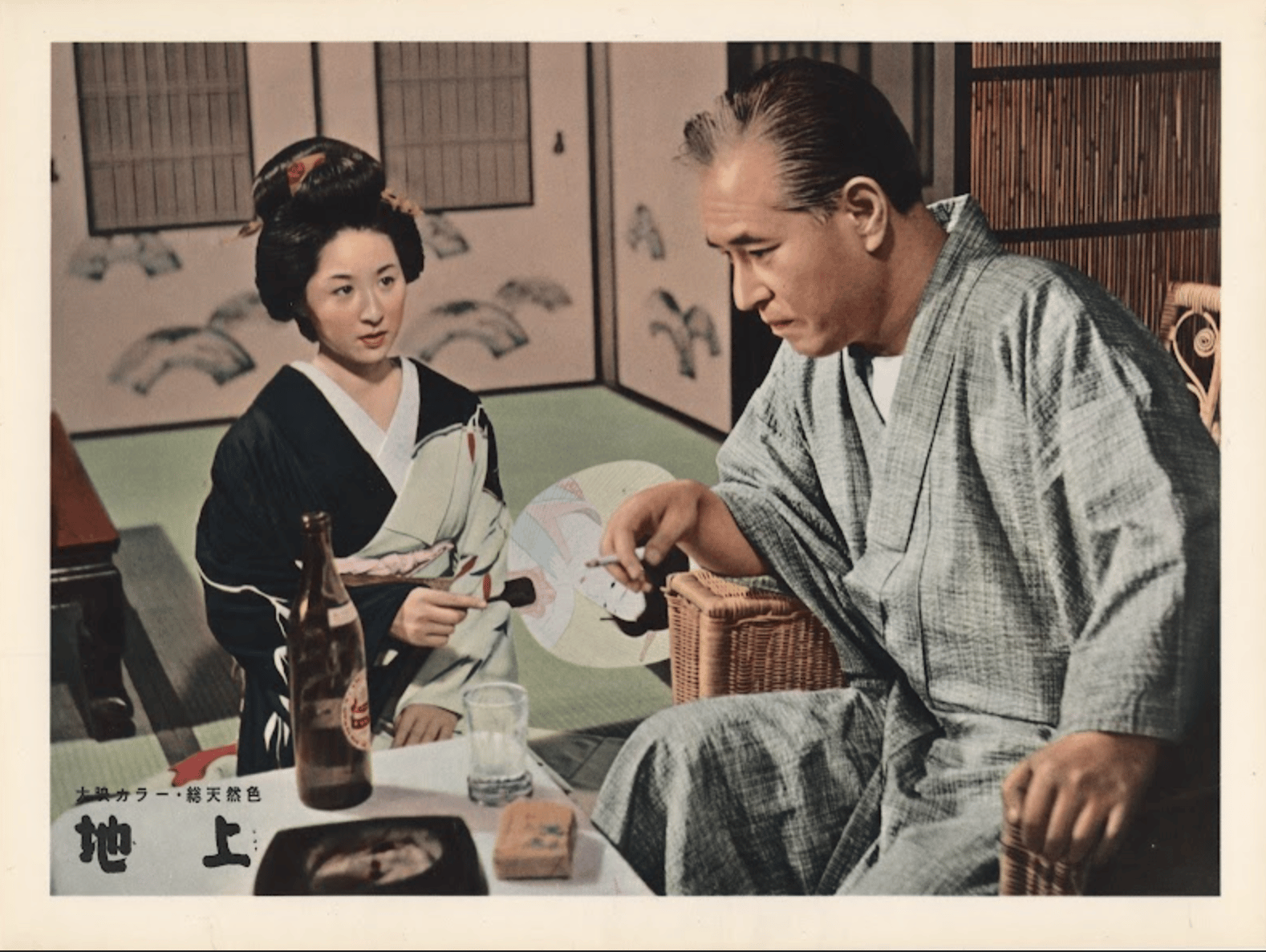
On This Earth. Courtesy of the Kadokawa Corporation.
A young man’s political consciousness dawns in Kōzaburō Yoshimura’s moving drama, scripted by Kaneto Shindō and set during the Taisho period. Set in Kanazawa, On This Earth follows the trials and tribulations experienced by a family after circumstances force the matriarch to work in a local geisha house in order to cover her son’s school tuition fees. Again working in vivid color, Yoshimura and DP Yoshihisa Nakagawa imbue the proceedings with the gravity of a documentary, juxtaposing its politically tinged melodrama with a record of Kanazawa (which was mostly spared the widespread destruction other Japanese cities faced during WWII) as a city on the cusp of being properly modernized, with traces of the past lingering on. Print courtesy of the National Film Archive of Japan.
Friday, December 5 at 9:00pm – Reception for ticket holders preceding the screening
Night Butterflies
Kōzaburō Yoshimura, 1957, Japan, 35mm, 92m
Japanese with English subtitles

Night Butterflies. Courtesy of the Kadokawa Corporation.
A rivalry between two women again lies at the heart of a typically incisive study of Japanese society by Kōzaburō Yoshimura, here working with another great screenwriter of the era: Sumie Tanaka, who wrote many of Mikio Naruse’s films and several films of Kinuyo Tanaka, the legendary actress and Japan’s first female director. Two bar proprietresses (Machiko Kyō and Fujiko Yamamoto), originally from Osaka and Kyoto respectively, try to make ends meet and succeed in the Ginza district of Tokyo, their competition giving way to a gripping succession of conflicts and entanglements, all captured in vibrant color by DP Kazuo Miyagawa. Print courtesy of the National Film Archive of Japan.
Sunday, December 7 at 3:30pm
The Naked Face of Night
Kōzaburō Yoshimura, 1958, Japan, 35mm, 121m
Japanese with English subtitles
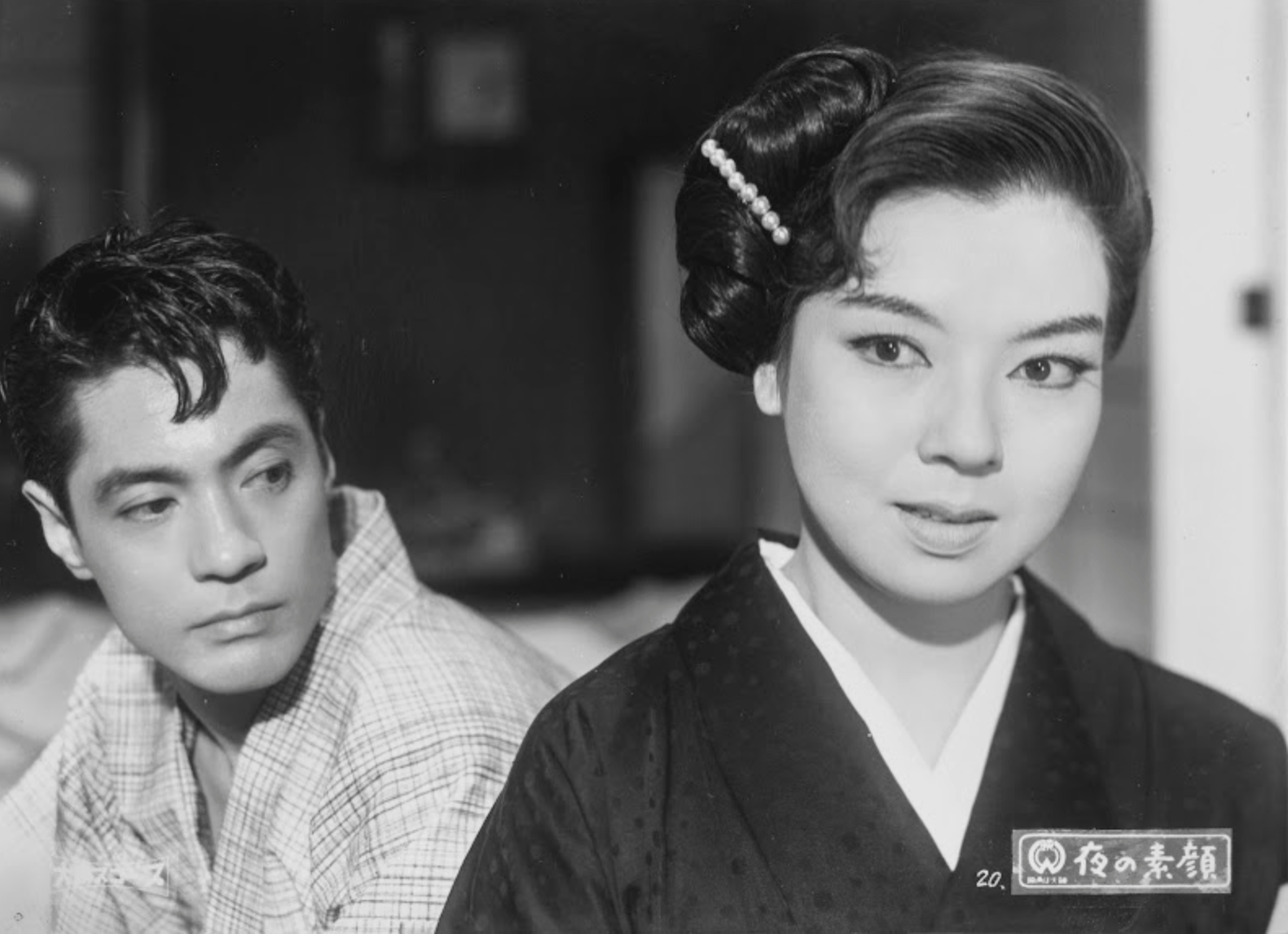
The Naked Face of Night. Courtesy of the Kadokawa Corporation.
Many of Kōzaburō Yoshimura’s best films scrutinize the effects of modernity upon traditional Japanese culture and industry. The Naked Face of Night, his complex, critical tribute to traditional Japanese dance, follows a rivalry between two dancers in the postwar period, portrayed by two of the era’s greatest actresses, Machiko Kyō and Ayako Wakao. Yoshimura, again working with writer Kaneto Shindō, uses the tension between them as a vehicle to explore the clash of the old and the new—and the emergence of new forms of femininity in women that weren’t as eager to accept their familiar, stifling social roles. Print courtesy of the National Film Archive of Japan.
Wednesday, December 10 at 6:30pm
A Woman’s Uphill Battle
Kōzaburō Yoshimura, 1960, Japan, 35mm, 107m
Japanese with English subtitles
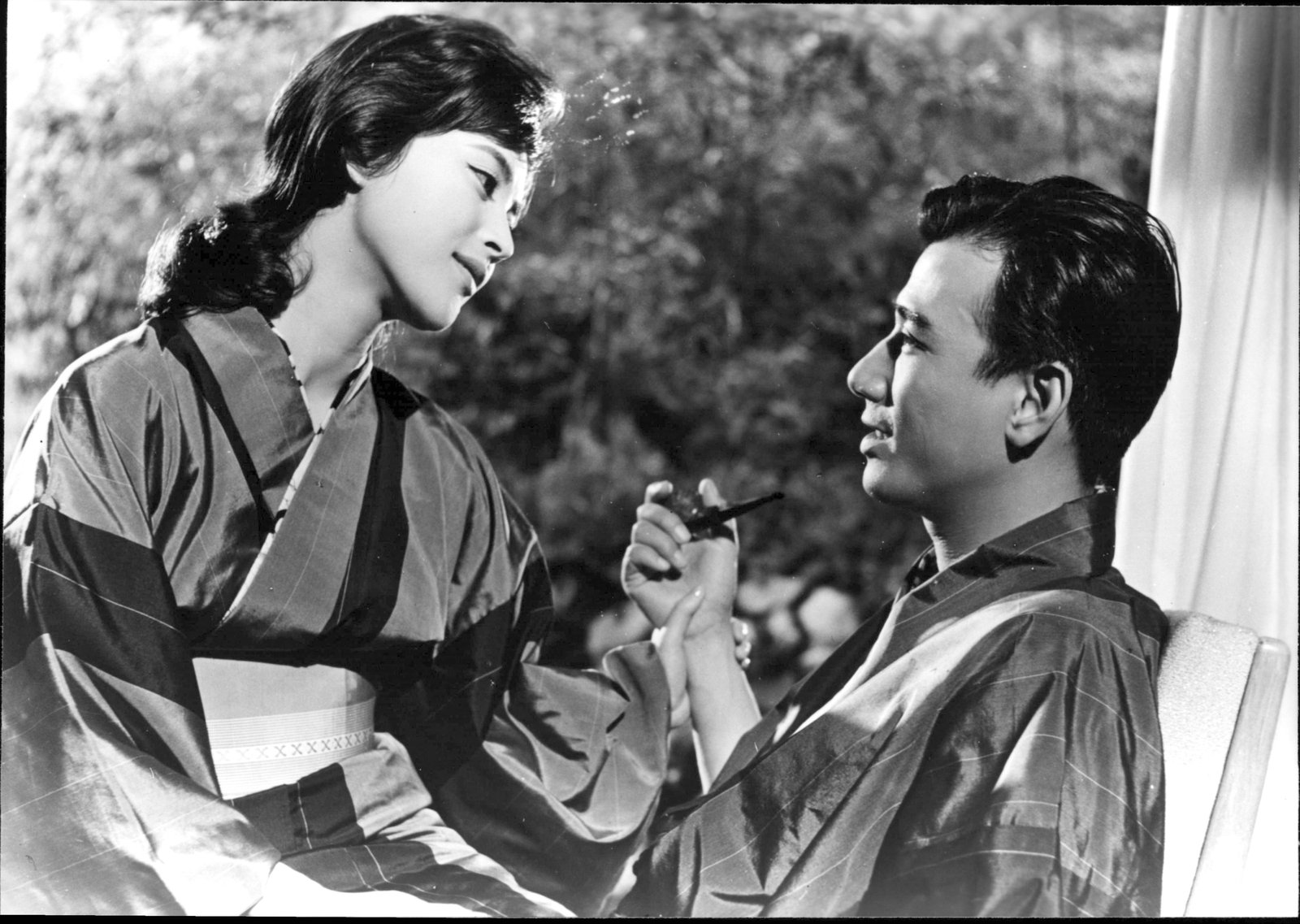
A Woman’s Uphill Battle. ©1960 Kadokawa Pictures
Kōzaburō Yoshimura teamed up with the great Mariko Okada for this delicate parable on the effects of modernity, lensed in color by Yoshio Miyajima, Masaki Kobayashi’s famed cinematographer. Okada stars as a woman who inherits a traditional sweets shop in Kyoto; through her, we encounter a variety of women trying to get by in the old capital as the winds of change blow ever more forcefully. A Woman’s Uphill Battle is one of Yoshimura’s boldest experiments with color, marked by an at-times jarring palette that evokes the shock of the new and the slow disintegration of the old. Print courtesy of the Japan Foundation.
Saturday, December 6 at 3:30pm
Wednesday, December 10 at 3:30pm
Bamboo Doll of Echizen
Kōzaburō Yoshimura, 1963, Japan, 16mm, 102m
Japanese with English subtitles

Bamboo Doll of Echizen. ©1963 Kadokawa Pictures
A thickly atmospheric chronicle of forbidden desire, Bamboo Doll of Echizen is at once one of Kōzaburō Yoshimura’s starkest and most sensitive works. Ayako Wakao stars as a geisha who goes to pay her respects to her recently deceased lover, only to find herself falling into a fraught romance with his son. An exceedingly modern exploration of sexual politics and ethics in 20th-century Japan, this film is an uncannily frank and entrancing melodrama rendered by Yoshimura and DP Kazuo Miyagawa in elemental, high-contrast black-and-white. Print courtesy of the Japan Foundation.
Tuesday, December 9 at 3:30pm – Francesca Beale Theater
Thursday, December 11 at 8:45pm – Francesca Beale Theater
FILM AT LINCOLN CENTER
Film at Lincoln Center (FLC) is a nonprofit organization that celebrates cinema as an essential art form and fosters a vibrant home for film culture to thrive. FLC presents premier film festivals, retrospectives, new releases, and restorations year-round in state-of-the-art theaters at New York’s Lincoln Center for the Performing Arts. FLC offers audiences the opportunity to discover works from established and emerging directors from around the world with a passionate community of film lovers at marquee events including the New York Film Festival and New Directors/New Films.
Founded in 1969, FLC is committed to preserving the excitement of the theatrical experience for all audiences, advancing high-quality film journalism through the publication of Film Comment, cultivating the next generation of film industry professionals through our FLC Academies, and enriching the lives of all who engage with our programs.
Rolex is the Official Partner and Exclusive Timepiece of Film at Lincoln Center.
Film at Lincoln Center receives generous, year-round support from the New York State Council on the Arts with the support of the Office of the Governor and the New York State Legislature. American Airlines is the Official Airline of Film at Lincoln Center. For more information, visit filmlinc.org and follow @filmlinc on X, Instagram, and Bluesky.
For press inquiries regarding Film at Lincoln Center, please contact:
John Kwiatkowski, Film at Lincoln Center, [email protected]
Eva Tooley, Film at Lincoln Center, [email protected]
THE JAPAN FOUNDATION
The Japan Foundation is Japan’s only institution dedicated to carrying out comprehensive international cultural exchange programs throughout the world. With the objective of deepening mutual understanding between the people of Japan and other countries/regions, our various activities and information services create opportunities for people-to-people interactions.


