FLC Announces “L.A. Rebellion: Then and Now” Retrospective, April 25-May 4
March 25, 2025
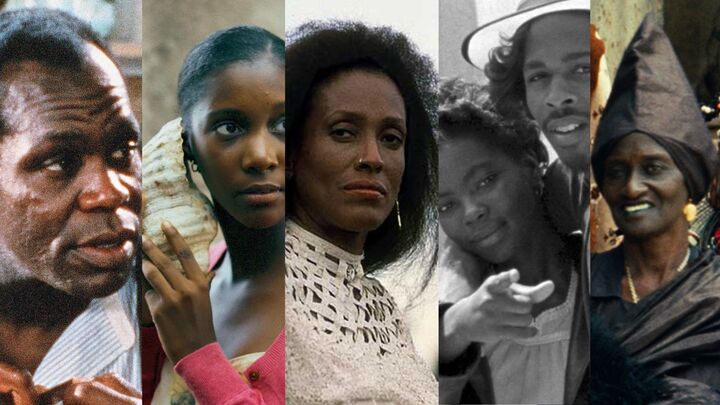
Film at Lincoln Center announces “L.A. Rebellion: Then and Now,” a series of films both made and inspired by a diverse group of African, Caribbean, and African American filmmakers and video artists from UCLA in the 1970s and ’80s—known collectively as the L.A. Rebellion—that revitalized not only Black cinema but American film culture as a whole. From April 25 to May 4, FLC is proud to present a retrospective program showcasing the vast, vital influence that the L.A. Rebellion and its spiritual descendants have exerted on the cinema of the African diaspora in the decades since the movement’s founding. This series pairs well-known and lesser-known L.A. Rebellion films with recent works by a vibrant new generation of artists hailing from Africa, its global diaspora, and the U.S., alongside prominent works from the L.A. filmmakers’ African contemporaries, to show how these intergenerational filmmakers share a common aim: to reflect the complexity of Black experiences and reframe how Black communities and lives are portrayed to global audiences.
In 1968, UCLA launched an initiative aimed at increasing the enrollment of Black, Latino, Native American, and Asian film students. Although the program ended in 1973, it had successfully admitted a significant number of students of color, many of whom continued to attract others to UCLA. Notably, the initiative produced a remarkable group of Black filmmakers, including Charles Burnett, Julie Dash, Billy Woodberry, Haile Gerima, Jamaa Fanaka, Barbara McCullough, Larry Clark, Alile Sharon Larkin, Ben Caldwell, and Zeinabu irene Davis. In the decades that followed, artists from this extraordinary cohort would go on to become internationally renowned as the founding practitioners of a wholly original school of cinematic thought, justly celebrated for the bracing confluence of stark naturalism and unvarnished lyricism in evoking the rhythms and textures of an underrepresented milieu.
Paired films exploring common themes of love, political engagement, incarceration, gentrification, veterans’ experiences, and more will have back-to-back screenings, allowing audiences to experience the program as a series of double features. Highlights include Larry Clark’s Passing Through (1977) and Alain Gomis’s Rewind & Play (2022), which offer two perspectives on racism and exploitation in the jazz music industry; and Julie Dash’s Daughters of the Dust (1991) and Denise Fernandes’s Hanami (2024), poetic stories of insular women and migration. The series opens with Zeinabu irene Davis’s 2016 documentary Spirits of Rebellion: Black Cinema at UCLA, which seeks to define “What is a Black film?” and answers with a collection of interviews with visionary yet crucial directors including Charles Burnett, Billy Woodberry, Julie Dash, Haile Gerima, and more, all of whom offer generous, intimate testimonies reflecting on their own artistic practice.
A free talk on April 26, Reframing Black Stories on Screen, will feature programmer Claire Diao and a panel of filmmakers, scholars, and journalists in a conversation on the history of the L.A. Rebellion and its enduring influence on artists and audiences in the U.S. and around the world.
Curated by Claire Diao and co-organized by Madeline Whittle.
“L.A. Rebellion: Then and Now” is sponsored by MUBI, the global streaming service, production company, and film distributor dedicated to elevating great cinema.
Acknowledgements: UCLA Film & Television Archive, Fondazione Cineteca di Bologna and The Film Foundation, Merawi Gerima, Larry Clark, Mahen Bonetti.
Tickets will go on sale on Wednesday, March 26 at 2pm, with an early access period for FLC Members starting Wednesday, March 26 at noon. Tickets are $17; $14 for students, seniors (62+), and persons with disabilities; and $12 for FLC Members. See more and save with 3+ Film Package ($15 for GP; $12 for students, seniors (62+), and persons with disabilities; and $10 for FLC Members), the $99 All-Access Pass, or the $79 Student All-Access Pass.
FILMS & DESCRIPTIONS
All films screen in the Walter Reade Theater (165 W. 65th St.)
Black Life on Screen
Spirits of Rebellion: Black Cinema at UCLA
Zeinabu irene Davis, 2016, U.S., 100m
Spirits of Rebellion: Black Cinema at UCLA
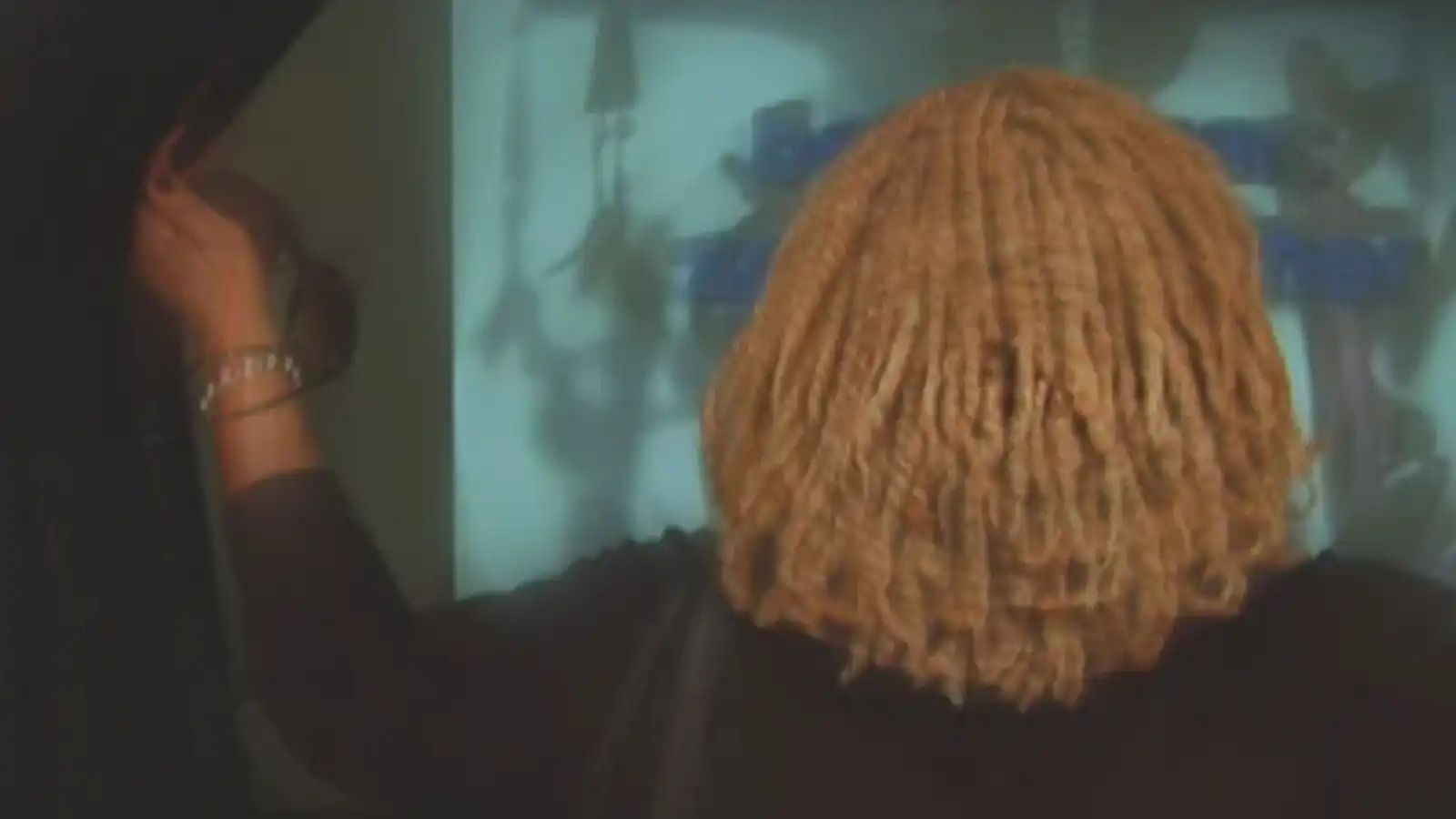
“What is a Black film?” is the inciting question at the heart of Spirits of Rebellion: Black Cinema at UCLA, Zeinabu irene Davis’s retrospective documentary that shines a light on the radical aesthetic innovations and interventions that emerged from a collective of radically inquisitive, steadfastly humanist filmmakers who took seriously the imperative to create films about—and for—their own communities. Davis, herself a member of the history-making cohort who enrolled at UCLA School of Theater, Film, and Television during a period stretching from the late 1960s well into the ’80s, compiles a precious trove of interviews with visionary directors Charles Burnett, Billy Woodberry, Julie Dash, Haile Gerima, and more, all of whom offer generous, intimate testimonies reflecting on their own artistic practice, their influences and inspirations, and the evolution of Black cinema and its complicated relationship with the Hollywood film industry in the second half of the 20th century.
Screening with:
Special Work-in-Progress Screening
Jérémie Danon, Kiddy Smile, 2023–25, France, 42m
The French film industry, home of the Lumière brothers and the Cannes Film Festival, has historically been the subject of pointed critiques identifying a culture of invisibility around the achievements of Black actors and filmmakers. In this smart and aesthetically incisive video project, artist Jérémie Danon and DJ and LGBTQ+ rights activist Kiddy Smile engage in conversations with prominent Black activists, thinkers, and film professionals to better understand the underrepresentation and systematic discrimination faced by people of color in France.
Friday, April 25 at 3:00pm
Tuesday, April 29 at 6:00pm
Cinemas of Revenge
Welcome Home, Brother Charles
Jamaa Fanaka, 1975, U.S., 35mm, 91m
Welcome Home, Brother Charles
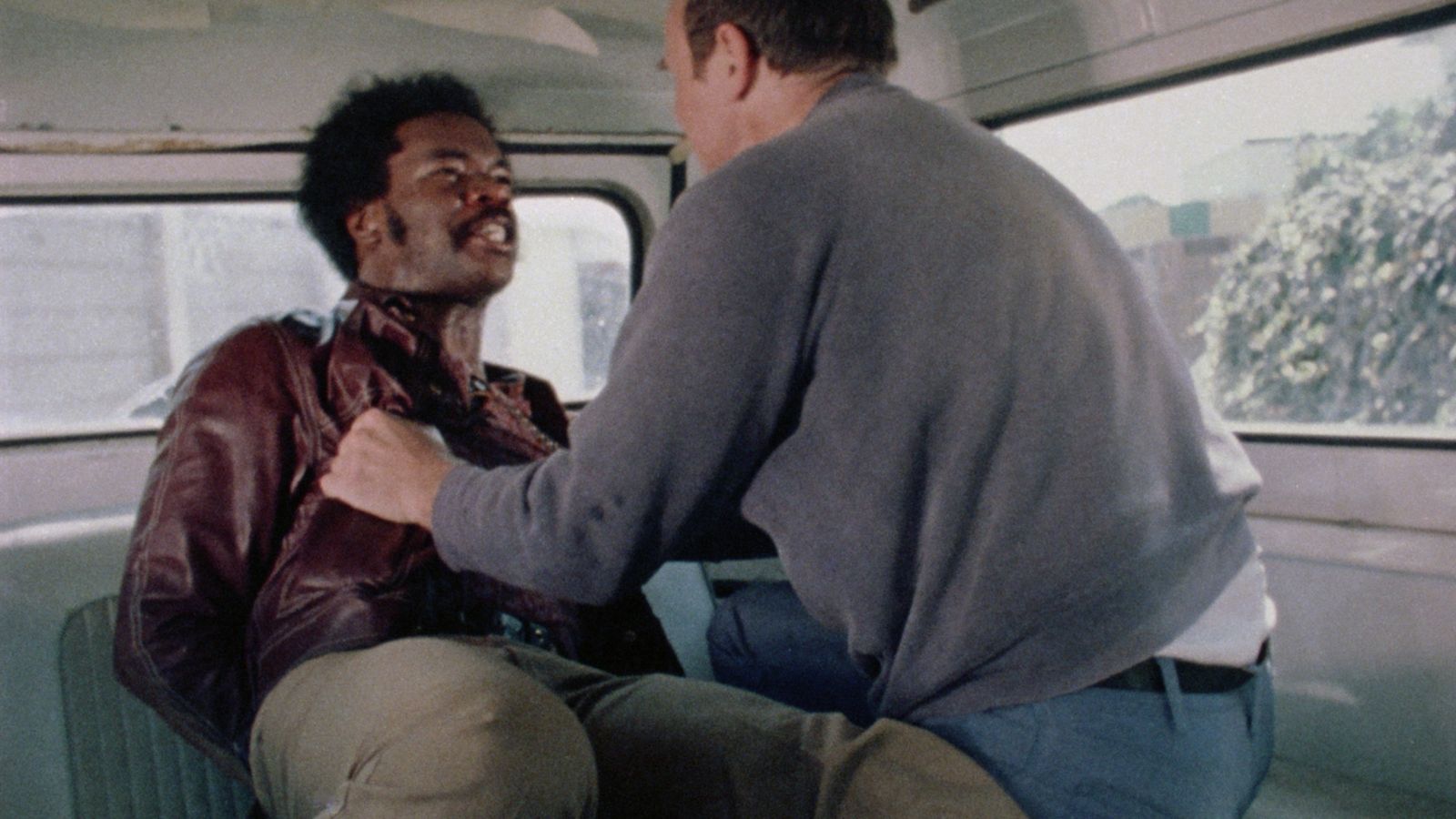
The debut feature by the late visionary director Jamaa Fanaka—for which Charles Burnett served as camera operator alongside George Geddis—stands simultaneously as an essential distillation of the Blaxploitation revenge genre in all its outrageously cinematic splendor, and as an incisive, surrealist critique of the political meanings that animate the genre’s well-worn conventions. Wrongly imprisoned, Charles Murray (Marlo Monte) seeks to wreak vengeance on the detective who framed him, and on the systemic racism of the legal structures that allowed him to do so. Cannily playing with the mythologies surrounding Black male sexuality and the racial politics of power and desire, Fanaka interrogates the corrupt white establishment’s caricatures of the African American community, suggesting that below-the-belt revolt might be as effective a tactic as any for driving progress.
35mm print courtesy of the L.A. Rebellion collection at the UCLA Film & Television Archive.
Saturday, May 3 at 1:45pm
Joe Bullet
Louis de Witt, 1973, South Africa, 79m
Joe Bullet
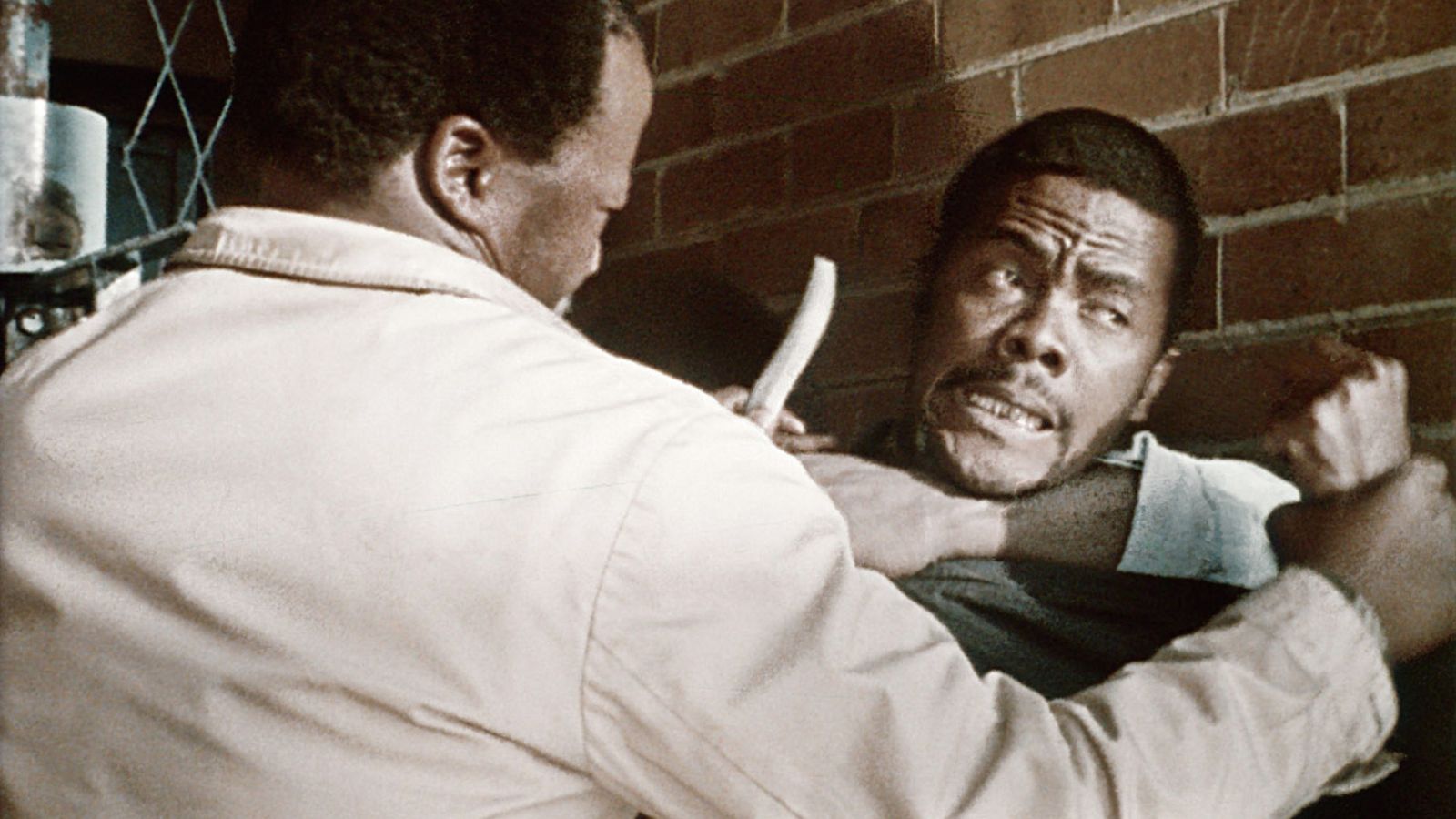
During the period of South African Apartheid that spanned much of the latter half of the 20th century, the nation’s segregated filmmaking apparatus witnessed a surprisingly vigorous movement of white producers and filmmakers investing in the production of films for Black audiences, eventually with the support of “B-scheme” government subsidies. Shot in 1971 under the auspices of screenwriter Tonie van der Merwe’s self-financed production outfit, director Louis de Witt’s Joe Bullet was one of the first South African films to feature an all-Black cast—and was banned by government censors after just two screenings. Tall, handsome, and athletic, the titular hero (Ken Gampu) was reportedly conceived in the mold of Shaft and James Bond, fighting, stabbing, and shooting at the nefarious saboteurs who hope to undermine his soccer team in an upcoming championship game.
Saturday, May 3 at 4:00pm
On Jazz
Passing Through
Larry Clark, 1977, U.S., 105m
Passing Through
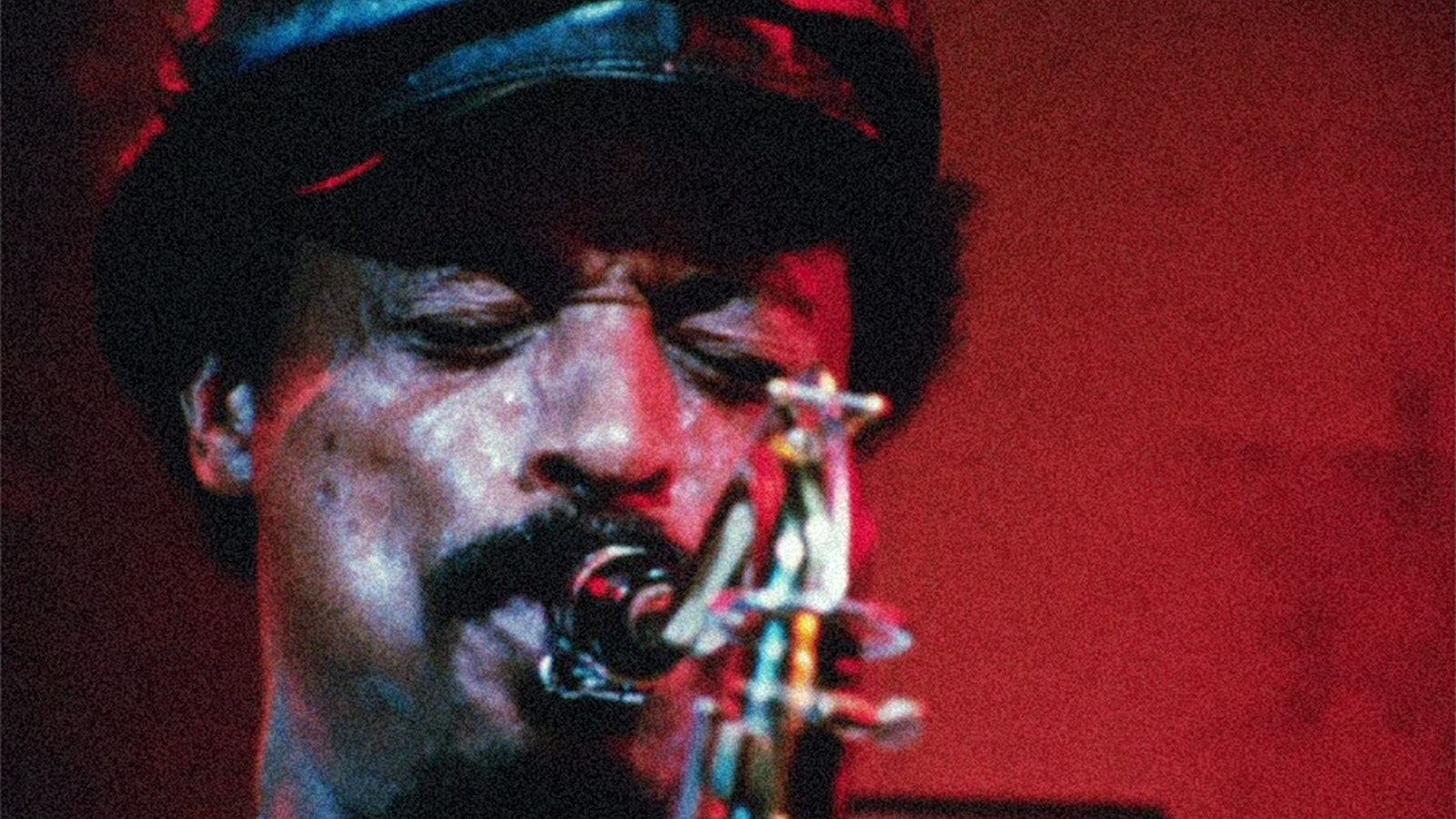
Completed as his Master’s degree thesis project during his graduate studies at UCLA, Larry Clark’s Passing Through takes jazz as a prism through which to examine the perpetually colluding forces of American capitalism and American racism. The narrative follows a talented saxophonist, Eddie Warmack (Nathaniel Taylor) who, recently released from prison, hopes to persuade his grandfather and mentor to join him in establishing an artist-owned musical collective—to the chagrin of the mob-affiliated crooks controlling the music industry with an iron grip. Featuring camera and sound work by Clark’s UCLA classmates Charles Burnett and Julie Dash, the film situates this artistic milieu in the context of ongoing political struggles in the U.S. and abroad—not least via pointed visual references to the political fights for independence that swept the African continent in the 1970s—and deploys the liberatory aesthetic and formal spontaneity of free jazz to compose a stunning, vividly realized tribute to a thriving Black creative community, far from the blinkered myopia of the midcentury Hollywood canon.
Digital presentation courtesy of the UCLA Film & Television Archive.
Sunday, April 27 at 6:00pm
Tuesday, April 29 at 9:00pm
Rewind & Play
Alain Gomis, 2022, France/Germany, 66m
English and French with English subtitles
Rewind and Play
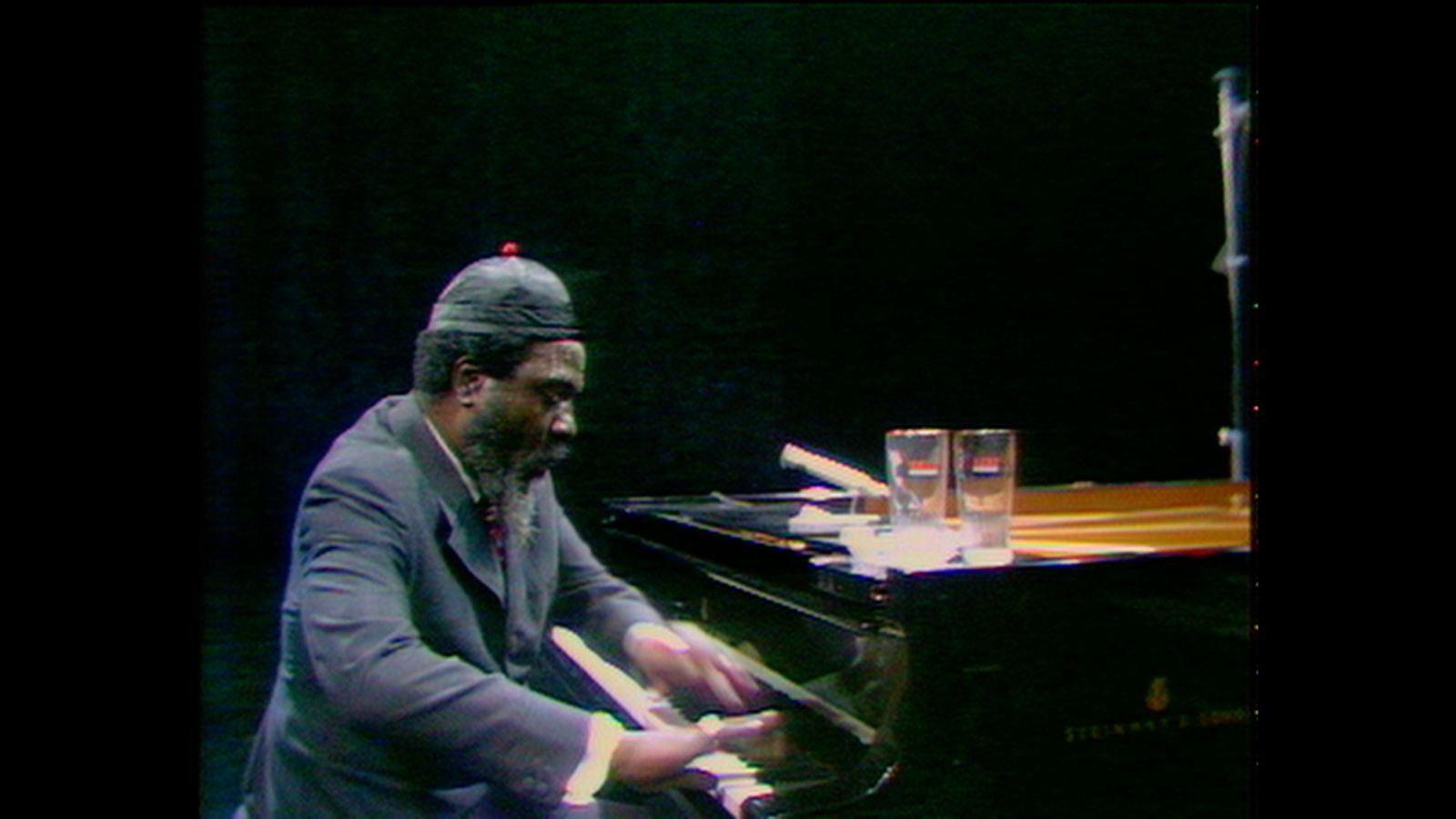
In December 1969, Thelonious Monk arrived in Paris for a concert at the tail end of a European tour. While there, the legendary jazz pianist was invited to appear on a television interview program, where he would perform and answer questions in an intimate, one-on-one studio stage. Using newly discovered footage from the recording of the interview, versatile French-Senegalese filmmaker Alain Gomis (whose dazzling music-tinged drama Félicité played in NYFF’s Main Slate in 2017) reveals the troubling dynamic between Monk and his white interviewer, Henri Renaud, and how Monk stands his ground despite being antagonized by Renaud’s trivializing approach. Gomis’s gripping film is a fascinating behind-the-scenes documentary; a subtle yet searing exposé of casual racism; and, above all, a chance to see one of the monumental geniuses of 20th-century music at work. A Grasshopper Film release. An NYFF60 Currents selection.
Sunday, April 27 at 8:45pm
On Political Engagement
Bush Mama
Haile Gerima, 1979, U.S., 97m
Bush Mama
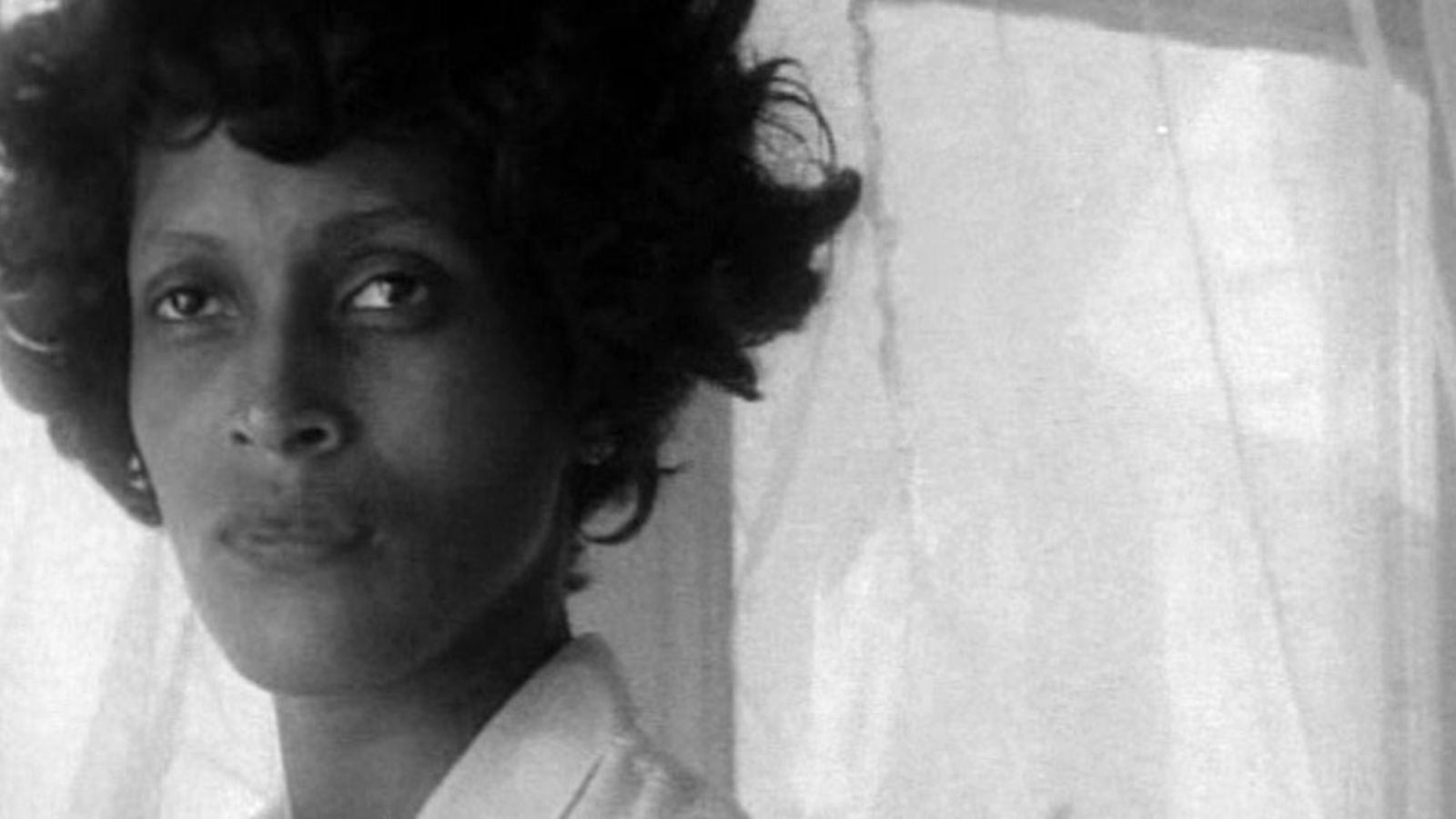
In Bush Mama, Ethiopian-born director Haile Gerima tracks the experiences of Dorothy (Barbara O. Jones), a Black mother living in L.A.’s Watts neighborhood, as she grapples with the imprisonment of her Vietnam vet husband and navigates the bureaucratic tangles of public assistance. Her world is rendered with an unflinching neorealist lens, but these scenes are also teamed with formally experimental dispatches from Dorothy’s turbulent inner life. She finds herself in overwhelming circumstances, yet talk of liberation buzzes all around her, a response to relentless police violence and capitalist exploitation. Bush Mama, through its fractured, captivating drama of political awakening, showed us Los Angeles as Hollywood never had.
Digital presentation courtesy of the UCLA Film & Television Archive.
Friday, April 25 at 9:15pm (Q&A with Haile Gerima on April 25)
Monday, April 28 at 6:15pm
This Is Not a Burial, It’s a Resurrection
Lemohang Jeremiah Mosese, 2019, Lesotho/South Africa/Italy, 120m
Sesotho with English subtitles
This Is Not a Burial, It’s a Resurrection
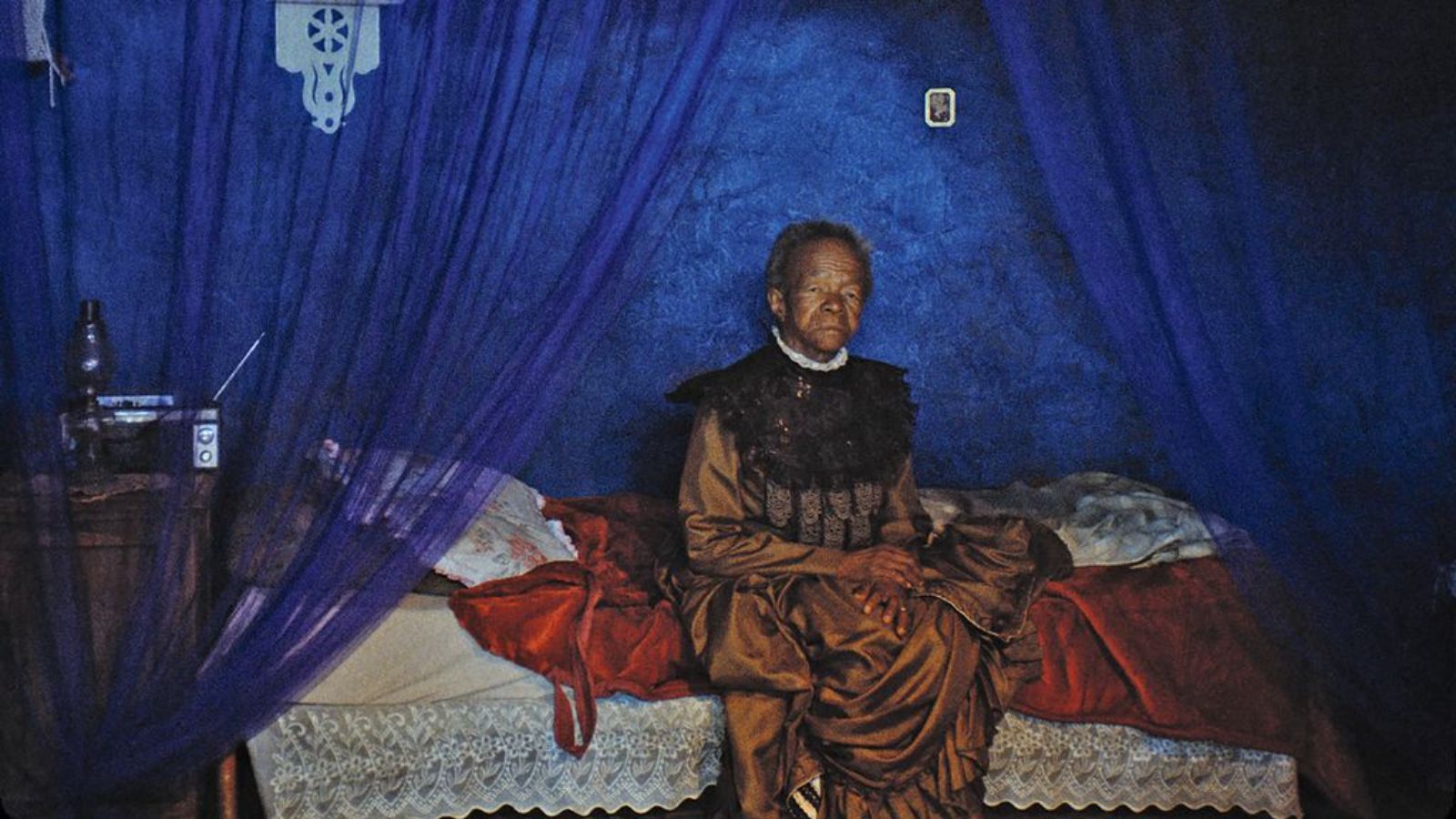
In the mountains of Lesotho, an 80-year-old widow named Mantoa eagerly awaits the return of her son—her only living kin—from the South African mines where he works. When instead she receives news of his death, she puts her affairs in order and makes arrangements to be buried in the local cemetery. Her careful plans are upset abruptly by the news that provincial officials intend to resettle the village, flood the entire area, and build a dam for a reservoir. Determined to die on her own terms and in her own land, Mantoa resolves to defend the spiritual heritage of her community. A Dekanalog release.
Monday, April 28 at 8:30pm
On Incarceration
Penitentiary
Jamaa Fanaka, 1979, U.S., 35mm, 99m

Penitentiary
When a solitary hitchhiker (Leon Isaac Kennedy) is charged with the murder of a white man following a dispute over a sex worker, he is swiftly jailed and must adapt to the fraught new reality of his life as a prisoner, caught between animality and humanity, lucidity and madness, brutality and cunning, where the weakest are compelled to ally with the strongest, and the boxing ring promises the best hope at survival and escape. Produced, written, and directed by Jamaa Fanaka, Penitentiary is a lacerating dissection of the Blaxploitation, crime, and prison genres that also deftly exemplifies those genres’ capacity for political and social commentary. By deploying a formal framework where off-screen sounds and unseen reveries override the physical confinement of his characters, Fanaka simultaneously reflects on the widespread alienation of Black life in America, and condemns the carceral system that perpetuates those effects generation after generation.
35mm print courtesy of the L.A. Rebellion collection at the UCLA Film & Television Archive.
Saturday, May 3 at 6:00pm
Night of the Kings
Philippe Lacôte, 2020, France/Ivory Coast/Canada/Senegal, 93m
Dioula, French, and Ivorian slang with English subtitles
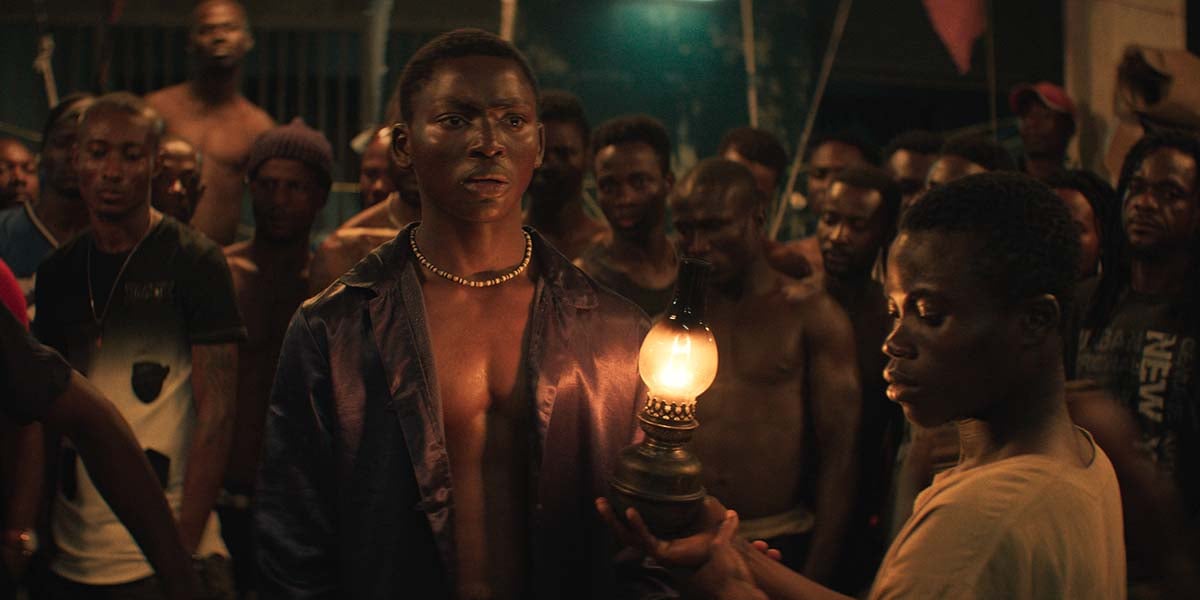
Night of the Kings
At the Maca correctional facility in the Ivorian capital of Abidjan, the inmates run the prison, a place all but ruled by folkloric superstitions. Tonight, upon the rising of a red moon, a newly arrived prisoner (Koné Bakary), jailed for pickpocketing, has been selected by the autocratic Lord Blackbeard to assume the position of “Roman storyteller”: he must keep his fellow inmates entertained with wild tales or risk his own life. As this Scheherazade-like scenario unfolds, he tells the story of Zama, the childhood friend who became a legendary crime boss. Paying homage to the tradition of the griot in West African culture, Night of the Kings is a work of Shakespearean fabulism and gripping, energetic filmmaking, an altogether original vision from Ivory Coast filmmaker Philippe Lacôte. A NEON release. An NYFF58 Main Slate selection.
Saturday, May 3 at 8:15pm
The Veteran’s Experience
Ashes and Embers
Haile Gerima, 1982, U.S., 126m
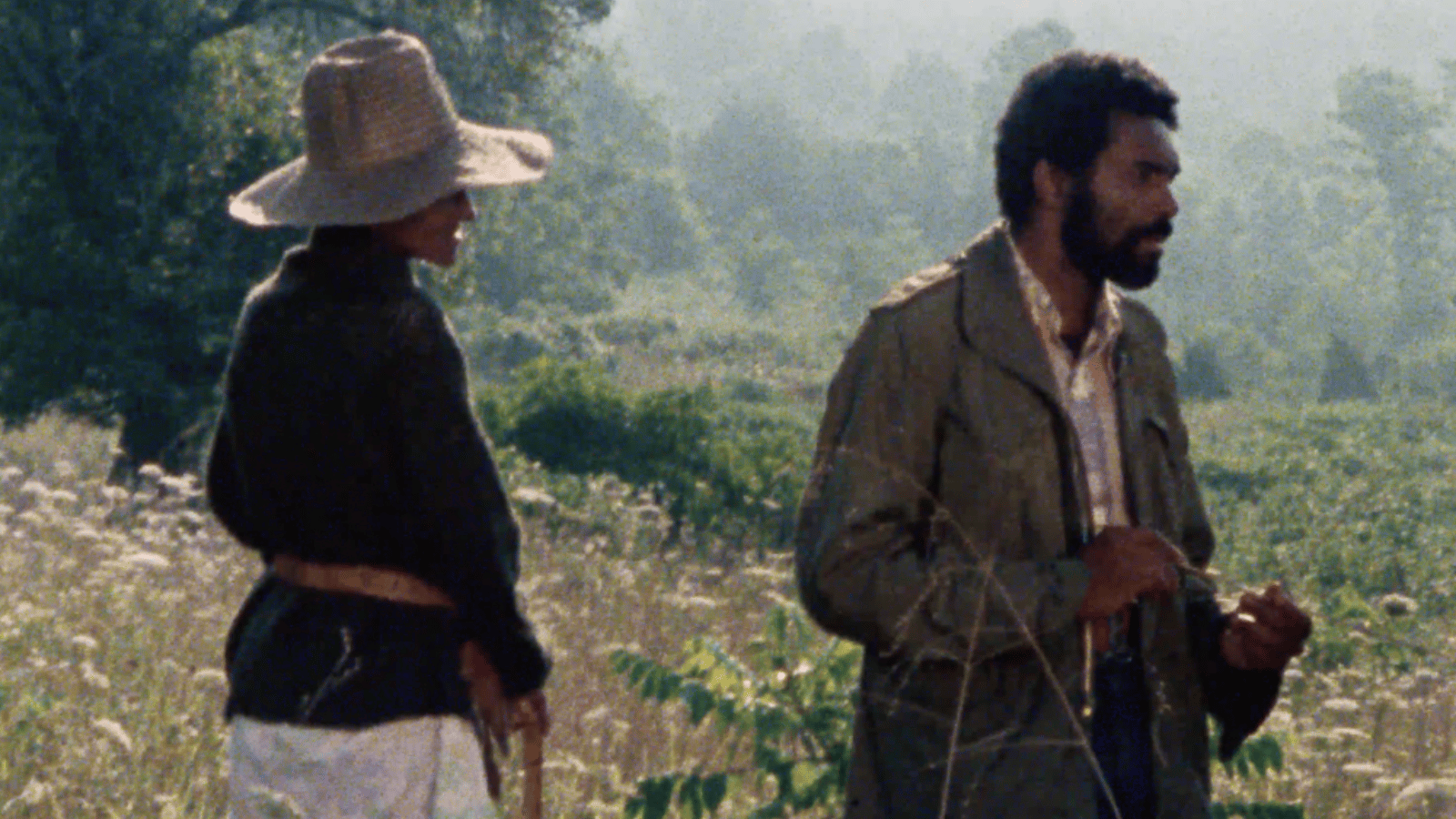
Ashes and Embers
Following on the heels of Bush Mama, Haile Gerima’s third feature Ashes and Embers offers a stirring account of the challenges and upheavals faced by Black veterans of the Vietnam War, represented here in the form of Nay Charles (John Anderson), an African American soldier who, upon returning to his hometown after a stint in Vietnam, struggles with newfound disenchantment and alienation as he attempts to reconnect with the decidedly American way of life he once inhabited. Caught between the competing pressures and contradictions of a Black middle class content to accommodate the brutality of the existing power structure and a heterogeneous coalition of radical activists with the will, if not the resources, to transform a society rooted in racism, Charles decamps for Los Angeles, only to discover the impossibility of escaping the legacies of systematic discrimination and disenfranchisement that continue to resonate in American society.
Saturday, April 26 at 6:00pm (Q&A with Haile Gerima on April 26)
Wednesday, April 30 at 6:00pm
Camp de Thiaroye
Ousmane Sembène, Thierno Faty Sow, 1988, Senegal/Algeria/Tunisia, 154m
Wolof, French, and German with English subtitles
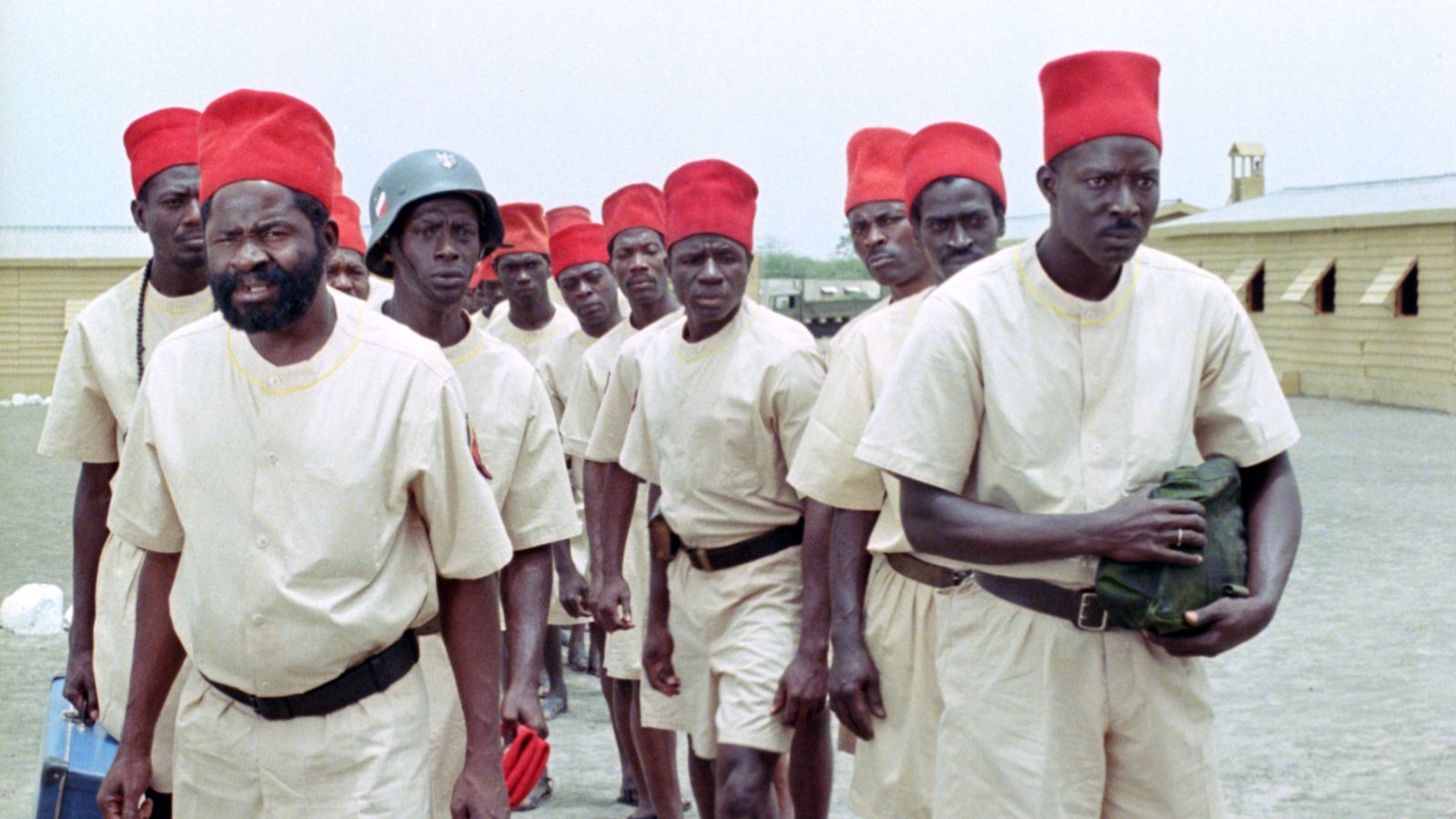
Camp de Thiaroye
Sensitively probing the legacy of a colonial postwar tragedy in Senegal, the legendary Ousmane Sembène partnered with Thierno Faty Sow to craft this rich, enraging work of cinema as historical corrective. Camp de Thiaroye chronicles the lead-up to the Thiaroye Massacre, a horrific event in which the French military murdered hundreds of West African soldiers, freshly returned from serving in the European theater of WWII, for their righteous insistence upon receiving their promised (and unpaid) wages and benefits. Winner of the Grand Jury Prize at the 1988 Venice Film Festival, Camp de Thiaroye was banned in France for more than a decade; it endures as one of cinema’s most powerful and precise portraits of both war and colonial racism. An NYFF62 Revivals selection.
Restored by The Film Foundation’s World Cinema Project and Cineteca di Bologna at L’Immagine Ritrovata laboratory in association with the Tunisian Ministry of Culture and the Senegalese Ministry of Culture and Historical Heritage. Special thanks to Mohammed Challouf. Restoration funded by the Hobson/Lucas Family Foundation. This restoration is part of the African Film Heritage Project, an initiative created by The Film Foundation’s World Cinema Project, the Pan African Federation of Filmmakers and UNESCO—in collaboration with Cineteca di Bologna—to help locate, restore, and disseminate African cinema.
Saturday, April 26 at 9:00pm
On Gentrification
Residue
Merawi Gerima, 2020, U.S., 90m

Residue
Forty years after his mother, Shirikiana Aina, directed her seminal short film Brick by Brick, the artist Merawi Gerima took up the gauntlet, expanding upon the themes of Aina’s lyrical cinematic meditation and applying them in the context of 21st-century Washington D.C., where Gerima’s protagonist, young filmmaker Jay (Obinna Nwachukwu), returns home after many years away. Seeking to reconnect with the memories, spaces, and lingering traces of his childhood, he instead discovers that his old neighborhood is no longer recognizable, and many of his old friends have met with a tragic fate. Premiering during the pandemic era at the Slamdance Film Festival before going on to screen at the Venice Film Festival, Residue is at once a reflection on the lived experience of gentrification and a layered, authentic portrait of the Black Lives Matter generation.
Screening with:
Brick by Brick
Shirikiana Aina, 1982, U.S., 37min
Shirikiana Aina—one of the few women members in the original cohort of student filmmakers who would come to be known collectively as the L.A. Rebellion—documented the stigmatization of Black residents within the Washington D.C. area in her first film, produced during her final year at UCLA. Brick by Brick depicts families and individuals, otherwise ignored by the media, who were then in the process of being pushed out of their homes. Gentrification and urban redevelopment are at the core of this powerful short, which captures the extraordinary spirit of a neighborhood community who came together to fight against the perpetuation of a systemic injustice.
Digital presentation courtesy of the UCLA Film & Television Archive.
Friday, April 25 at 6:00pm (Q&A with Merawi Gerima on April 25)
Wednesday, April 30 at 8:30pm
On Black Love
Bless Their Little Hearts
Billy Woodberry, 1984, U.S., 35mm, 80m
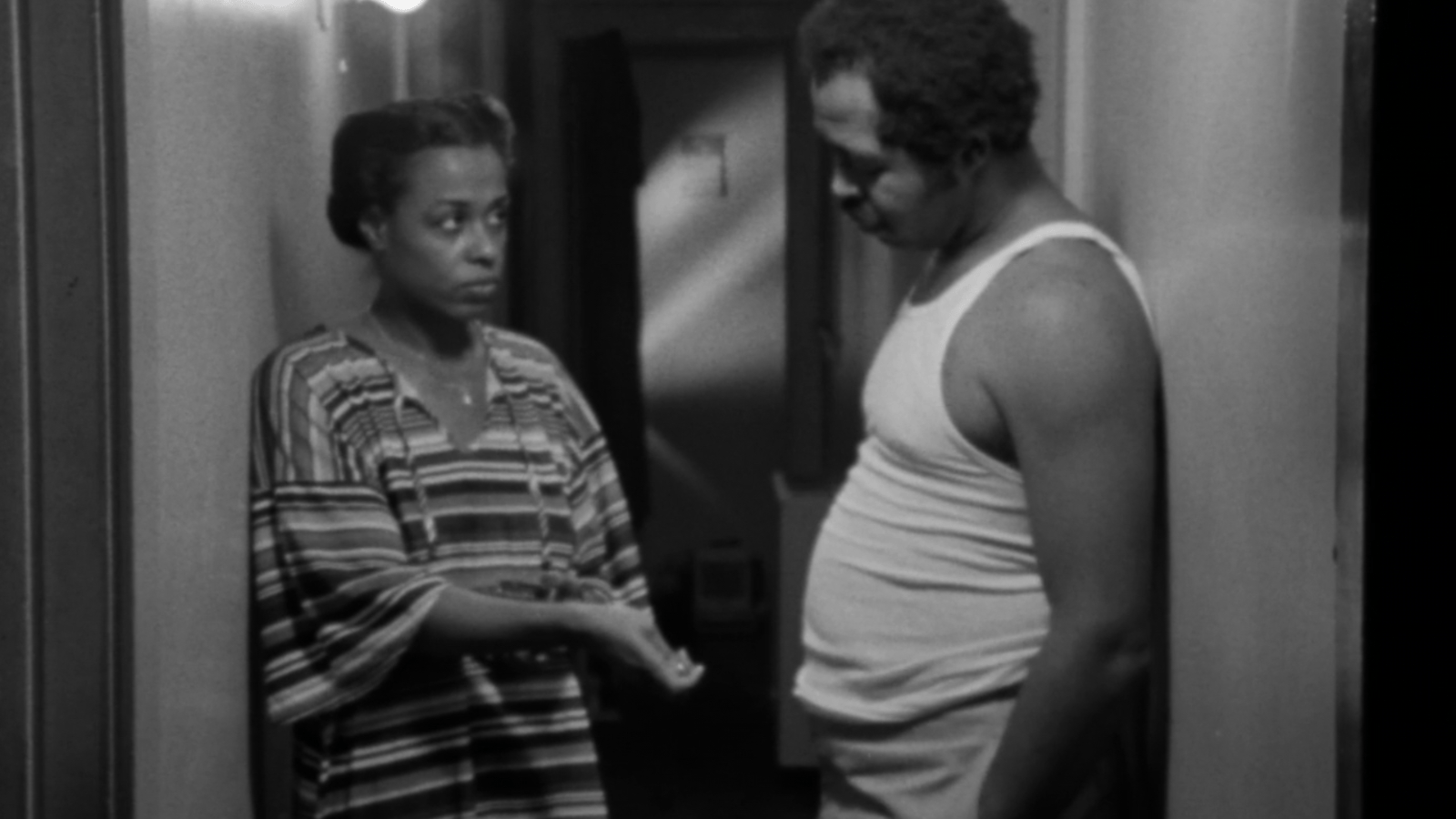
Bless Their Little Hearts
The lone narrative feature from director Billy Woodberry, Bless Their Little Hearts exemplifies the rigorous commitment to collaborative art-making that defined the L.A. Rebellion’s collective practice—in this case, a collaboration between Woodberry and Charles Burnett, who scripted and lensed the film, and facilitated the casting of friends and family members who had previously acted in Burnett’s Killer of Sheep and My Brother’s Wedding. Woodberry’s film unfolds in the Watts neighborhood of Los Angeles, several years after the 1969 Watts riots; its protagonist, Charlie Banks (Nate Hardman), is unemployed and unable to financially support his wife (Kaycee Moore) and their three children. Training a keen eye on the psychological ravages of underemployment and economic discrimination—and sensitively attending to the intimate dynamics of a marriage in crisis—Woodberry and Burnett’s extraordinary shared vision endures as a paradigmatic masterpiece of poetic neorealism, more than 40 years after its Cannes Critics’ Week premiere.
35mm preservation print courtesy of the UCLA Film & Television Archive.
Thursday, May 1 at 6:30pm
Sunday, May 4 at 1:00pm
If Beale Street Could Talk
Barry Jenkins, 2018, U.S., 117m
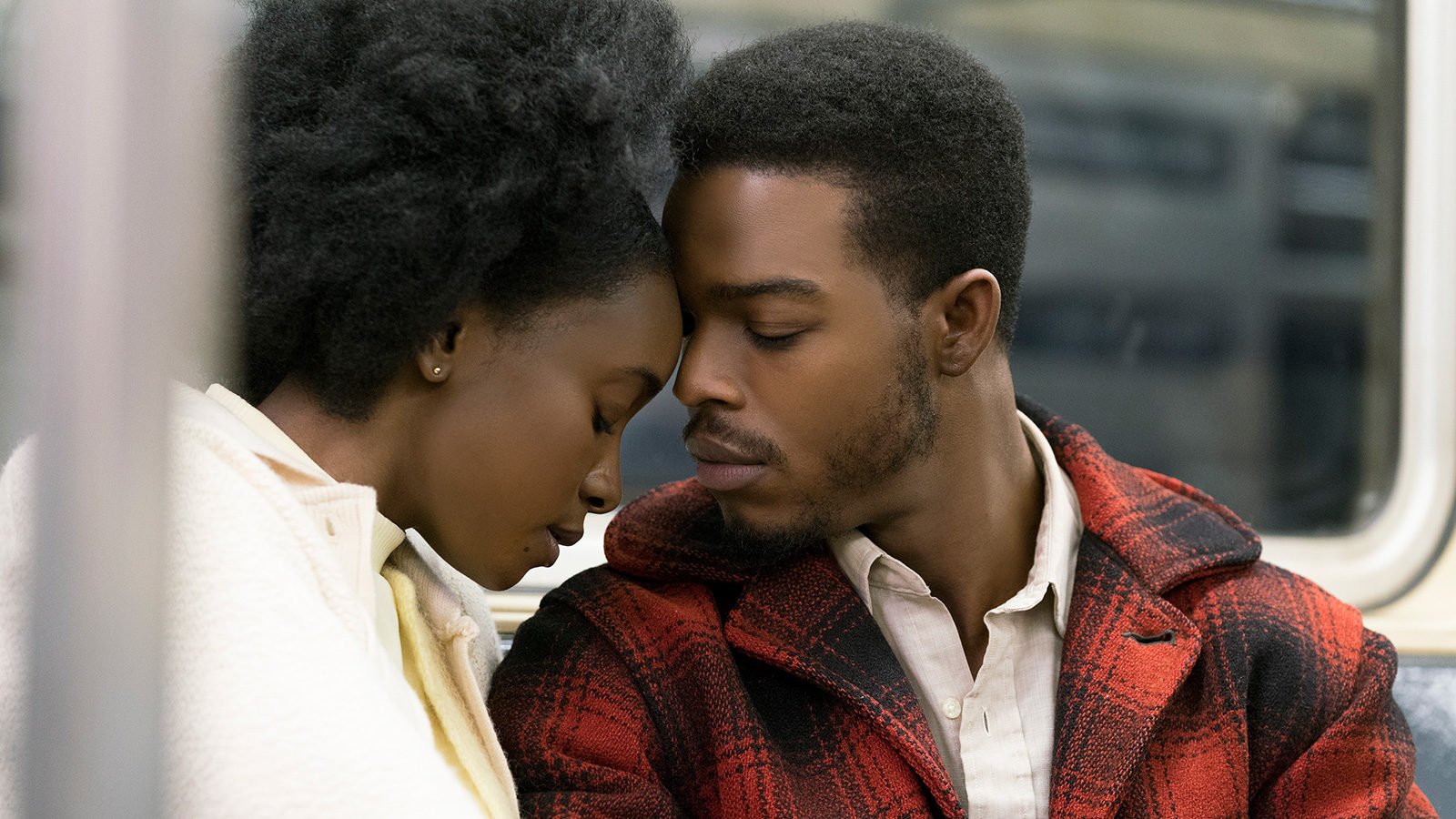
If Beale Street Could Talk
Barry Jenkins’s follow-up to his Oscar-winning Moonlight is a carefully wrought adaptation of James Baldwin’s penultimate novel, set in Harlem in the early 1970s. Fonny (Stephan James) and Tish (KiKi Layne) are childhood friends who fall in love as young adults. Tish becomes pregnant, and Fonny suffers a fate tragically common to young African American men: he is arrested and convicted for a crime he didn’t commit. Jenkins’s deeply soulful film stays focused on the emotional currents between parents and children, couples and friends, all of whom spend their lives repairing and reinforcing the precious but fraying bonds of family and community in an unforgiving, racist world. An NYFF56 Main Slate selection.
Thursday, May 1 at 8:30pm
Into the 1990s
To Sleep with Anger
Charles Burnett, 1990, U.S., 102m
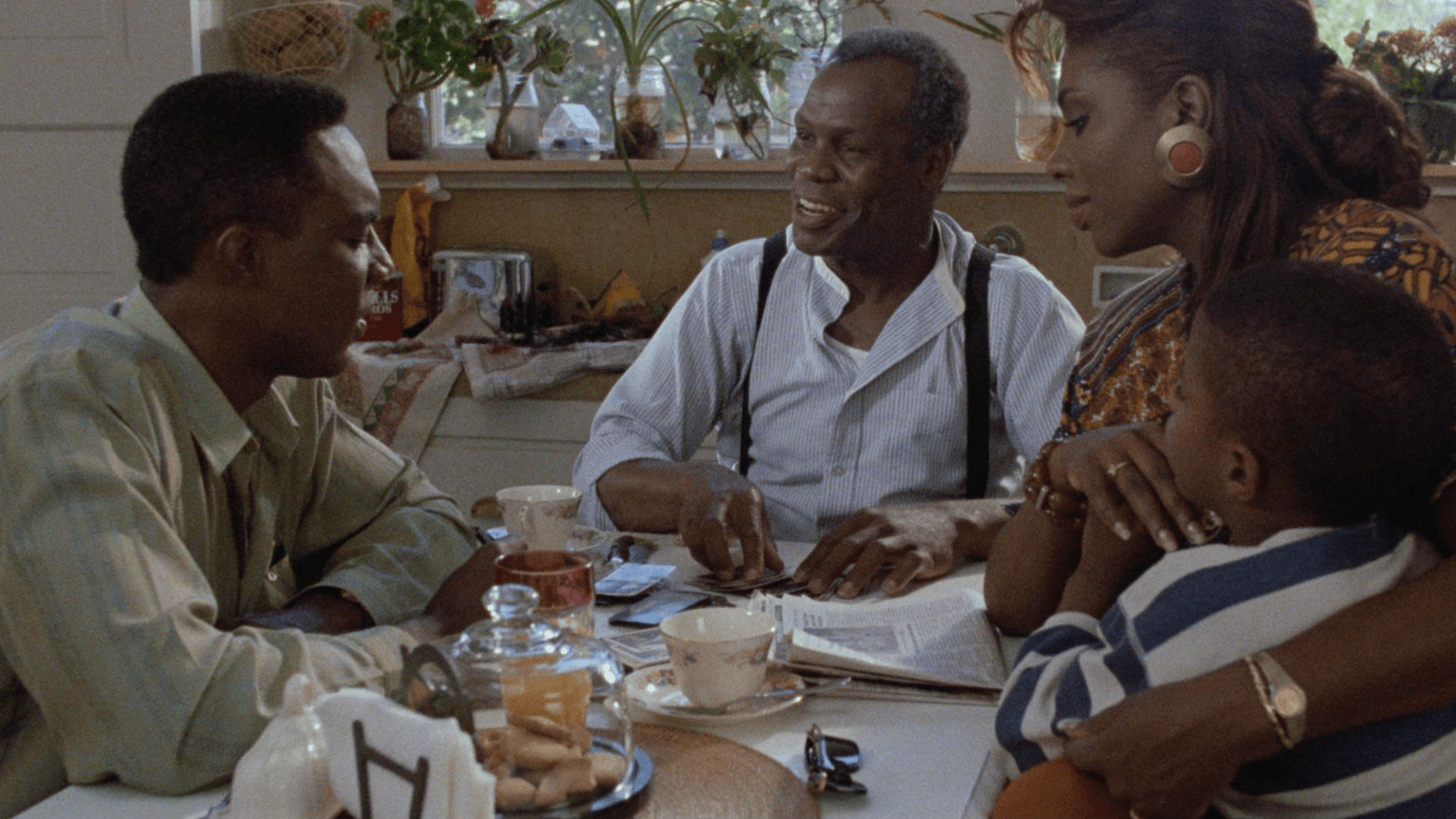
To Sleep With Anger
Charles Burnett burst onto the world stage when his 1978 UCLA thesis film, Killer of Sheep, won the Critics’ Prize at the 1981 Berlin Film Festival. His legendary reputation among cinephiles never quite segued into mainstream recognition, even though his 1990 drama To Sleep with Anger—novelistic in its narrative density and rich characterization—is one of the finest films about the Black experience in modern America. Danny Glover (also the film’s executive producer) stars as Harry Mention, a mysterious drifter from the South who visits an old acquaintance (Paul Butler), now leading a middle-class life with his family in South Central Los Angeles. Though imbued with charm and traditional manners, Harry has a knack for mischief that creates powerful rifts throughout the family. Burnett’s overlooked masterpiece connects the past to the present in emotionally resonant ways, making this film as imaginative and insightful as his debut feature. An NYFF28 Main Slate selection.
Sunday, April 27 at 1:15pm
Friday, May 2 at 3:30pm
Hyenas
Djibril Diop Mambéty, 1992, Senegal/Switzerland/France, 110m

Hyenas
“When a story ends—or ‘falls into the ocean,’ as we say—it creates dreams,” said the great Senegalese director Djibril Diop Mambéty in an interview after the completion of his second film, Hyenas, a wildly freeform adaptation of Friedrich Dürrenmatt’s The Visit. A wealthy woman (Ami Diakhate) returns to her—and Mambéty’s—home village, and offers the inhabitants a vast sum in exchange for the murder of the local man who seduced and abandoned her when she was young. “I do not refuse the word didactic,” said Mambéty of his very special body of work, and of the particular plight of African cinema. “My task was to identify the enemy of humankind: money, the International Monetary Fund, and the World Bank. I think my target is clear.” An NYFF30 Main Slate selection.
Restored over the course of 2017 by Eclair Digital in Vanves, France. Restoration was taken on by Thelma Film AG (Switzerland).
Sunday, April 27 at 3:30pm
Women’s Destinies
Daughters of the Dust
Julie Dash, 1992, U.S., 35mm, 113m

Daughters of the Dust
Following a run of acclaimed short films, writer-director-producer Julie Dash made history with her 1992 fiction feature debut Daughters of the Dust, the first film directed by an African American woman to receive a national theatrical release. Set just after the turn of the 20th century, Dash’s richly evocative screenplay sketches an impressionistic portrait of the Gullah people—an independent community of formerly enslaved people and their descendents living on the Sea Islands off the coast of North Carolina and Georgia. Adopting a circular narrative structure, with voice-over narration supplied by the spirit of an unborn child who speaks in Gullah Creole, the film follows three generations of women from the Peazant family as they prepare to migrate to the mainland, giving rise to a lyrical meditation on the American experience of diaspora, embodied by characters torn between their attachment to the traditions and ways of life handed down by their African ancestors on the one hand, and on the other the desire to embrace a more “modern”—if not necessarily better—life in the industrialized North.
35mm preservation print courtesy of the UCLA Film & Television Archive.
Friday, May 2 at 6:00pm
Sunday, May 4 at 3:00pm
Hanami
Denise Fernandes, 2024, Cape Verde/Switzerland/Portugal, 93m
Capeverdian Creole, English, Japanese, and French with English subtitles
New York Premiere
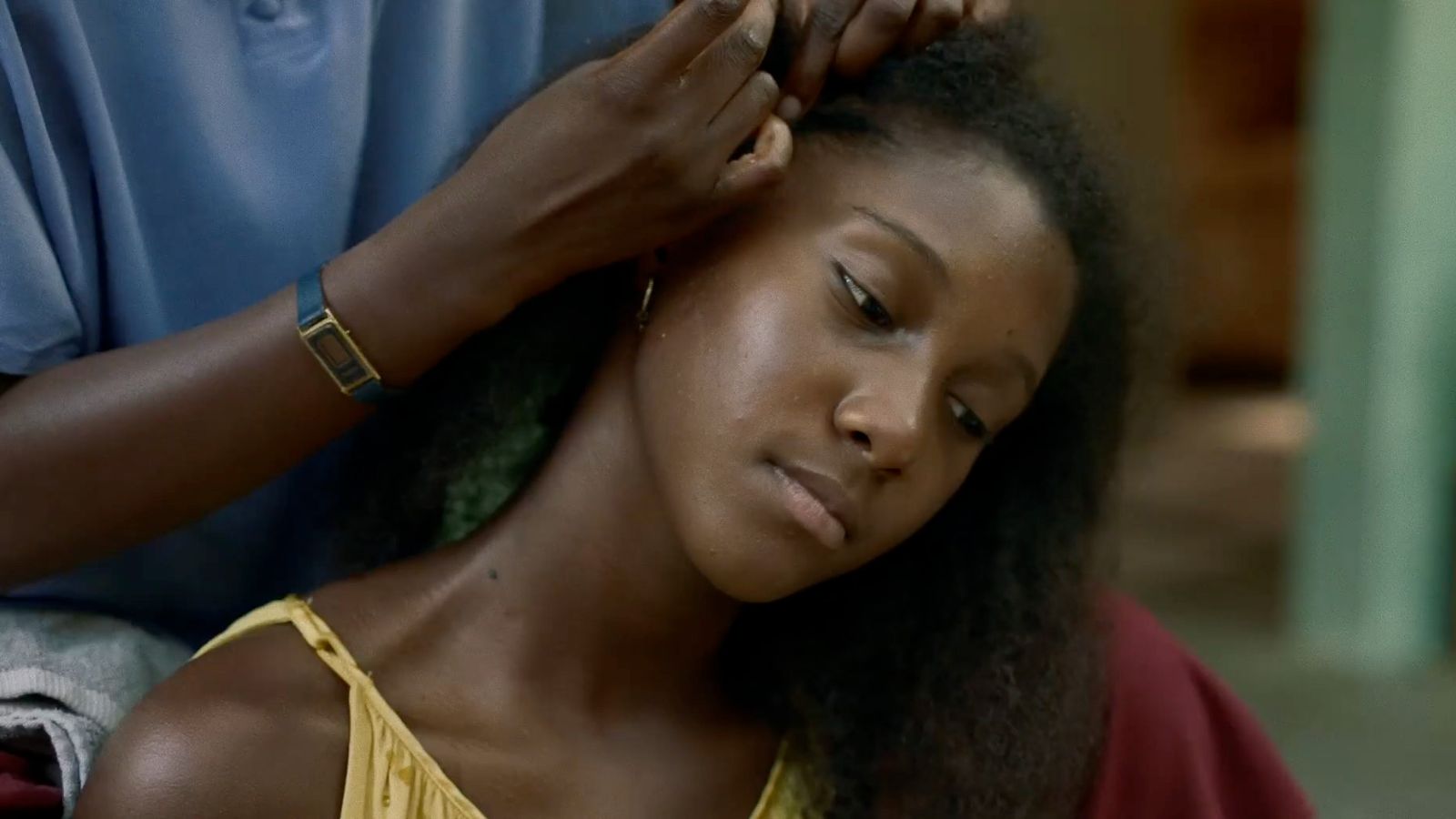
Hanami
Winner of the Best Emerging Director award and a Special Mention in the First Feature competition at the 2024 Locarno Film Festival, Cape Verdean-Swiss director Denise Fernandes expands on the themes that she probed with restrained eloquence in her 2020 short film Nha Mila (New Directors/New Films 2021) with her stunning feature debut, a beguiling coming-of-age fable that continues the filmmaker’s tender, emotionally precise inquiry into specifically diasporic experiences of displacement and belonging. Embracing a cinematic style of understated poetry and stirring oneirism, Hanami introduces viewers to the insular community of Djarfogo, where each successive generation is confronted with the dilemma of leaving for new opportunities abroad or staying put, perpetuating a way of life that all of its adherents seem eager to escape. It’s in this context that young Nana (played at different ages by gifted first-time actresses Sanaya Andrade and Daílma Mendes) navigates the onset of adolescence, all the while grappling with the ever-looming absence of a mother who left years ago, in the child’s infancy, to seek treatment for a mysterious ailment.
Friday, May 2 at 9:00pm
Free Talk
Free Talk: Reframing Black Stories on Screen
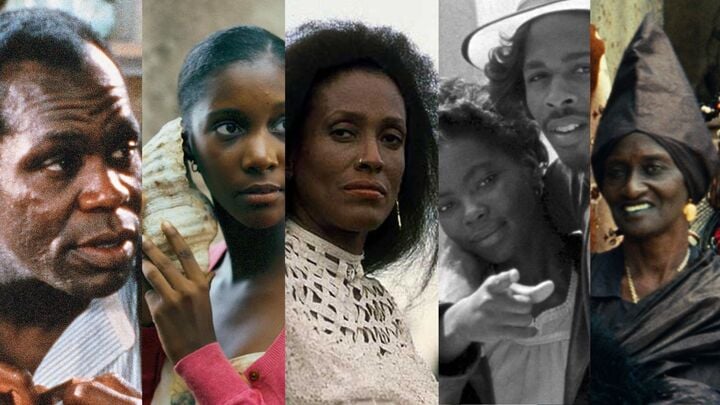
Join programmer Claire Diao and a panel of filmmakers, scholars, and journalists for a wide-ranging conversation in which they’ll explore the history of the L.A. Rebellion, its formal and thematic influences on contemporary artists, and how the reception of films produced in Africa and throughout its diaspora has evolved since the 1970s.
Saturday, April 26 at 4:00pm – Amphitheater at Elinor Bunin Munroe Film Center (144 W. 65th St.)


