Meet the Filmmakers of the New Directors/New Films 2025 Shorts Programs
April 7, 2025

The Inhabitants
Exploring bold new works from filmmakers around the world, the 54th New Directors/New Films, our annual festival co-presented with The Museum of Modern Art, is officially underway through April 13. As the festival continues, get to know the filmmakers who speak to the present and anticipate the future of cinema.
In a special spotlight on the filmmakers in this year’s two shorts programs, we hear from directors Enrique Pedráza-Botero (You Can’t See It From Here), Kevin Walker and Irene Zahariadis (Things Hidden Since the Foundation of the World), Maureen Fazendeiro (The Inhabitants), Camille Vigny (Crushed), Daphné Hérétakis (What We Ask of a Statue Is That It Doesn’t Move), Julia Sipowicz (Maidenhair), Daniel Asadi Faezi and Mila Zhluktenko (In Retrospect), Jessica Dunn Rovinelli (Life Story), and Alisha Tejpal, Mireya Martinez, and Anoushka Mirchandani (Landscapes of Longing).
What made you first want to be a director?
Enrique Pedráza-Botero: Film has been part of my life since a young age. I think it still feels weird to call myself a filmmaker given how hard it is to make work consistently—especially documentary work. My earliest memory of noticing the camera and wanting to film something was watching Tina Turner concerts on DVD. I thought she was the coolest. After college, I began gravitating towards nonfiction film and started a career in the nonprofit world, in organizations like Sundance Institute and Ambulante. I worked on the industry side for about eight years and then decided to go back to school for documentary work specifically. At Stanford is where I began making work that truly felt personal and where I began to push my formal aspirations.
Kevin Walker: The day my parents showed me the original The Twilight Zone (the New Year’s marathon they always did on SyFy), was a huge moment for me—very shortly after, I handwrote my own highly derivative episode of TZ (no longer extant).
Irene Zahariadis: I always watched a lot of old movies with my parents when I was growing up—I felt so moved by them and knew I wanted to create art!
Maureen Fazendeiro: Not being able to be a dancer, or a singer, or a writer.
Camille Vigny: I wanted to be a writer since a very young age. Then I discovered music, dancing, and photography. At 16, I had failed finding a summer job and was spending all my days watching films copied on VHS. I saw two films that awoke my desire to be a filmmaker. It was like a strong intuition that made me realize this is the way I want to express and create. It was Permanent Vacation by Jim Jarmusch and Leningrad Cowboys Go America by Aki Kaurismäki.
Daphné Hérétakis: My dad bought me a camera when I was very young and I started filming everything around me—my family, my friends, unknown people I’d meet in the streets. I was a shy kid so through cinema I found a way to bond with others, and to live imaginary lives.
Julia Sipowicz: I was a lonely kid who watched a lot of movies and TV. I could never imagine a different life for myself.
Jessica Dunn Rovinelli: When I was 14, my friends’ parents rented three movies a week from the video store, which meant you got a fourth one free. We got to pick the fourth movie, but then we always ended up watching some of the parents’ three films, and they happened to be into classic cinema. That, apparently, is enough for an anxious young child desperate for something exciting in this pathetic world.
Mireya Martinez: I am unsure to this day. It sprouted as a feeling that it allowed me to live other lives, to research endlessly, to chase down a random amalgamation of interests. But the desire was reinforced by every movie that touched me, that expanded my worldview beyond the constraints of my own skin. It made me crave touching others in that way.
Alisha Tejpal: Like most things in life, it was a compounding effect, but if I had to point to a moment of genesis I’d say it was my mother. Skipping school to catch a matinee show of a foreign or less-known regional film that my mother had heard about was not an uncommon event in my childhood. She’d often show up at school with some excuse or another, an aunt died or I had an urgent doctor’s appointment, and the minute I got in the car she’d say, “I’m sorry, it’s the only show I could find and we have to go!” Hours were then spent in detailed post-screening discussions and ice cream, always ice cream! Perhaps that is why I still crave ice cream if I’ve watched something that deeply moved me.
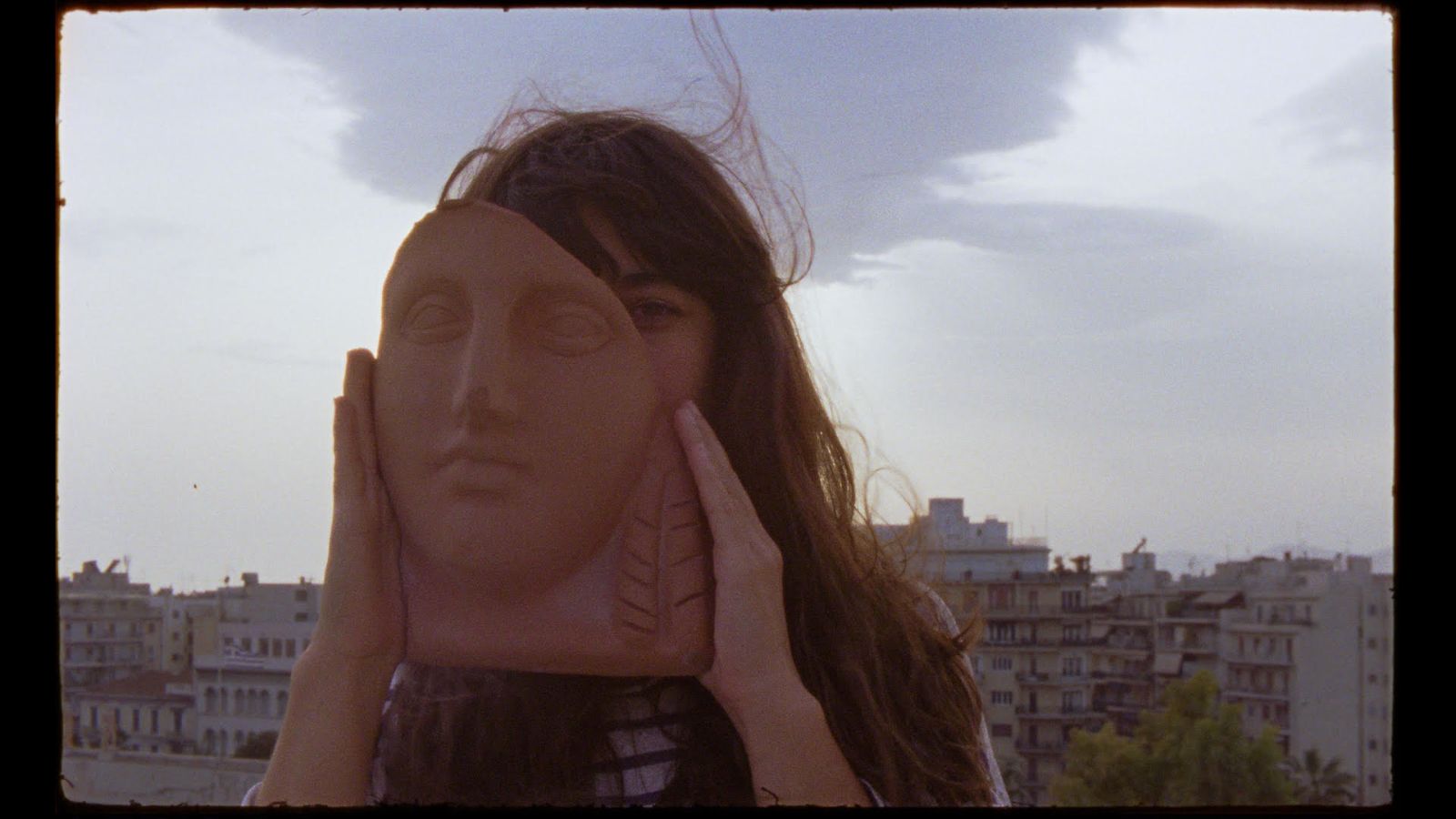
What We Ask of a Statue Is That It Doesn’t Move. Courtesy of Daphné Hérétakis.
Was there a film or director you were inspired by or continue to be inspired by?
Enrique Pedráza-Botero: It changes. Right now I’m really into Deborah Stratman’s work, Jia Zhangke, and Lucrecia Martel.
Kevin Walker: For [Things Hidden Since the Foundation of the World], Theo Angelopoulos, Vittorio de Seta, and Cynthia Scott were huge for us. Perennial favorites are Kiarostami, Dreyer, Satyajit Ray, Tarkovsky, Reichardt, and James L. Brooks!
Irene Zahariadis: I am inspired by the work of Agnès Varda—I love the film Jane B. for Agnès V.
Maureen Fazendeiro: Too many… John Ford, Éric Rohmer, Jacques Tourneur, Jean-Marie Straub and Danièle Huillet, Abbas Kiarostami, Hong Sang-soo… sadly, not enough women.
Camille Vigny: There are so many I cannot name one! If I have to choose two whose works inspire me the most lately, I would say Ben Rivers and Alice Rohrwacher.
Daphné Hérétakis: Chris Marker, Agnès Varda, Robert Kramer, Chantal Akerman.
Julia Sipowicz: David Lynch forever.
Alisha Tejpal: Oof… There are so many but I do remember being transfixed the first time I encountered the work of Lucrecia Martel, not just her films but also the ways in which she describes both the functional and formal aesthetics of the cinematic apparatus. And Jeanne Dielman by Chantal Akerman is another film that I continually return to. I live with that film close by in all of the work I make.
Mireya Martinez: Filmmakers whose trajectory and body of work are continuous sources of inspiration are Lucrecia Martel, Robert Altman, Abbas Kiarostami, Céline Sciamma, Les Blank, and Akram Zaatari. Some films that have left indelible sparks are: 5 Broken Cameras (Emad Burnat and Guy Davidi), O’er the Land (Deborah Stratman), Beginners (Mike Mills), The Wonders (Alice Rohrwacher), White (Krzysztof Kieślowski), Happy Together (Wong Kar Wai), Y tu mamá también (Alfonso Cuarón).

You Can’t See It From Here / No se ve desde acá
In your own words, tell us about your film. What should audiences know?
Enrique Pedráza-Botero: I hope audiences discover their own words after watching it [You Can’t See It From Here].
Kevin Walker: Things Hidden Since the Foundation of the World was shot on the beautiful island of Nisyros in its most secluded region: the mountaintop village of Nikia, which overlooks the Aegean Sea on one side and an active volcano on the other. All of the performers in the film are residents of the island, and for most of them it was their first time on camera—it was a huge honor to document their lives and find a way to weave it into a narrative. My co-director Irene [Zahariadis]’s father, Mike Zahariadis, was the primary inspiration for the events of the film.
Irene Zahariadis: [Things Hidden Since the Foundation of the World] is a film that examines death in a way that may make some people feel uncomfortable—yet, in many parts of the world, the routines that are depicted are viewed as beautiful and respectful.
Maureen Fazendeiro: [The Inhabitants] is a portrait of the small town where my parents live in the suburbs of Paris. I wrote it after receiving some letters from my mother telling about her comings and goings to a Roma camp who had just settled in town. It is a movie about the ghosts of Europe, but I’m sure it will resonate with contemporary America too.
Camille Vigny: It took me 13 years to be able to name and tell this story [Crushed]. This is how strong it has impacted my ability to remember. It happened to me when I was 18 and at that same period of time I started studying cinema. So this violent story was somehow always closely linked to my filmmaking. It was always present throughout my short films shot during my film school years or later. But I always used fiction and genre to have this strong distance between the story and my life. With Crushed, I had the need and the urge to tell this violent story straight from within and to let poetry emerge from a more documentary approach. What came first was the text of the voice-over. Then, I discovered the stock-car races on a speedway in Belgium. I felt so connected to those cars being wrecked, I knew almost immediately that those metal bodies would embody my story.
Daphné Hérétakis: [What We Ask of a Statue Is That It Doesn’t Move] is a playful film about feeling stuck, about human statues and about trying to find ways to move forward.
Julia Sipowicz: Love makes you do crazy things!
Daniel Asadi Faezi and Mila Zhluktenko: Our film [In Retrospect] is a short essay that emerged out of a video installation. It deals with the history of migrant workers, so-called Gastarbeiter in Germany, and how they were involved in the building of the facilities for the Munich Olympics 1972, and the Olympic shopping mall especially. This same mall then became the site of a racist shooting in 2016. Our film also asks the question of how the economic wealth of a country is connected to racism within the society. In Retrospect poses those questions by weaving different archival footage together with shots from today’s site. It might also be interesting to know that after WWII the rubble of the destroyed buildings was brought to the outskirts of Munich. This is how the so-called “rubble mountain” evolved. Later, the Olympic area was built at that same outskirts and the rubble mountain was remodeled into the Olympia mountain. This is something that you will experience through archival footage at the beginning of the film.
Jessica Dunn Rovinelli: [Life Story], like all my films, is a dance. I’m asking you to dance with McKenzie, to hold her body lightly in your thoughts, and to follow her moves as she directs you with her worlds and touch. It is a film about her life story, but one written in the gentle movements of the body. It is a film about hope, but a hope grounded in her body.
Alisha Tejpal and Mireya Martinez: What is the archive and what does it mean for those who live inside it, with it, among it. What histories do our dreams hold? Where does something begin and who decides when it ends? These are some of the many questions that we have been wrestling with for a few years now. In many ways we think of Landscapes of Longing as the beginning of a much larger thought—a gestural provocation perhaps.
Anoushka Mirchandani: [Landscapes of Longing] was born out of a deep desire to explore perspectives of assimilation, migration, and movement through a very personal quest—investigating the journey of the women that came before me, and revealing an unspoken family history of my grandparents surviving the Partition of India. I am primarily interested in the stories of my matrilineage, stories that were never discussed prior to starting the work on this film. My grandmothers fled Pakistan as children during the 1947 Partition of India under British Rule, and were refugees in a newly divided India.
My practice as an artist examines the nature of—the continuous reassembly and renegotiation of identity as we navigate a myriad of contexts. As an immigrant that moved from India to the United States at 18, it is very meaningful for me to reflect and contextualize my path in contrast to the forced displacement of my Nani (maternal grandmother), who you will encounter in this film. In a roundabout way, this film came to be the catalyst for three generations of women in a family to learn about each other again and find a renewed sense of intimacy, compassion, and understanding amongst us.
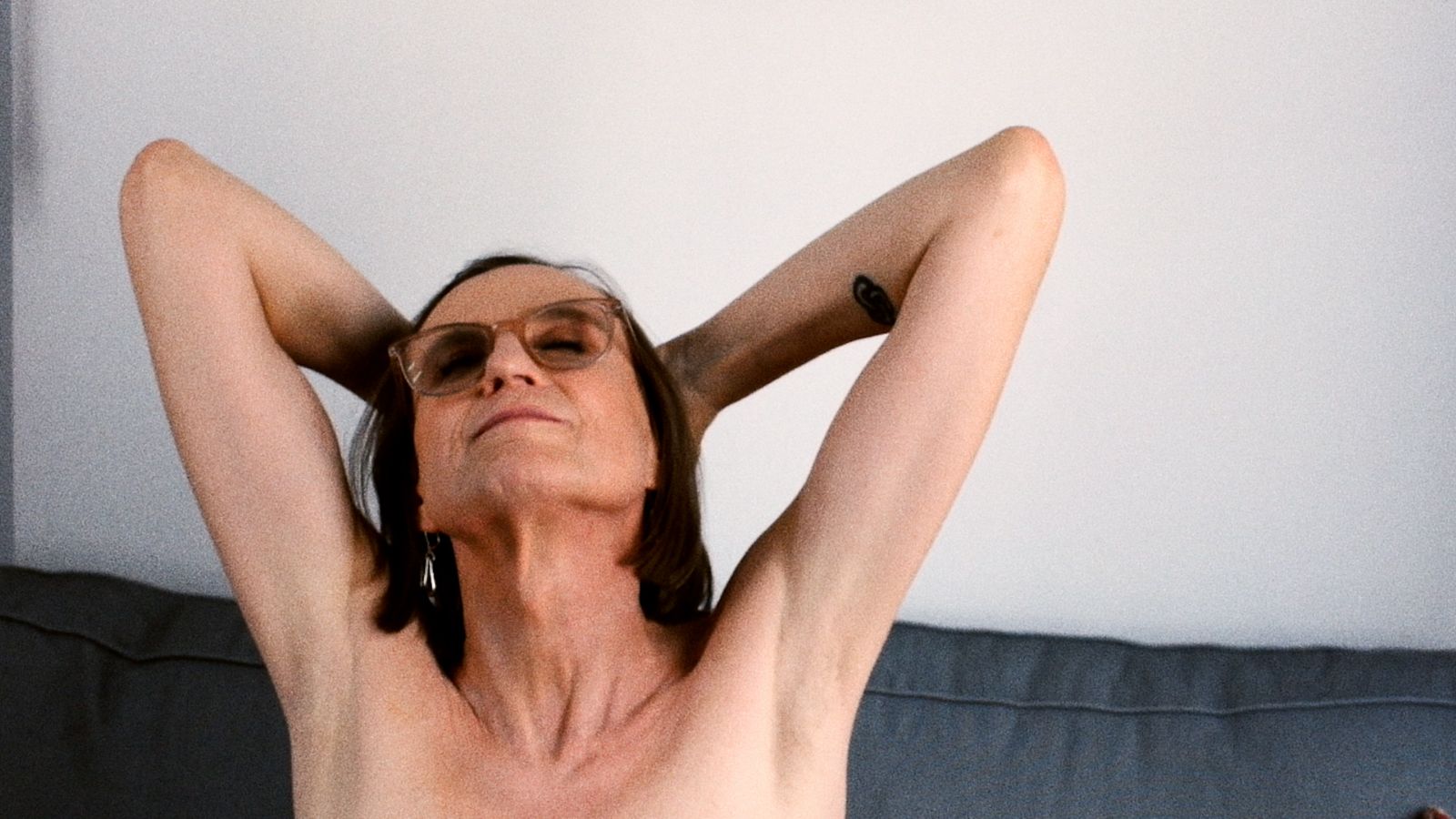
Life Story
What does it mean to you to show your film at New Directors/New Films?
Enrique Pedráza-Botero: It’s quite surreal—I’ve been following the festival for so many years. I’ve seen some truly daring work there. I went to film school in New York and it’s very cool I get to show my work at MoMA and Lincoln Center.
Kevin Walker: Screening at ND/NF is incredibly meaningful to us—during our time in NYC, we’ve really considered Film at Lincoln Center a second home, and have seen more movies at MoMA than we can count. To screen our film at each venue is completely surreal and genuinely feels like a dream come true.
Maureen Fazendeiro: It is a great honor.
Camille Vigny: It is a huge honor and joy. It is the first time any of my films have been shown in the U.S.
Daphné Hérétakis: Since I was kid I dreamed of going to New York since it’s a city I feel close to me because of its representation through cinema and films I love. Showing my film at New Directors/New Films is like a dream come true.
Julia Sipowicz: Screening at ND/NF proves to me that dreams can come true. I’m honored to be recognized in such high esteem, and I’m taking it as a sign that I am where I am meant to be, doing what I am meant to be doing.
Daniel Asadi Faezi and Mila Zhluktenko: Our film’s narrative is also based on the story of 1983 film Addressee Unknown, by Iranian director Sohrab Shahid Saless, whose films dealt a lot with racism in the German society. His films also have been shown at ND/NF, so for us it’s a huge honor to be able to show our films at the same place he and many other inspiring filmmakers have been presented before.
Jessica Dunn Rovinelli: Honestly, I’ve dreamed of this since I moved to New York. You’d think 10 years of directing cinema might have dampened that dream, but honestly, it thrills me as much as ever.
Alisha Tejpal, Mireya Martinez, and Anoushka Mirchandani: It goes without saying that we are honored and deeply flattered to be included in this year’s program. But above all we are grateful to sit beside filmmakers who comprise a filmmaking lineage as vast as ND/NF!
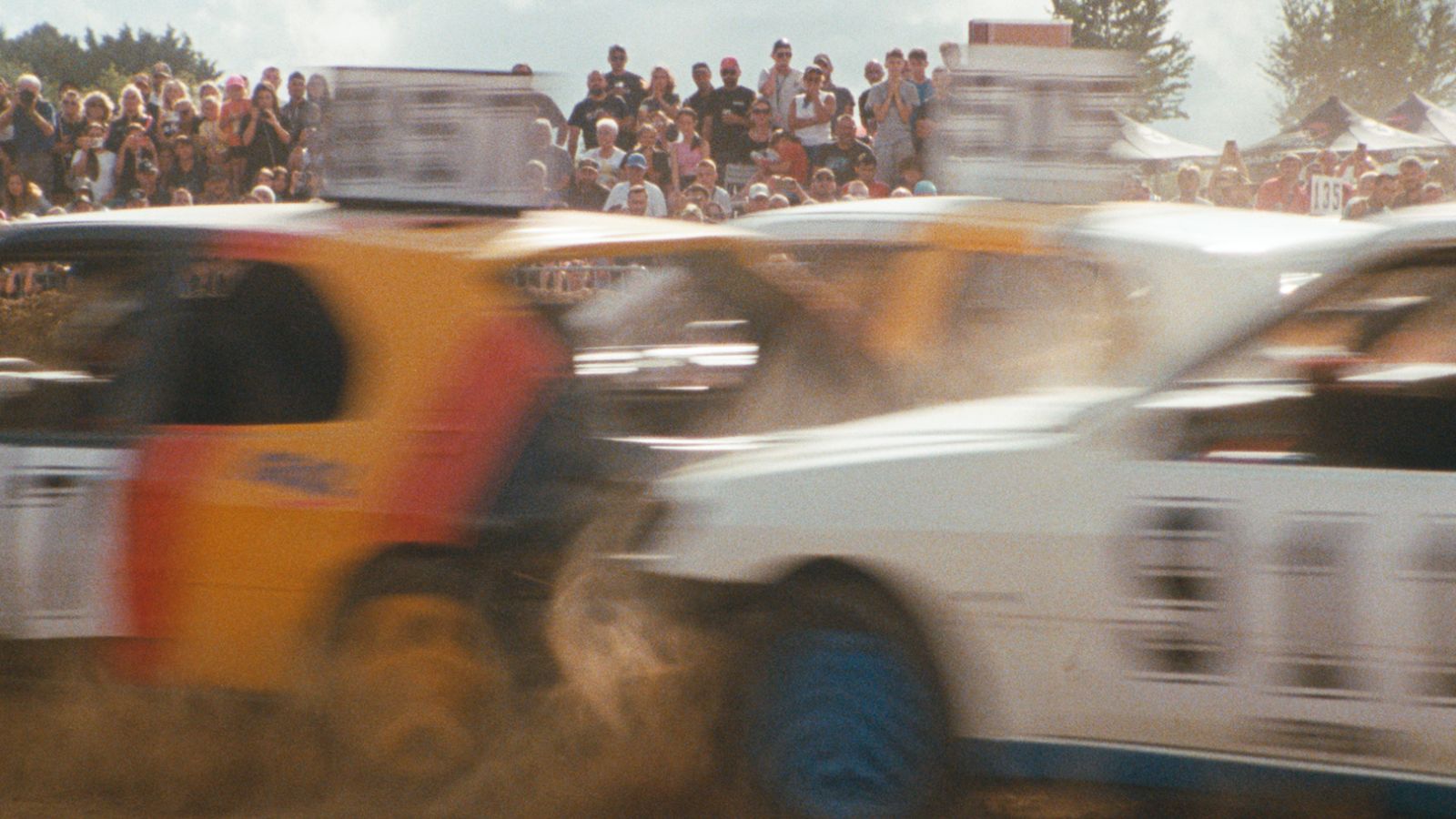
Crushed. Courtesy of Dérives.
What was the biggest lesson you learned during the making of your film?
Enrique Pedráza-Botero: Editing is very, very hard. Also, a long time away from the edit is very, very good.
Kevin Walker: For me, generating an admixture of documentary and fiction in the way we did was a significantly more delicate and meddlesome process than I anticipated. Asking people to instrumentalize their REAL life for the purposes of our harebrained project is an extremely intimate and bizarre request, and the process can conjure up difficult memories for people—memories which weren’t necessarily ours to dredge up. Thankfully, the subjects of the film have responded very positively to the experience of the shoot and to the finished product. For our next at-bat in the realm of docufiction, though, I’m going to approach its more invasive qualities with a little more caution.
Irene Zahariadis: I learned that people can surprise you in a good way; so many people were eager to help with this project.
Maureen Fazendeiro: Be persistent.
Camille Vigny: To understand the balance between what you need to prepare minutely for the film, and to trust the unexpected to happen at the right time and be able to seize it.
Daphné Hérétakis: Trusting my gut and trusting the process.
Julia Sipowicz: I learned how to ask for and accept help. I made this film with my friends and most of the budget was funded through a big community effort. I never could’ve done it without all the people (about 100?? some strangers!) who donated, supported, advised, gave discounts, watched edits, listened to me complain, and celebrated with me when things went well. Maidenhair is very special. I am so lucky and so grateful.
Jessica Dunn Rovinelli: Sometimes, you just make a film. I’d theorized every film before this so deeply, anguished over concepts, but here I let myself make this almost on autopilot, just doing the things that come easy to me my in my film style. I thought that would make for a film that underwhelmed me, and yet, it’s one of my favorites.
Anoushka Mirchandani: To be open to all the different directions the making of this film took us, to be patient as it unfolded and revealed itself to us, that eating too many Alphonso mangoes never gets old, and to be gentle towards the very strong women who have shaped us.
Mireya Martinez: More than a lesson, a couple reminders: That each film is its own entity. That you cannot force serendipity, but can invite it.
Alisha Tejpal: To trust my gut. To lean into play.
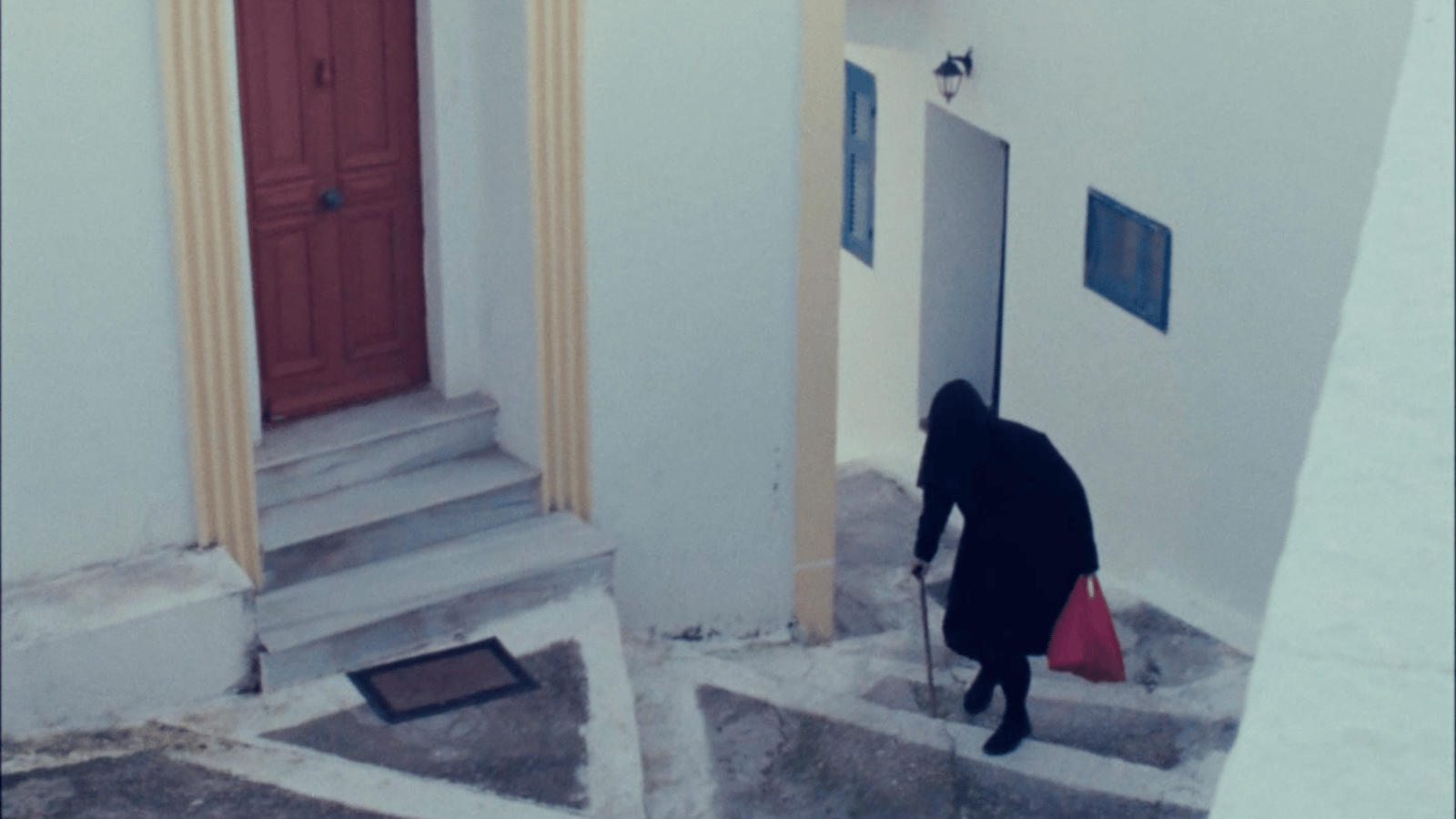
Things Hidden Since the Foundation of the World. Courtesy of Gargantua Film.
What is the best piece of advice you’ve ever been given?
Enrique Pedráza-Botero: Work like a gardener.
Kevin Walker: Be swift to hear, slow to speak!
Irene Zahariadis: You’re never stuck anywhere.
Maureen Fazendeiro: Follow your intuition.
Camille Vigny: To first look at what you want to film with your own eyes, body, and emotions. Away from any camera or frame. You will then know for sure the right place to be.
Daphné Hérétakis: To drink a lot of water.
Julia Sipowicz: Ask for forgiveness instead of permission.
Jessica Dunn Rovinelli: Say “I’m a director,” when someone asks “what do you do?” if that’s something you want to do. Even if you haven’t directed anything. Why not? In other words, “always act with the unearned confidence of a man.”
Alisha Tejpal: If you can’t go on a long vacation with your core collaborators on a project then they’re probably not your team.
Mireya Martinez: As a child, a dear aunt once advised me to read before doing my chores. It’s great advice.

Landscapes of Longing. Courtesy of Alisha Tejpal and Mireya Martinez.
What else do you enjoy doing outside of filmmaking?
Enrique Pedráza-Botero: Playing the drums.
Kevin Walker: I love spending my free time playing the guitar and learning languages.
Irene Zahariadis: I love writing and reading!
Maureen Fazendeiro: Reading, playing with my kids.
Camille Vigny: Day walking in the forest with my dog, night walking in the city with my friends, staring at the sky’s colors, dancing and making weird ceramic sculptures.
Daphné Hérétakis: Reading and gardening on my balcony.
Julia Sipowicz: I’ve been knitting a big scarf with fancy mohair that I’ll keep forever.
Jessica Dunn Rovinelli: Dancing and sex.
Alisha Tejpal: Cooking, which to me feels very much akin to filmmaking! I’m also a closeted painter and ceramicist.
Mireya Martinez: I love cooking and reading about food. I occasionally watercolor and love the contemplations it has led me to.

In Retrospect / Rückblickend betrachtet
What’s a film you saw recently that you enjoyed?
Enrique Pedráza-Botero: I’ve been thinking a lot about Radu Jude’s Do Not Expect Too Much from the End of the World.
Kevin Walker: I was really fascinated by Sara Cwynar’s new film, Baby Blue Benzo.
Irene Zahariadis: I watched The Hours for the first time recently and loved it.
Maureen Fazendeiro: Trenque Lauren by Laura Citarella.
Camille Vigny: Dahomey by Mati Diop.
Daphné Hérétakis: Vulcanizadora by Joel Potrykus.
Julia Sipowicz: Go Go Tales by Abel Ferrara.
Daniel Asadi Faezi and Mila Zhluktenko: While researching for our film, we watched a lot of films by Sohrab Shahid Saless. His films were inspiring to us. Especially the fact that this migrant director, who was also a crucial part of the German New Wave, nowadays is almost forgotten. We, as migrant directors in Germany ourselves, see a lot of interesting parallels, in how he saw and portrayed the country in the ’70s and ’80s, to us working here nowadays.
Jessica Dunn Rovinelli: Castration Movie by Louise Weard.
Mireya Martinez: Bird directed by Andrea Arnold.
Alisha Tejpal: Dahomey directed by Mati Diop.
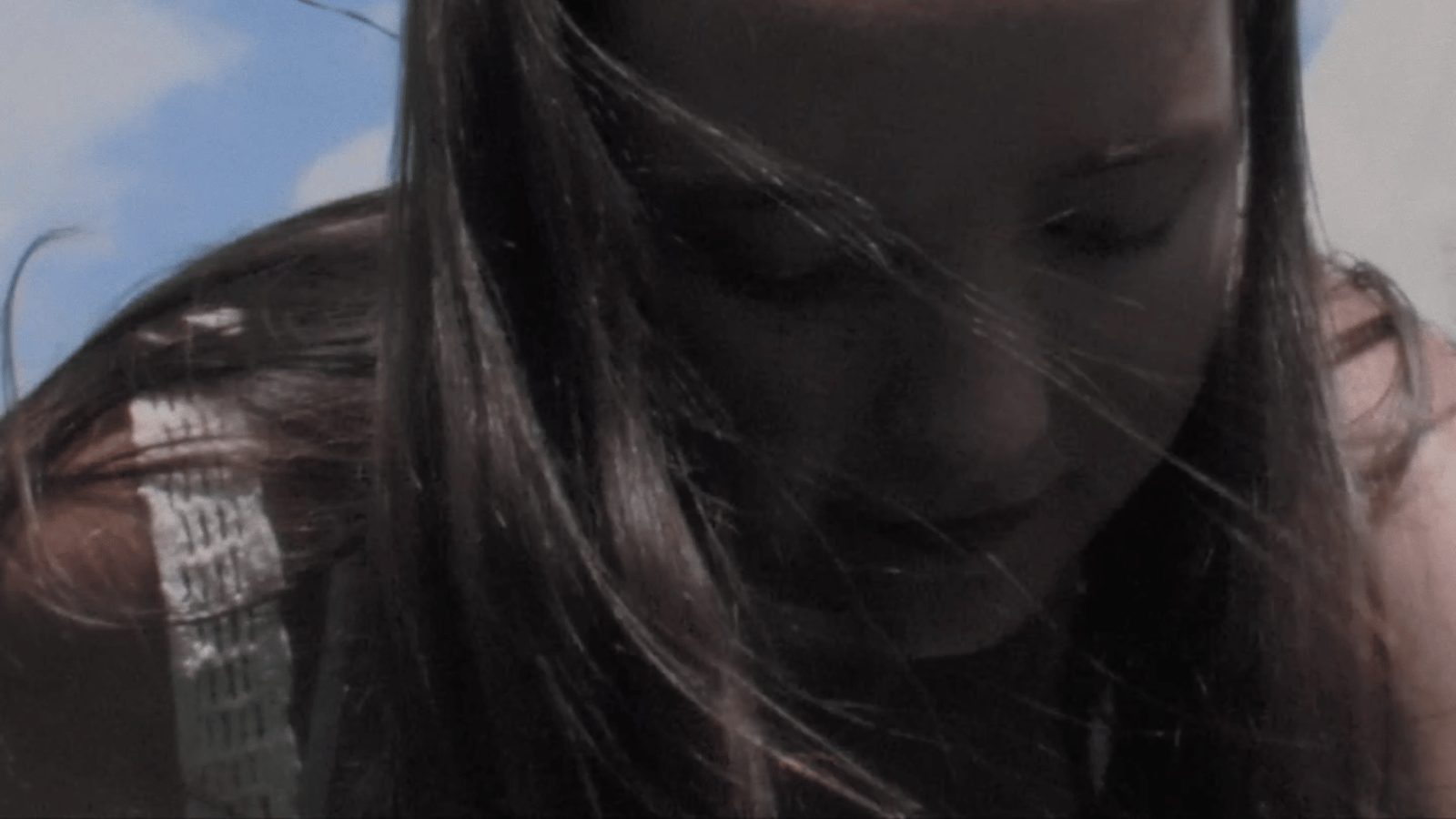
Maidenhair. Courtesy of Raine Roberts.
ND/NF 2025 Shorts Program I screens on April 9 & 10. ND/NF 2025 Shorts Program II screens on April 11 & 13.
New Directors/New Films takes place April 2–April 13. Explore the lineup and get tickets.


