Film Comment Selects 2018
Film Comment’s movie showcase returns in its 18th edition with a selection of titles curated by the magazine’s editors, offering strikingly bold visions, mixing New York premieres of new films and long-unseen older titles that deserve the big-screen treatment.
"This cinematic showcase is devoted to the underseen, the avoided, and the cast-off." - Village Voice
Antonio Mendez Esparza
2017|
U.S. / Spain|
114 minutes
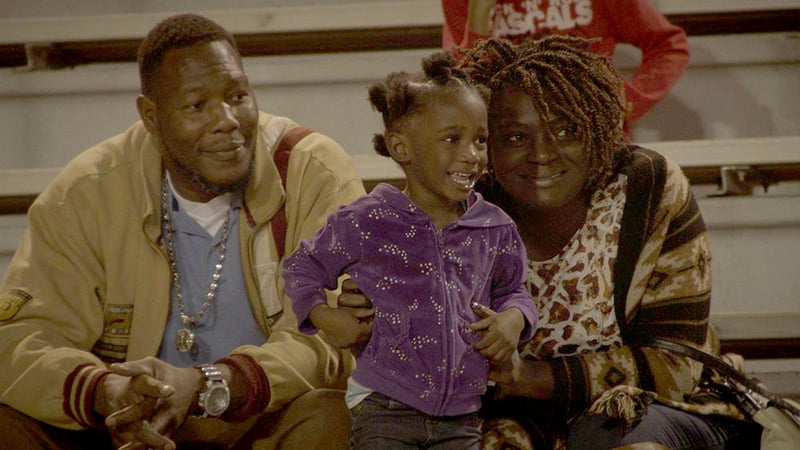
“The African American single mom and teenage son at the center of this drama are lifelong residents of northern Florida but remain, at best, provisional citizens of their own country. Rendering characters they developed in tandem with their director, these non-professional but astoundingly gifted performers convey so much of what matters in so many working-class black lives.” —Nick Davis, TIFF 2017 online coverage
Rok Biček

2017|
Slovenia / Austria|
106 minutes
“Slovenian director Rok Biček started The Family as a film-school student and proceeded to film a life in full: a boy, Matej, seen growing up, watching his father die and becoming a father himself, breaking up with his girlfriend, and battling her for child custody. A twist on observational cinema, Biček’s portrait of the anti-heroic young man defies stereotypes of working-class and dysfunctional families, refrains from passing moral judgments, and retains an open fondness of his subject.” —Tina Poglajen, Nov/Dec 2017 issue
Govinda Van Maele

2017|
Luxembourg / Belgium / Germany / France|
107 minutes
“A stranger wends through twilit wheat fields in the exquisite opening moments of Govinda Van Maele’s fiction feature debut [starring Phantom Thread’s Vicky Krieps] … By the following morning he’s courted by an elder who finds him a gig and lodging—and then Gutland quietly maunders from folktale to pastoral noir to Polanski-esque uncanny and, finally, back to folk tale. Call it a ‘village film,’ with an eerie ambiance of secrets, insularity and sinister solidarity.” —José Teodoro, Nov/Dec 2017 issue
Wang Bing
2017|
China|
86 minutes
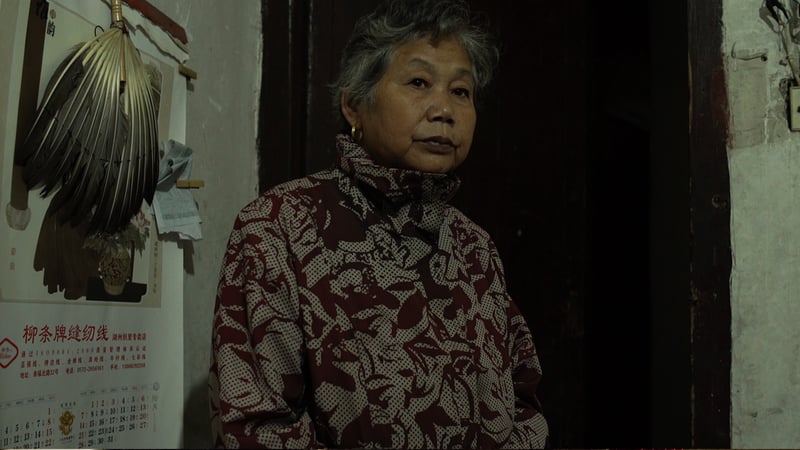
“Wang Bing’s latest documentary trains its camera very tightly on the face of a bedridden elderly woman suffering from Alzheimer’s in a small rural Chinese village. For a while, it seems as though Mrs. Fang is content to use the camera as a tool to unflinchingly record a human being close to her final breath. Yet Wang Bing is after something completely different, as the filmmaker goes into different territory, somehow more and less tangible than a portrait of dying.” —Michael Koresky, Toronto Film Festival 2017 online coverage
Ildikó Enyedi

2017|
Hungary|
116 minutes
Winner of the Golden Bear at Berlin, Ildiko Enyedi’s visually imaginative film embellishes upon the highs and lows of an oddball romance with exuberant abandon. Film Comment celebrated Enyedi’s “ludic, freewheeling storytelling” with last year’s home-video release of her 1989 favorite My Twentieth Century, and her newest marks a triumphant return.
Katharina Wyss

2017|
Switzerland / Germany|
86 minutes
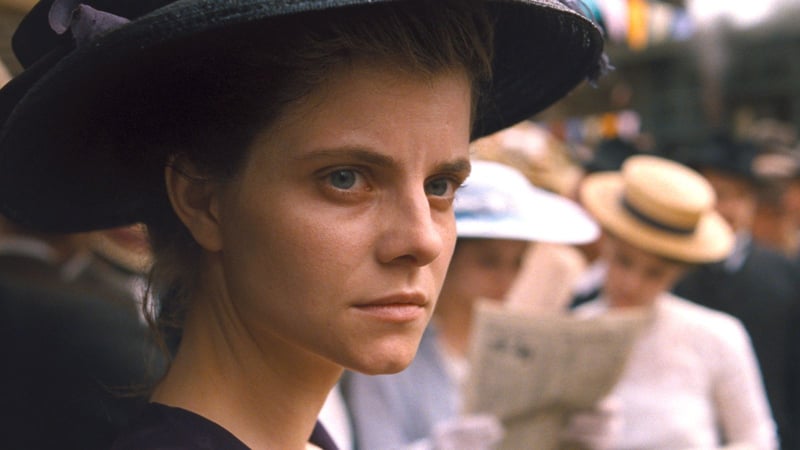
“Berlin-based Katharina Wyss’s heady debut feature centers on Sarah, a young woman channeling her powerful depth of feeling into the artistic and psychological outlet of theater. As the 17-year-old protagonist in a staid Swiss town, Loane Balthasar is unnervingly transparent, giving herself over to her character—and, like Sarah, 20 times more present than anyone around her. The film’s title captures a life fraught with energy.” —Nicolas Rapold, Jan/Feb 2018 issue
Tom Joslin

1993|
U.S.|
99 minutes
“Silverlake Life is about a couple, and one of the guys is filming his boyfriend, who is ill and dying. I didn’t want to represent the disease too much [in BPM (Beats Per Minute)], because I thought it was so real in Silverlake Life. I didn’t want to make the same thing because you can’t do more than this film, because it was real and it’s a very, very moving film. I love it so much.”—Robin Campillo, director of BPM (Beats Per Minute), July/Aug 2017 issue
Bertrand Mandico

2017|
France|
110 minutes
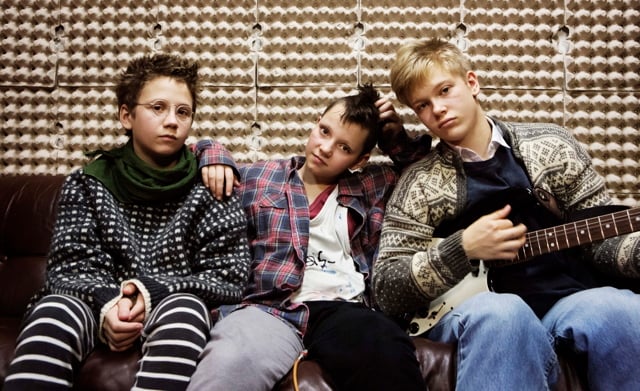
“Some might be quick to suggest Mandico’s similarities with Guy Maddin due to his new film’s whacked-out narrative, alienating use of studio sets, and brusquely outré acting. Exiled teenagers are sentenced to hard labor on a mysterious island, left to their own devices and then transformed… All the teens are played by actresses, with ever-fearless, weather-beaten Elina Löwensohn leading the way. Little else in 2017 was quite as exhilarating, eye-popping, intoxicating, seductive, carefree, funky, sexy, and fun.” —Olaf Möller, Jan/Feb 2018 issue
Five Films by Nico Papatakis
“It’s become a cliché to call a filmmaker ‘rebellious,’ but from Gance to Eisenstein to Pasolini to Buñuel, the 20th century saw true rebels who fiercely defied both the cinematic and political establishments of their time. Nikos Papatakis (1918- 2010)—nicknamed Nico in France—holds a profound and unique place in this lineage through a body of work that blends anarchic fury with visceral and transcendent poetry. Born in Addis Ababa to an Ethiopian mother and a Greek father, Papatakis was an outcast by nature, mocked and ostracized as a child for being biracial. Deeply rooted in personal experience, Papatakis’s films are politically, morally, and formally subversive explorations of race, gender, and class that use the medium as a vehicle of opposition and dissent.” —Yonca Talu, Sept/Oct 2017 issue
Nico Papatakis

1963|
France|
94 minutes
This allegorical portrait of the Algerian resistance was inspired by the real-life story of the Papin sisters, two maids who brutally murdered their employers in 1930s France—also the basis for Jean Genet’s influential 1947 play The Maids and Claude Chabrol’s 1995 psychological thriller La Cérémonie.
Nico Papatakis

1967|
Greece|
121 minutes
The Shepherds of Disorder (Thanos and Despina) juxtaposes an anthropological and materialist study of a rigid rural community with the mythologically imbued, forbidden romance between a rebellious shepherd and the angelic and compliant daughter of a rich conservative family, engaged in an erotically charged power game.
Nico Papatakis

1976|
France|
116 minutes
Papatakis’s most psychedelic and intellectually challenging film, Gloria Mundi, a virulent denunciation of consumer capitalism and a hypocritical left-wing intelligentsia that deems itself political but does not take any action, begins with a scream and ends with an explosion.
Nico Papatakis

1986|
Greece / France|
112 minutes
Papatakis’s most accessible, gripping, and poignant work is a meticulously crafted, intimate meditation on immigration and exile centering on a 26-year-old Greek man fresh out of prison (where he was tortured for being a communist’s son) who leaves for France in hopes of a better life, and where he strikes up a complicated friendship with a distant relative.
Nico Papatakis

1992|
France|
119 minutes
The director’s final film—starring Michel Piccoli as a fictional version of Papatakis’s friend Jean Genet—is a compendium of the themes and motifs that pervade his distinctive filmography, including the torturous nature of love, the suffering induced by exile, and suicide as an act of rebellion.
Free Talk
Not able to attend? Subscribe to The Film Comment Podcast to listen.

Inspired by the opening night selection of the series, Life and Nothing More, Editor-in-Chief Nicolas Rapold will moderate a talk about representations of race in American and international cinema.
Film Comment’s movie showcase returns in its 18th edition with a selection of titles curated by the magazine’s editors, offering strikingly bold visions, mixing New York premieres of new films and long-unseen older titles that deserve the big-screen treatment. It’s a festival The New York Times called “a combination of under-the-radar art house entries and idiosyncratic revivals that reliably deliver an atmosphere of cutting-edge eclecticism.” Synopses below written by Film Comment contributors.
Organized by Madeline Whittle and Film Comment magazine staff.
Acknowledgments:
With the kind support of the Consulate General of Switzerland in New York and Swiss Films. Special thanks to Manuela Papatakis.
Special offer for Film Comment Selects attendees! Receive $10 off any print subscription to Film Comment magazine and a free one-year digital subscription. Redeem here.
Listen to Michael Koresky and Nicolas Rapold preview the series on The Close-Up: