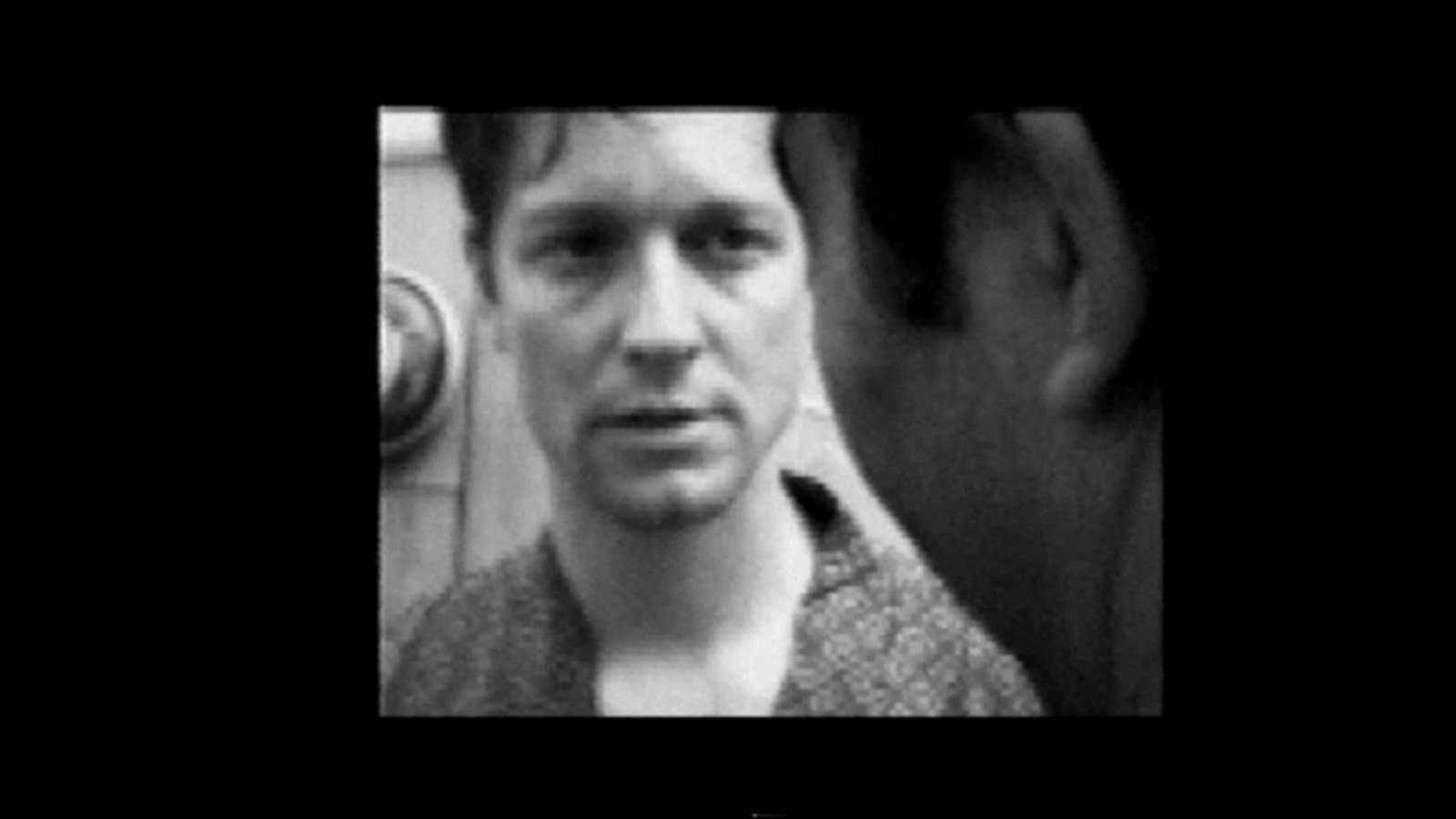
Program 2: The Rocking Horse Winner + Another Girl, Another Planet
Flat Is Beautiful: The Strange Case of Pixelvision
August 10 - 16, 2018
“The pixel camera practically forces you to be reckless and original,” once wrote Michael Almereyda, who would use the lo-fi apparatus to memorable effect in The Rocking Horse Winner, his contemporary take on the classic D. H. Lawrence story, and his impressionistic study of a young man, Another Girl, Another Planet.
“The pixel camera,” Michael Almereyda once wrote, “practically forces you to be reckless and original. If you’re shooting something at a distance, with a crowded background, detail goes out of the window; you might as well be using a bank camera. So it’s necessary to compose shots with an eye toward compressed space, to stage action with an awareness of how silhouettes register and relate to one another, and to favor close-ups, which the camera delivers with startling detail.” He would use the lo-fi apparatus to memorable effect in The Rocking Horse Winner, his contemporary take on the classic D. H. Lawrence story about a fey child with a talent for playing the ponies, as well as in Another Girl, Another Planet, an impressionistic portrait of a young man, his downstairs neighbors, and the many women who drift in and out of his romantic orbit. Set against a backdrop of cramped apartments and dusky dive bars in the early-nineties East Village, it’s a film rich with tenebrous lensing and evocative voiceovers, not to mention an unerring feel for musical accompaniment. Downtown anomie has never looked better.
The Rocking Horse Winner
Michael Almereyda, USA, 1997, 23m
Another Girl, Another Planet
Michael Almereyda, USA, 1992, 16mm, 56m
Programmer Thomas Beard on Pixelvision, the “Underappreciated Flipside of ’90s Indie Cinema”:
I bought a PXL 2000 on eBay years ago, back when I was in college, but unfortunately I could never get it to work. The Pixelvision camera was kind of legendary, a plastic camcorder for kids put out by Fisher-Price in the late ’80s that recorded its ghostly, low-res images onto a regular audio cassette. As a toy, the PXL 2000 was rather a bust, yanked from the shelves after only a year—they were too expensive, they were temperamental—but the story of Pixelvision doesn’t end there. It had a look like nothing else, a dreamy visual texture, fuzzy as a faded memory, and the format had a surprise second act in the hands of experimental filmmakers, who used the device to shoot some truly remarkable movies, like Michael Almereyda’s Nadja, a wry riff on the vampire picture, or Sadie Benning’s teenage bedroom tapes, which, in my estimation, are among the most moving and imaginative records of queer adolescence ever made.
Over the years there have been a number of one-off Pixelvision screenings, but nothing this comprehensive, and many of the titles aren’t currently available on DVD or Netflix, so if you’re intrigued by the curious afterlife of the PXL 2000 and the challenging, strangely beautiful films it captured, now’s the time to check them out. Think of this series as the underappreciated flipside of ’90s independent cinema.
Read More
Kamal Aljafari on With Hasan in Gaza and ‘The Camera of the Dispossessed’
Our 63rd New York Film Festival Talks featured a special conversation with With Hasan in Gaza director Kamal Aljafari, moderated by Film Comment editor Devika Girish.

Lucrecia Martel on Our Land (Nuestra Tierra), the Filmmaker’s First Feature Documentary
On the latest episode of FLC Luminaries, our video series that spotlights talent at all levels of the filmmaking process who uplift the art and craft of cinema, Our Land (Nuestra Tierra) director Lucrecia Martel discusses her expansive and enlightening first feature documentary.

Carla Simón on Her Poignantly Autobiographical Romería
This week we’re excited to present a conversation from the 63rd New York Film Festival with Romería director Carla Simón, moderated by NYFF Main Slate selection committee member Florence Almozini.


