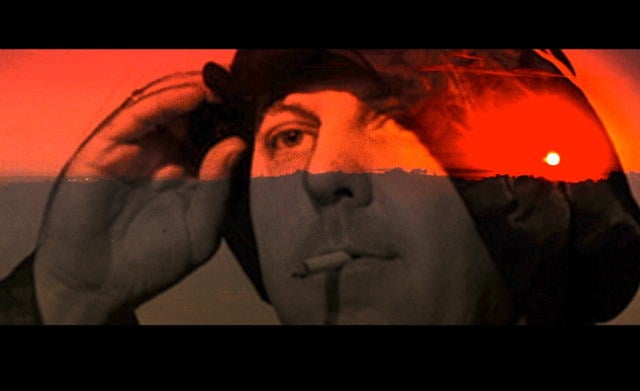
Program 2: Travis Wilkerson – Los Angeles Red Squad
NYFF51: Views from the Avant-Garde
October 3 - 7, 2013
Los Angeles Red Squad: The Communist Situation in California (Travis Wilkerson, USA, 2013, 70m)
Screening with:
Redemption (Miguel Gomes, Portugal/France/Germany/Italy 2013, 26m)
“Beauty can be a revolutionary force.
They may own everything but they can’t own beauty.
I had written a screenplay, a historical narrative with actors and costumes, about the Los Angeles Red Squad of the Red Hynes era. Red Squad was the popular name for the anti-radical divisions of Police Departments found all over the country. I had done a ton of research, but in fact it was mostly a black comedy even if everything was also true. Something Keystone Kops about it even.
But the film would require money But then it occurred to me that I did have resources. I had already done a ton of research and writing, and that the locations were all, more or less, within a few subway stops.
I had a camera I loved, and an anamorphic lens that I’d been itching to use for years. I had a shotgun microphone I bought for a project ten years ago that sounds beautiful. I had nearly a decade’s worth of audio from demonstrations in Los Angeles and actually even around the world, mostly made with that microphone. I also had an amazing partner who helped me in any way she could and over and over again.
And so I just made the movie.
I have a problem with self-imposed rules, convinced above all else that limitations fuel innovation so of course I came up with a list.
Don’t spend any money. Use things you already have.
Likewise, locations must represent themselves. Enough with smoke and mirrors. The world itself is more than adequate.
Use one lens: 100mm, anamorphic.
Avoid visual clichés of Los Angeles if humanly possible. Just because the city is one of the most photographed doesn’t mean most of it has been photographed. Much less photographed well.
Balance contemplation with rupture. History is always punctuated equilibrium.
Compress and elongate time. Constantly strive to connect past with present and present with past.
Use sound in imaginative ways to add past and future dimensions.
Poetic repetition, in the literal sense.
Text is embedded in the landscape.
Therefore, text strictly as image.
Therefore, text from archives, not character generators.
It’s still a black comedy. Funny as hell.
But most of all…
Never once concede beauty. Beauty is an unequivocal demand.
In making this work, I had to concede a great deal. Because of resources, I had to change my film from a narrative to documentary, from actors to documentary street scenes, from crew to one man band, from being paid to labor of love.
And so one thing I simply wouldn’t budge on is beauty. I had a right to beauty. No one could take it away. I refused to make an ugly film about their ugly history. No way. Even if I didn’t have any money to make my film. Because beauty simply cannot be monopolized, thank goodness.
Many of the rules facilitate this goal. I’ve learned to play to my available strengths. The camera creates a lovely image. The lens makes something almost unworldly. Light and crispness fall away like memories at the edge of the frame. And the microphone creates absolutely stunning sound, intimate and alive, even when affixed to cheap recorders.
But still, the film was about ugliness. Violence and illegality and brutality and abuse. Isn’t that, as they say, aestheticizing violence? Isn’t this somehow disrespectful? Callous even?
To the contrary. I quickly realized, without actors or costumes but instead just the actual locations in the here and now that in fact I was filming the aftermath of violence. Or perhaps its premonition.
And in this space, beauty plays a rather different role.
The presence of beauty, the cultivation of beauty, in the aftermath of violence or abuse, is an act of almost militant defiance. It is a denial of the omnipotence of power. Expressions of beauty anywhere remind us that expressions of beauty are possible everywhere. Even in Governments, and Social Systems. Even when confronting war.
Another way to say it would be that beauty in the face of abuse is a constant affirmation of hope. And honestly, is there anything more radical than hope?
It’s in this context that beauty surely can be a revolutionary force.
And perhaps even more useful now than ever, when crisis is chased by crisis, horror by horror, and everyone is constantly telling you there’s nothing that can be done about it.
Of course there is. And beauty reminds me of that.”
-T.W.
Screening with: Redemption. Miguel Gomes, Portugal/France/Germany/Italy 2013, 26m

Read More
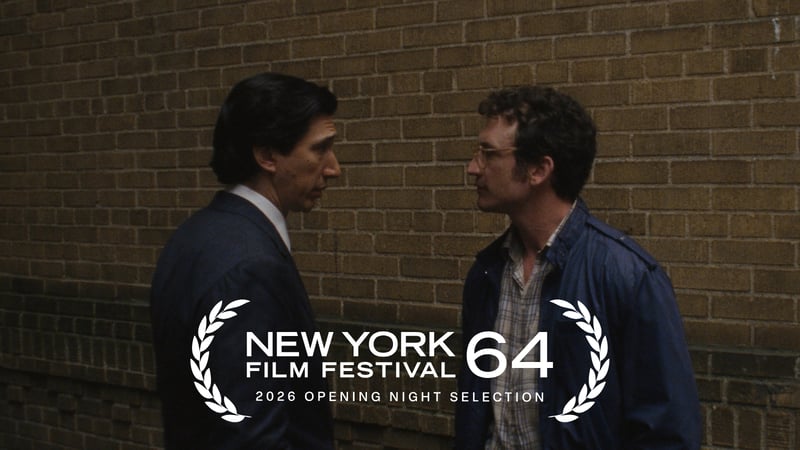
James Gray’s Paper Tiger Will Open the 64th New York Film Festival
FLC announces James Gray’s Paper Tiger as the Opening Night selection of the 64th New York Film Festival, presented in partnership with Rolex. The film will make its North American premiere in a gala debut at Alice Tully Hall on Friday, September 25, with Gray and members of the cast and crew in attendance.

Scary Movies XIV Brings Horror and Genre-bending Cinema to Film at Lincoln Center, August 12–20
Running August 12 through August 20, the 16-film festival will premiere new works alongside special presentations of spine-tingling classics and rediscoveries conjured from the dark recesses of midnight-movie lore, with filmmakers and special guests appearing for post-screening Q&As.

Lana Daher on Her Documentary Do You Love Me
This week we’re excited to present a conversation from the 2026 edition of New Directors/New Films with Do You Love Me director Lana Daher.


