
The Prop: There’s Always Tomorrow + The Pawnshop
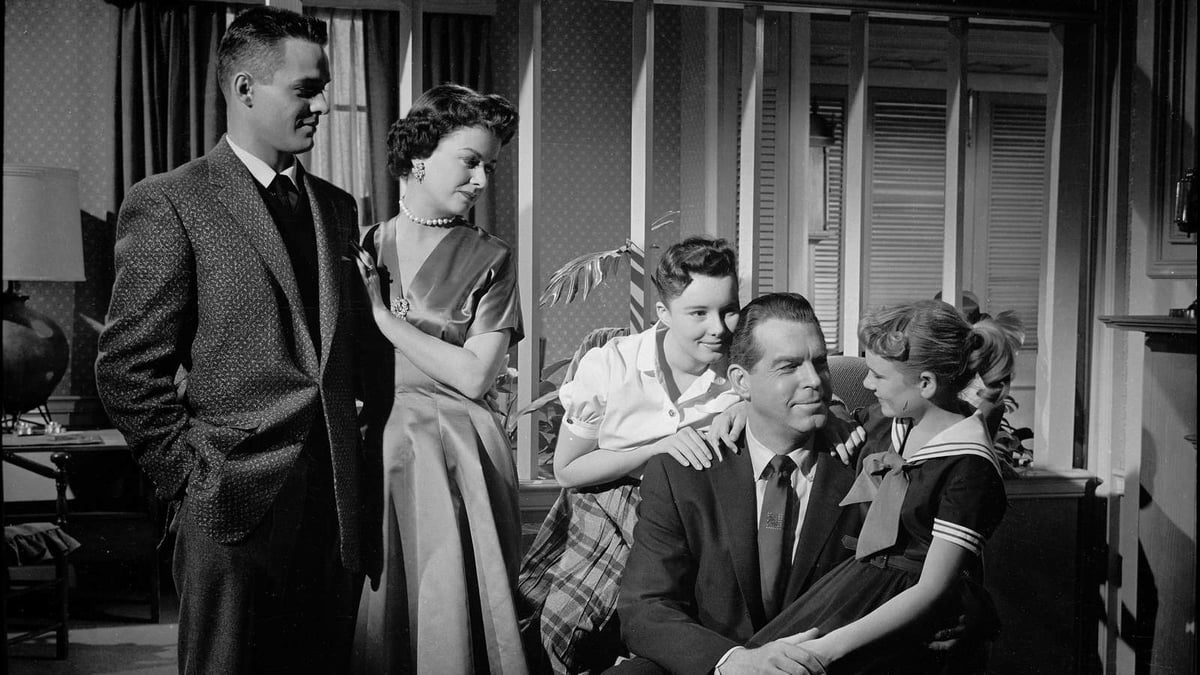
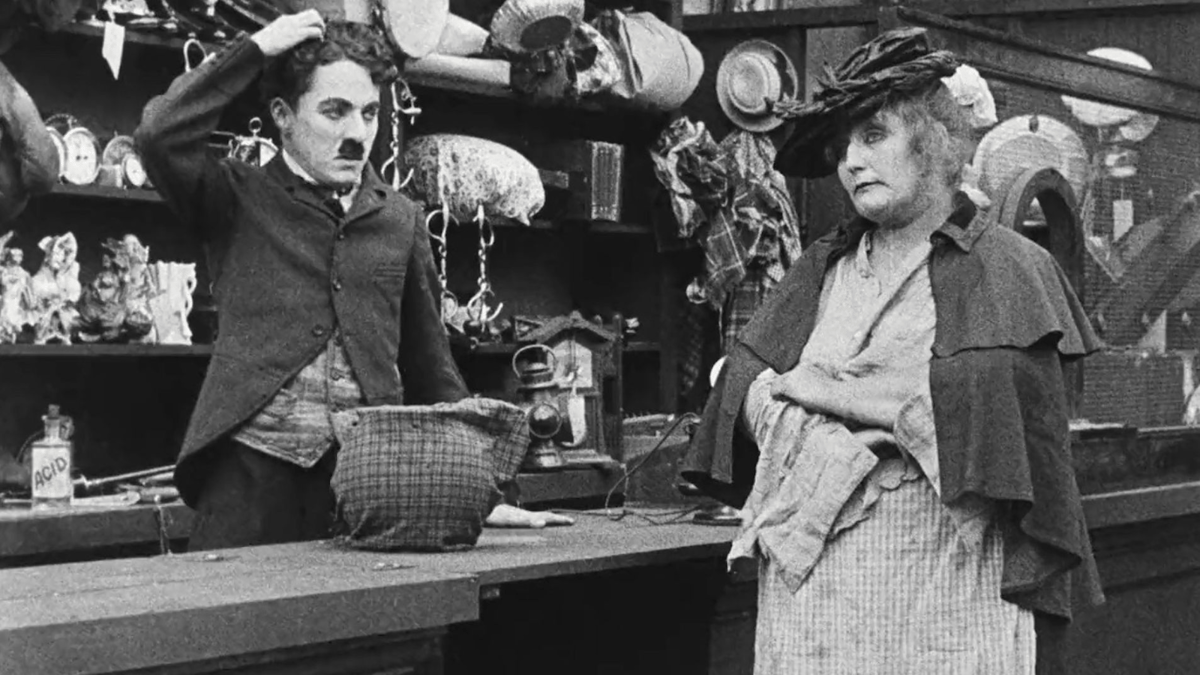
On the occasion of the publication of the new book The Prop, join FLC for a special screening of Douglas Sirk’s There’s Always Tomorrow on 35mm and Charlie Chaplin’s The Pawnshop, followed by an onstage conversation between authors Elena Gorfinkel and John David Rhodes and editor Genevieve Yue, followed by a book signing.
Copies of The Prop by Elena Gorfinkel and John David Rhodes will be available for purchase (and to be signed) at the screening.
What are film props? What do they do? Elena Gorfinkel and John David Rhodes’s new book The Prop (the first in the “Cutaways” book series edited by Erika Balsom and Genevieve Yue, published by Fordham University Press) attempts to answer these questions by a close attention to those material objects that are used to construct cinematic worlds. On the occasion of the publication of The Prop, join FLC for a special screening of Douglas Sirk’s There’s Always Tomorrow on 35mm and Charlie Chaplin’s The Pawnshop, followed by an onstage conversation between Gorfinkel, Rhodes, and Yue, followed by a book signing.
In There’s Always Tomorrow (1956, 84m), Douglas Sirk delivers a devastating takedown of 1950s family values in this caustic domestic nightmare disguised as a romantic melodrama. Fred MacMurray stars as a browbeaten L.A. toy manufacturer whose insufferable children and ineffectual wife (lent nice depth by Joan Bennett) drive him into the arms of a fashion-designer old flame (Barbara Stanwyck). Sirk’s visual coup is the indelible image of a wind-up toy robot (a not-so-subtle metaphor for MacMurray) marching obediently toward oblivion. Ultimately, the film makes the jaw-dropping case that infidelity can be a justifiable escape from the suffocating boredom of domesticity—but that it, too, may only offer the illusion of happiness.
In this typically masterful slapstick miniature The Pawnshop (1916, 25m), Charlie Chaplin is a pawnbroker’s assistant who contends with disapproving coworkers, demanding customers, and a would-be thief.
About The Prop:
The term “prop” is short for property. This truncated term’s etymology belies the expansiveness of its concept and indicates the micro and macro scales at which the prop operates. Props are the material—often literal—furniture of cinema’s animacy reality. Props are also narrative agents: think of the animacy of props in Jean Epstein’s account of photogenie, the coffee cup in Hitchcock’s Notorious, or the domestic bric-a-brac of Douglas Sirk’s 1950s melodramas. The prop is central to the practice of production design and the construction of cinematic mise-en-scène. And yet, the prop has rarely—almost never—been taken as an object of analysis and theorization in its own right, or on its own terms. The “propness” of the prop—its liminal relation to narrative semiotics—has seemingly underwritten the prop’s relative obscurity in film history and theory.
This book begins by tracing the prop’s curious but unacknowledged role in film theory, before proceeding to a series of theoretical speculations and close readings that bring the prop into focus. Close readings of cinematic scenes of “prop mastery” demonstrate the labor that props perform and enable, as well as the interpretive work they make possible. Across a variety of genres, modes, and historical contexts—studio filmmaking, art cinema, adult and avant-garde films—The Prop introduces readers to the notion of “prop value”—a quality that puts the prop in proximity to the capitalist commodity, but also provides an ironic distance from the commodity’s subjection to exchange value. Gorfinkel and Rhodes argue that the prop—a privileged or not-so-privileged object—is a condensation of how notions of labor, subjection, value, and instrumentality underwrite the very conditions of the cinematic.
“A beautiful object in itself, Gorfinkel’s and Rhodes’ inspiring book brings to life the object in film. It gives the prop its deserved close-up and in doing so unravels a fascinating new way of looking at cinema.” – Joanna Hogg, director of The Souvenir
Elena Gorfinkel is Reader in Film Studies at King’s College London. She is the author of Lewd Looks: American Sexploitation Cinema in the 1960s (Minnesota, 2017) and Wanda (British Film Institute, 2025).
John David Rhodes is Professor of Film Studies and Visual Culture at the University of Cambridge. He is the author of Spectacle of Property: The House in American Film (Minnesota, 2017), Meshes of the Afternoon (British Film Institute, 2011), and Stupendous, Miserable City: Pasolini’s Rome (Minnesota, 2007).

Read More

James Gray’s Paper Tiger Will Open the 64th New York Film Festival
FLC announces James Gray’s Paper Tiger as the Opening Night selection of the 64th New York Film Festival, presented in partnership with Rolex. The film will make its North American premiere in a gala debut at Alice Tully Hall on Friday, September 25, with Gray and members of the cast and crew in attendance.

Scary Movies XIV Brings Horror and Genre-bending Cinema to Film at Lincoln Center, August 12–20
Running August 12 through August 20, the 16-film festival will premiere new works alongside special presentations of spine-tingling classics and rediscoveries conjured from the dark recesses of midnight-movie lore, with filmmakers and special guests appearing for post-screening Q&As.

Lana Daher on Her Documentary Do You Love Me
This week we’re excited to present a conversation from the 2026 edition of New Directors/New Films with Do You Love Me director Lana Daher.


