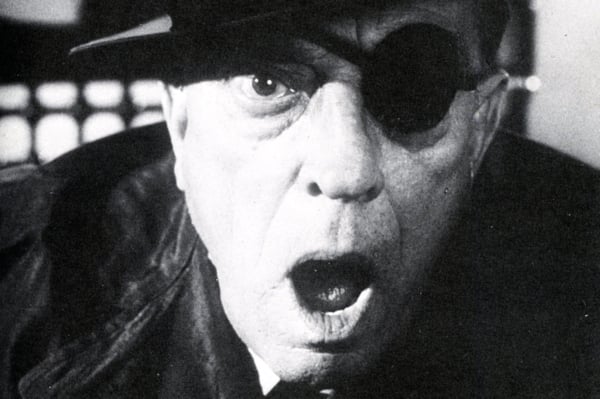
Waiting For Godot (Play of the Week)
After years of post-HUAC blacklisting, Zero Mostel enjoyed a career breakthrough in this Broadway-caliber staging of Beckett’s absurdist masterpiece.
screening with Samuel Beckett’s Film
Alan Schneider, 1965, USA, 35mm; 20m
Buster Keaton stars in Nobel Prize-winning playwright Samuel Beckett’s lone work for projected cinema. Preservation funded through the Avant-Garde Masters program funded by The Film Foundation and administered by the National Film Preservation Foundation.
Premiering in 1959 from WNTA-TV in New York, the ambitious television experiment Play of the Week presented an eclectic mix of plays that, according to series producer Lewis Freedman, “no one else would touch.” Produced on a modest budget of $45,000 per two-hour episode, notable stage actors including Dame Judith Anderson and Helen Heyes reportedly accepted scale to star in the sparse, videotaped productions that aesthetically resembled TV’s once prolific anthology programs (such as StudioOne and Goodyear Playhouse) that by the close of the 1950s had largely disappeared from the airwaves. Over the course of its acclaimed two-year broadcast run, Play Of The Week distinguished itself in the emerging TV wasteland by featuring top directorial talent, such as Sidney Lumet and Daniel Petrie tackling adaptations of significant works by the likes of Eugene O’Neill (The Iceman Cometh) and Anton Chekhov (The Cherry Orchard).
As an independently-produced and syndicated series, Play Of The Week was not subject to the same intensity of McCarthy-fed scrutiny as network television programs of the era. Thanks to progressive casting stances by producers such as David Susskind (and later, Worthington Minor), stage and screen actor Zero Mostel, who suffered years of unemployment for refusing to testify before the House Committee on Un-American Activities in 1955, enjoyed something of a career breakthrough after being cast in Play Of The Week productions of The World of Sholom Aleichem (1959) and Samuel Beckett’s absurdist masterpiece, Waiting for Godot (first staged in 1952). According to biographer Arthur Sainer, however, in reference to the direction of Godot by Beckett collaborator and confident Alan Schneider, Mostel reportedly humorously quipped that he “wished to be re-blacklisted.” Mostel’s playful critique aside, fifty years after first broadcast Play of the Week’s Waiting for Godot stands today as a significant example of the one of the last gasps of the “Golden Age” of television. From the production’s evocative direction and stage design to the Broadway-caliber performances of the distinguished cast, Godot exemplifies the potential heights the small screen could reach as a legitimate venue for meaningful and challenging dramatic arts.
—Mark Quigley, UCLA Film & Television Archive
UCLA Film & Television Archive holds original two-inch videoreel masters for every production of Play Of The Week (1959-61), except for “Waiting for Godot.” The tape master for “Godot” was deposited at Columbia University by publisher Barney Rosset as part of the Grove Press archives and has generously been provided to UCLA for restoration. The master was transferred by UCLA for preservation purposes at the CBS Media Exchange. Special thanks to: Gerald W. Cloud, the Columbia University Library, Evergreen Review, Michael Kantor, ALMO Inc., Barney and Astrid Rosset.
screening with
Samuel Beckett’s Film
Alan Schneider, 1965, USA, 35mm; 20m
Preservation funded through the Avant-Garde Masters program funded by The Film Foundation and administered by the National Film Preservation Foundation.
Nobel Prize-winning playwright Samuel Beckett’s lone work for projected cinema was entitled archetypally, Film, and grew from Berkeley’s pronouncement, esse est percipi: “To be is to be perceived.” Yet Beckett’s ontological concerns have less to do with the plastic medium than the nature of recorded and projected images. Film is in essence a chase film; arguably the craziest committed to celluloid. It’s a chase between camera and pursued image that finds existential dread embedded in the very apparatus of the movies. The link to cinema’s essence is evident in the casting, as the chased object is none other than an aged Buster Keaton, who was understandably befuddled at Beckett and director Alan Schneider’s imperative that he keep his face hidden from the camera’s gaze. The archetypal levels resonate further in the exquisite cinematography of Academy Award-winner Boris Kaufman, whose brothers Dziga Vertov and Mikhail Kaufman created the legendary self-reflective masterpiece Man With a Movie Camera (with the latter in the titular role). Commissioned and produced by Grove Press’s Barney Rosset, Film is at once the product of a stunningly all-star assembly of talent and a cinematic conundrum that asks more questions than it answers.
—Ross Lipman, UCLA Film & Television Archive
Preserved in cooperation with the British Film Institute from a variety of 35mm and 16mm prints. Laboratory services by Cinetech, Ascent Media, NT Picture and Sound, Dolby Laboratories, and Audio Mechanics. Special thanks to: the Academy Film Archive, Edward Beckett, Nicole Brenez, Les Éditions de Minuit, Evergreen Review, David Gray, Shawn Jones, Jonathan Lee, Irène Lindon, Bruce Mazen, the Pacific Film Archive, Barney and Astrid Rosset.
Read More
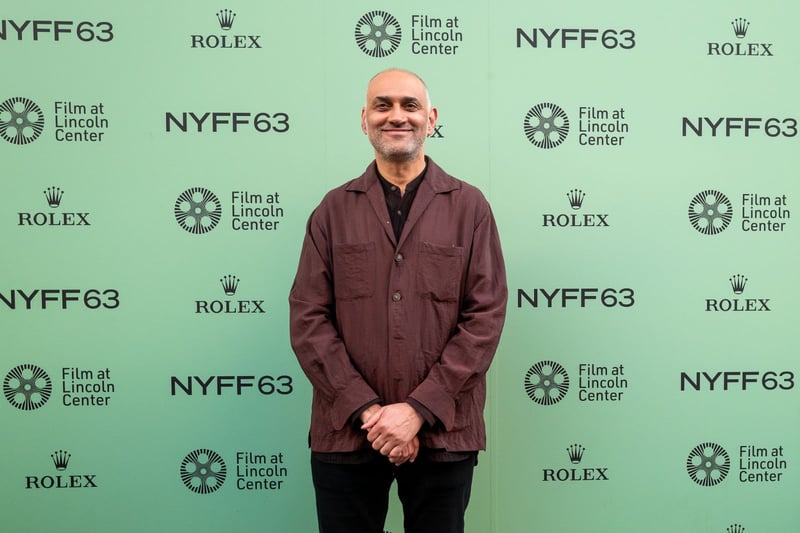
Kamal Aljafari on With Hasan in Gaza and ‘The Camera of the Dispossessed’
Our 63rd New York Film Festival Talks featured a special conversation with With Hasan in Gaza director Kamal Aljafari, moderated by Film Comment editor Devika Girish.
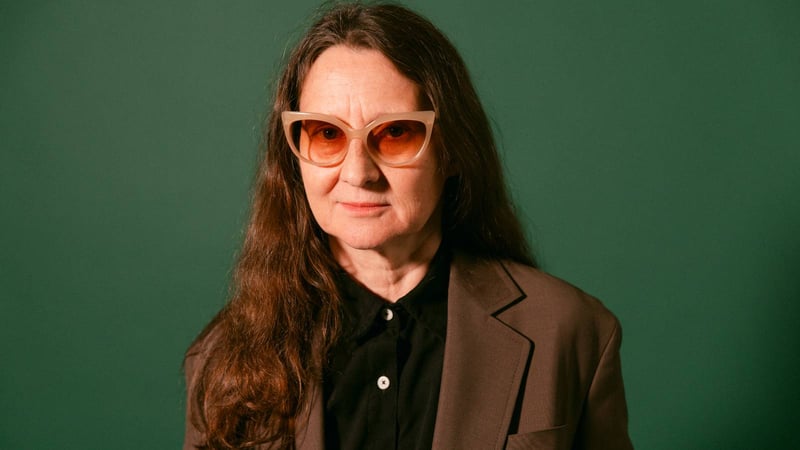
Lucrecia Martel on Our Land (Nuestra Tierra), the Filmmaker’s First Feature Documentary
On the latest episode of FLC Luminaries, our video series that spotlights talent at all levels of the filmmaking process who uplift the art and craft of cinema, Our Land (Nuestra Tierra) director Lucrecia Martel discusses her expansive and enlightening first feature documentary.
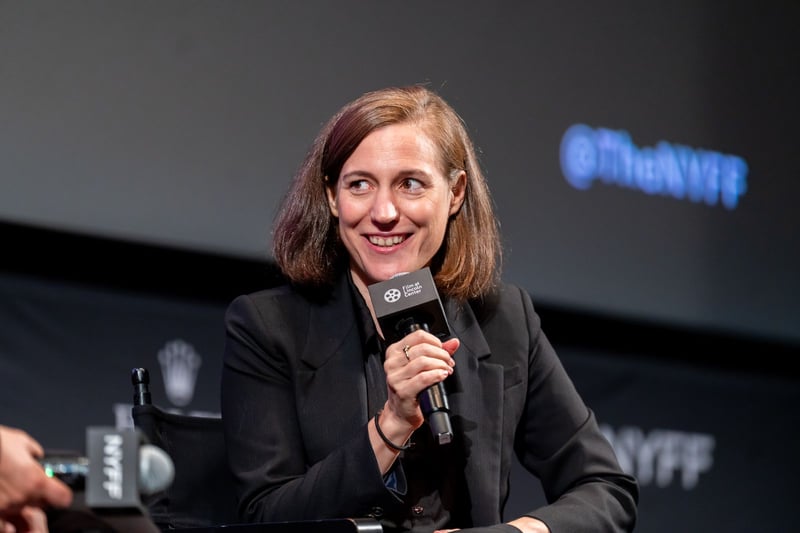
Carla Simón on Her Poignantly Autobiographical Romería
This week we’re excited to present a conversation from the 63rd New York Film Festival with Romería director Carla Simón, moderated by NYFF Main Slate selection committee member Florence Almozini.


