Meet the Filmmakers of the New Directors/New Films 2026 Shorts Programs
April 10, 2026

Buckskin Courtesy of Stella Rae Binion.
Exploring bold new works from filmmakers around the world, the 55th New Directors/New Films, the annual festival co-presented by Film at Lincoln Center and The Museum of Modern Art, is officially underway through April 19. As the festival continues, get to know the filmmakers who speak to the present and anticipate the future of cinema.
In a special spotlight on the filmmakers in this year’s two shorts programs, we hear from directors Renzo Cozza (Time to Go), Emma Hütt and Tina Muffle (Unleaded 95), Clément Pinteaux (Only Angels), Ananth Subramaniam (Bleat!), Mars Verrone (Buckskin), and El Mahdi L Youbi (Marseille, 14th July).
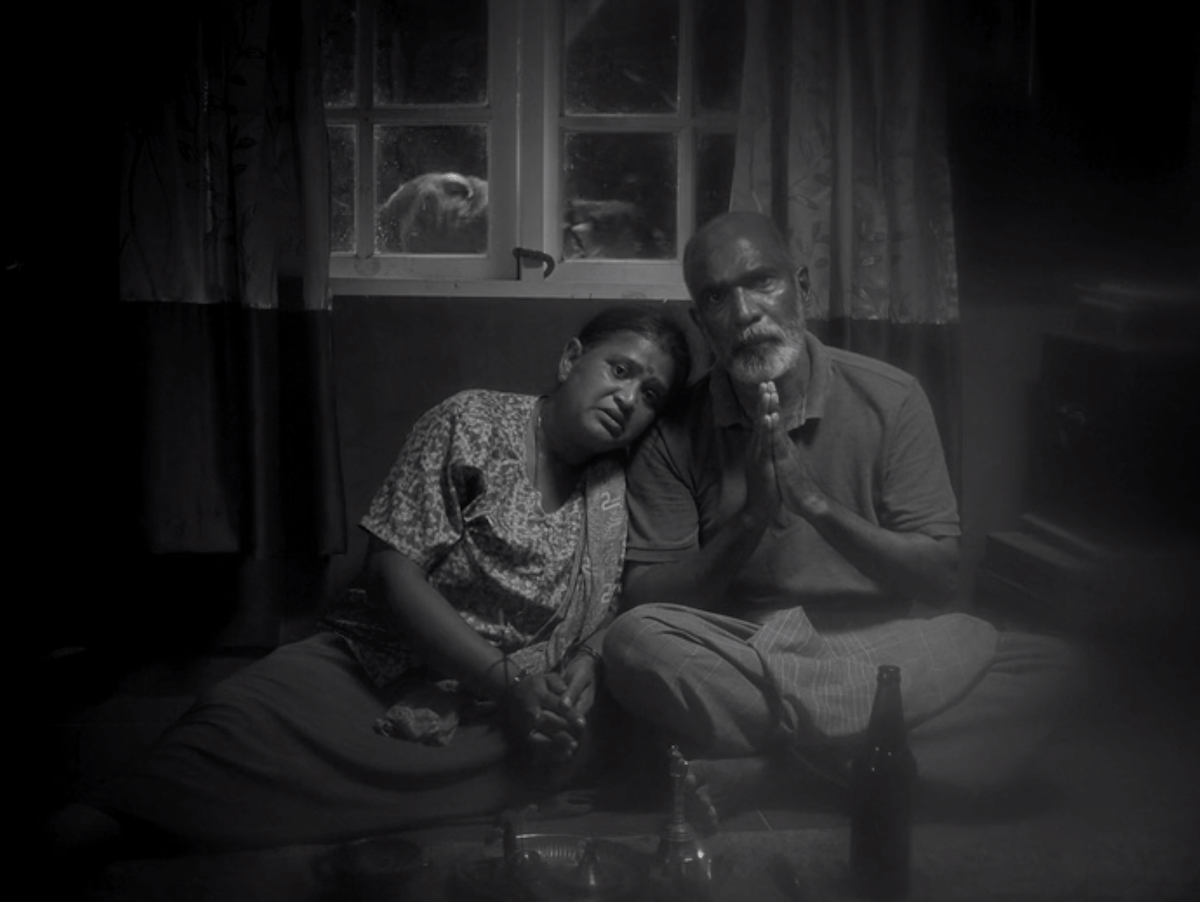
Bleat!
What made you first want to be a director?
Renzo Cozza: I began as an actor; I thought of cinema as something that happened in front of the camera. But then, I got a little bit depressed with acting, and now I think it had to do with the need of something else, just performing in front of the camera wasn’t enough anymore. So I therefore started filming with friends and classmates from my acting school.
The passage from being in front of the camera to being behind it, reminded me of my childhood, when, along with my cousins and my sister, we performed imaginary plays about things we were feeling or thinking of at that moment. There was always a moment when I directed them, and that made me a very happy child. So I think in every shooting I try to evoke that feeling, playing with my friends about things that concern us.
Emma Hütt and Tina Muffler: We (Tina and E) bonded over our shared desire to make films that build a universe in which we can make fictional claims while remaining permeable to reality during the shooting process.
Clément Pinteaux: I relate very much to Mike Leigh on that point. He says, “I make films to meet people.” I think it’s an amazing way to enter people’s lives and gain such intimate access. My films are very much about the collaborative process with the people I portray, and that’s probably where I find the greatest pleasure. I feel like I wanted to make films as much as I wanted to get lost in the world. That’s why I often make films far from home — to live another life, even if only for a while.
Ananth Subramaniam: I come from a long line of storytellers. For centuries, my ancestors shared stories through folk songs and sculptures. Over time, that love for art was lost, replaced by superstition and a culture of gatekeeping. That loss is what made me want to become a director. To continue the tradition and, in my own way, bring my community back to where it began.
Mars Verrone: As a young kid, watching old movies with my parents and making home videos with my brothers and cousins. Family and filmmaking are very intertwined for me.
El Mahdi L Youbi: The desire to tell real stories. I come from rap culture — from a very young age, under the name Mehdi Black Wind, I started writing songs to question the world and to put my inner experiences into words. Over time, the camera became my second tool to do the same.

Buckskin Courtesy of Stella Rae Binion.
Was there a film or director you were inspired by or continue to be inspired by?
Renzo Cozza: Just before and during the process of this short film, I had a sort of obsession with Mike Leigh. I have watched a film of his before, but watching almost all of his filmography – even some very good telefilms he made for British television – was inspiring, and a very immersive experience that made me think about cinema and life itself from another point of view. There is something about finding a tone from acting, and his bondage with the actors that moves me deeply. And to this day, many scenes of his films appear to me.
Kelly Reichardt is another director that I love, and I’m always looking forward to every film of hers. Watching Old Joy marked a before and after.
Emma Hütt and Tina Muffler: Tangerine from Sean Baker, Festen [The Celebration] from Thomas Vinterberg, in general the Dogme 95 movement, Baise-moi from Virginie Despentes, and photographs by Chloe Sherman.
Clément Pinteaux: I mainly work as an editor. I met Payal Kapadia ten years ago when we were both showing our first short films at the Berlinale. We’ve been friends ever since and have built a strong creative collaboration over the years. I’m inspired not only by her films, A Night of Knowing Nothing and All We Imagine as Light, but also by the way she approaches her creative process.
Ananth Subramaniam: G. Aravindan. He’s an Indian filmmaker from the 70’s ,whose work I only discovered a decade ago when Martin Scorsese’s World Cinema Project preserved and restored Aravindan’s work.
Mars Verrone: Apichatpong Weerasethakul is one of my greatest inspirations. I’m fascinated by the associations his films create between collective memory/history and physical location – something I’m very interested in exploring in my own work. His ability to depict the uncanny and surreal within the mundane is extraordinary.
El Mahdi L Youbi: Chris Marker.
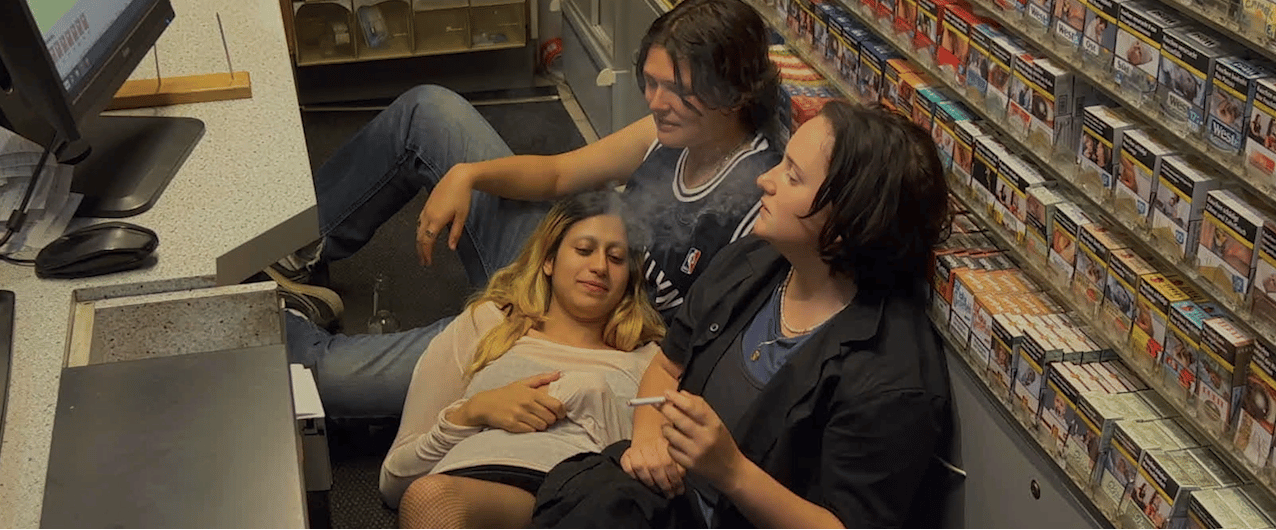
Unleaded 95
In your own words, tell us about your film. What should audiences know?
Renzo Cozza: My short film tells the story of Patricio, who, tired of working for her sisters, accepts a date with a mysterious man. When I started the writing process, I thought about the night. The night as a moment when the desires appear, in sexuality and its consumption. Are we consuming each other, or do we really feel attracted to each other? I thought about my friends, especially my friend Martin, who gave voice, ideas, and his world to the short film.
I also wonder about everyday terrors, terrors that come from the desire, the desire of abandoning places. To leave, to be oneself, to expand the boundaries that we live with and are getting tighter everyday. To twist those boundaries and make that twist an escape: when madness, love, and tenderness appear.
Emma Hütt and Tina Muffler: BLEIFREI 95 is a coming-of-age film born out of the chaos of queer second puberty. It formulates a place of longing: whether it’s queer-lesbian cruising, beating up guys in your favorite bar, or the untenable promise to love each other—even if you fuck each other’s mother in a 6-minute 38-second car wash. Aino, Toni, and Lolly rush through the film in a blur of adrenaline, energy, and horniness.
Clément Pinteaux: When I invited the protagonists to make the film with me, I first conducted long interviews to get to know them. So that we became friends as we were inventing the film. Then I asked them to rewrite the text with me. Some parts I invented; others came from them. The film became a kind of portal — for them, and for me — a space where something intimate, almost secret, could be expressed. It was also a way of capturing the strange atmosphere of this city, filled with foreign workers building enormous luxury ships destined to travel all around the world. There was something deeply melancholic, yet profoundly contemporary, in that image that I wanted to hold onto. On a more personal level, I would say the film is about rebuilding one’s life. They have all had to reinvent themselves again and again. As one of them says, “I’ve already had nine lives — I don’t know how many I have left.”
Ananth Subramaniam: Bleat! is about an elderly couple who’s been raising a male goat for ceremonial slaughter only to find out that the goat is pregnant. The film is a way for me to make sense of my own identity in my community, whilst also examining the social fracture that comes with standing up for your own voice.
Mars Verrone: Buckskin arose from a desire to engage with my mounting feelings of anxiety and grief around the interconnected existential crises of climate change and global fascism. I felt driven to learn more about indigenous land stewardship and non-Western conceptions of environmentalism as antidotes to these crises. So, I turned towards my own family history, seeking to better understand my grandfather’s work and philosophy as a forester (especially in relation to his own mixed native heritage). In spring of 2022, I spent a week with my grandfather, my mother, and my best friend Stella (the film’s director of photography) at his beautiful home in Panorama Hill – aptly named for its stunning views of Berkeley, California.For hours we sat at his creaky kitchen table, and over mugs of coffee and bowls of oatmeal we shared reflections, expressed our fears, and asked each other questions. Nine decades holds an infinity of experiences, but the recurring chorus throughout his memories was one of pride for his accomplishments and love for his family. I left this experience with far more questions than answers. I felt disturbed by the relentless anti-Black discrimination and violence that followed Grandpa Carroll through the decades. I was disquieted by the notion that the future he was facing at the end of his life was not necessarily a positive one. It wasn’t until two years later, when my grandfather passed away in March 2024, that I was able to return to this material and edit the film. I found that his memories and wisdom of course did not provide clear solutions to the existential crises of our time, but instead served as a generative point of reflection to consider the complexity of human beings, the severity of the stakes at hand, and the longevity and necessity of the fight ahead.
As many of us grapple with what we can or cannot do about the profound threats of climate change and fascism, Buckskin offers an opportunity to ruminate on a life devoted to fighting these very forces. This film considers the contradictions of being a non-Western subject living within the West and attempting to combat its harms. I hope to speak to a challenge that many people of color in America experience, of being victims of colonial violence while also finding that often our only access to power exists within colonial institutions (as my grandfather experienced in the U.S. Forest Service and higher academia). Additionally, Buckskin invites viewers to engage with the extraordinary world around them, to ignite the thrill of finding their place within it, and to consider with equal parts wonder and skepticism: what are the possibilities of a single human life?
El Mahdi L Youbi: My film confronts the harsh realities of France with the wounds left by its colonial past.

Marseille, 14th July
What does it mean to you to show your film at New Directors/New Films?
Renzo Cozza: First of all, it is a great honor for me to be part of New Directors/New Films. It’s a festival I’ve always paid close attention to because of its focus on emerging filmmakers, many of whom I first discovered through ND/NF. The great privilege of showing our short film here lies in giving visibility to the hard work we carried out with such dedication, alongside our crew and actors. At a time when Argentine cinema is under attack due to public policies, being able to present our work at a festival of such prestige means a great deal in terms of visibility and recognition. Contributing, even on a small scale, brings me joy and hope: knowing that we are here, that independent cinema endures because we continue to make it, and above all because spaces like this choose to make space for it.
Emma Hütt and Tina Muffler: BLEIFREI 95 is our first film and shooting it was very special for us, as we made it together with the queer-lesbian community: our friends, the regulars at Germany’s oldest lesbian bar, the Dykes on Bikes, and some of the most notorious lesbians in Berlin. We are looking forward to seeing them all at a venue with such a history.
Clément Pinteaux: It’s such an honor to screen my films at New Directors/New Films. I had the chance to present my first film, Young Girls Vanished, there in 2018. I think the program is truly remarkable, and it’s a great privilege to show my work alongside such beautiful films and fantastic directors. It’s very emotional for me.
Ananth Subramaniam: I belong to an ethnic minority community in Malaysia. While Malaysia itself is just a speck on the scale of planet Earth, being a minority within that speck is a feeling of its own. All my life, cinema has been a constant companion. Naturally, as I followed cinema, I began following film festivals, and New Directors/New Films has always been an important one to me. To show my film in the city where Spike Lee and Scorsese built their careers feels like an unofficial pilgrimage.
Mars Verrone: It is a true honor and feels like an affirmation of experimentation and exploration in the medium of film. It’s very easy to fall into a state of cynicism and despair around the current state of the film industry (and of course, the world). There’s this horrible feeling of collapse – everything closing in on itself. New Directors/New Films is a celebration of the future of film and its potential to open us towards new horizons. The festival offers a much needed sensation of possibility and expansion.
El Mahdi L Youbi: When I was a teenager, I used to wander around New York on Google Earth, just to see the neighborhoods where my favorite rappers lived — Queensbridge, the Bronx, Harlem… It’s such a thrill to be selected by your festival. This platform will give my work much-needed visibility and a chance to reach a wider audience.

Only Angels
What was the biggest lesson you learned during the making of your film?
Renzo Cozza: In this particular work, there were several learnings. On the one hand, the moment when the writing meets the actors, and then how those bodies guide you by the hand to keep writing during rehearsals and throughout the shoot. At one point, the cinematographer Victoria Pereda, with all the sensitivity that characterizes her, told me: “Let’s wait for the actors before framing.” There was something in that delay, in taking the time to fully think through the shot, that kept writing images throughout the process. It is partly what was planned during the location scouting, and largely the present moment and the encounter.
Emma Hütt and Tina Muffler: Chaos is great when you embrace it. You can make up a lie that becomes true during filming. We made up queer-lesbian cruising at a petrol station and since the station was open as usual, it somehow became real. People really wanted to cruise and even drove an hour just to get there.
Clément Pinteaux: The process of making the film was very long. Even though it’s a short and humble piece, I spent months alone in that city, trying to meet people and build genuine friendships. It may sound naïve, but the greatest lessons I’ve learned from my films have always come from the people I portray. In this case, they were all incredibly strong in the way they chose to live their lives. The way they invested themselves in the film was truly powerful. One of them, Natalia, even made an entirely different cut of the film using the footage I sent her. I think it’s brilliant and incredibly moving.
Ananth Subramaniam: Every story is worth telling. No matter how small.
Mars Verrone: My initial approach to interviewing my 92-year-old grandfather was somewhat naive: I arrived with a slew of direct questions about climate science, politics, and history. Quickly, I learned he was some combination of uninterested and unable to answer such questions. His mind would wander, he would fixate on mundane details, he would retell the same (seemingly irrelevant) story over and over again. I realized at his age, the mind reveals what is most significant and only the most powerful feelings and memories pierce through. So, I learned to yield to these cognitive patterns, allowing them to determine the shape and scope of the film.
El Mahdi L Youbi: You should never look down on your subject. A documentary is something you feel with your body first, before your mind can make sense of it.
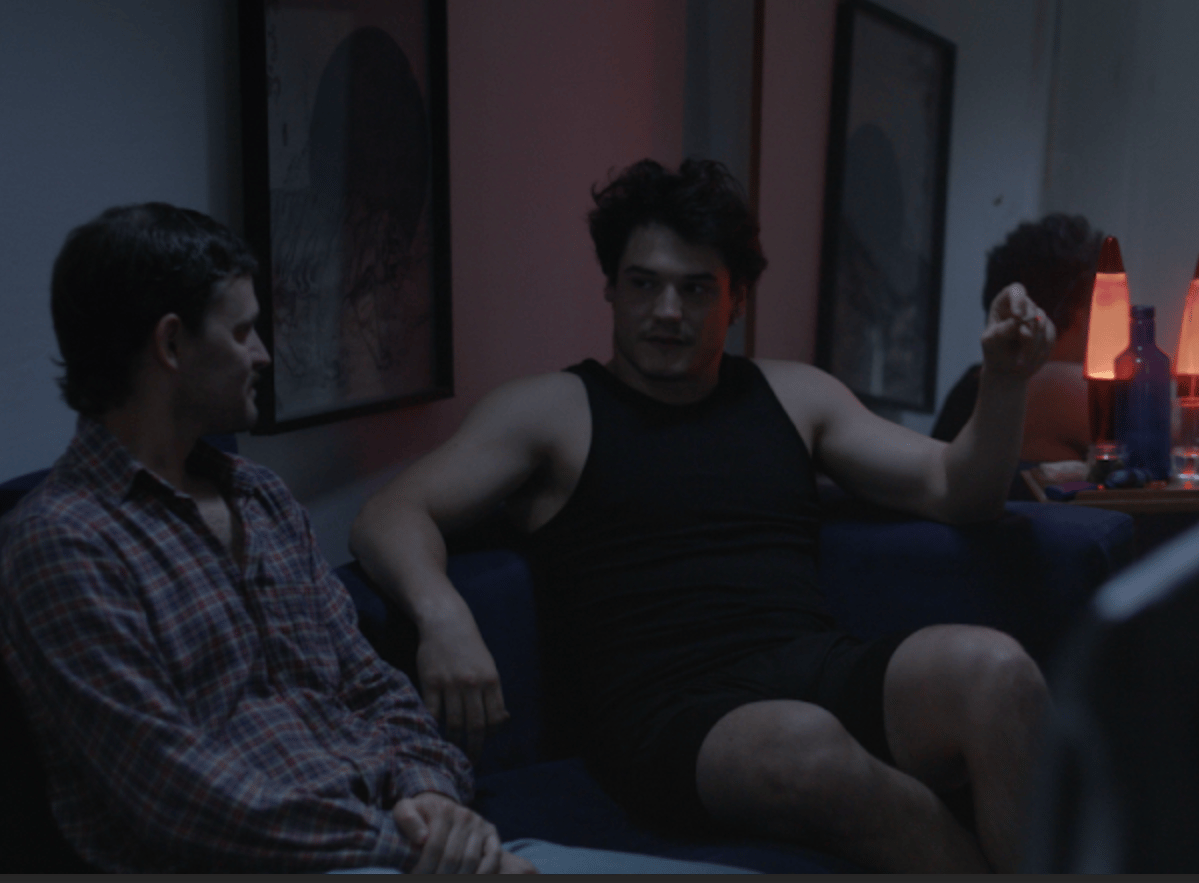
Time to Go. Courtesy of Esquimal Cine, Aurora Cine, Febrero Cine, Florencia Clérico.
What’s a film you saw recently that you enjoyed?
Renzo Cozza: Hard Truths by Mike Leigh and Misericordia by Alain Guiraudie.
Emma Hütt and Tina Muffler: Rotting in the Sun from Sebastián Silva.
Clément Pinteaux: I just watched The Grapes of Wrath by John Ford, and it blew me away — such a powerful, political, and beautiful film. More recently, I absolutely loved The Secret Agent by Kleber Mendonça Filho.
Ananth Subramaniam: The Mastermind!!
Mars Verrone: Seeds (dir. Brittany Shyne, 2025). The intimacy of this film is so special: cramped car interiors, mumbled exchanges, playful glances from children. It is so real it feels like a dream.
El Mahdi L Youbi: Before the Dying of the Light from Ali Essafi.
ND/NF 2026 Shorts Program I screens on April 12 & 13. ND/NF 2026 Shorts Program II screens on April 18 & 19.
New Directors/New Films takes place April 8–April 19. Explore the lineup and get tickets.