Rohan Parashuram Kanawade on Cactus Pears | Meet the Filmmakers of New Directors/New Films 2025
April 8, 2025

Cactus Pears (Sabar Bonda)
Exploring bold new works from filmmakers around the world, the 54th New Directors/New Films, our annual festival co-presented with The Museum of Modern Art, is officially underway through April 13. As the festival continues, get to know the filmmakers who speak to the present and anticipate the future of cinema.
Rohan Parashuram Kanawade shares the deeply personal backstory behind Cactus Pears below. See the film on April 9 at FLC with the director in person for a Q&A!
What made you first want to become a director?
My journey to becoming a director began in an unexpected way. My chauffeur father always took us to the cinema. It was in the cinema hall that my love for the film projector was sparked. So, in the beginning, it was this magical machine that made pictures move that attracted me, not the stories. I was 4 then, and I wanted a film projector so I could watch movies at home in large format and not on our 12-inch black-and-white TV. Later, when I watched Jurassic Park, I fell in love with sound and wanted a surround sound system in our tiny one-room house in a Mumbai slum.
When I was in my final year of high school, I was inspired to explore writing by one of the lessons in our Marathi language textbook. That lesson was written cinematically (it was actually a short story from an anthology book), so while learning the lesson, I imagined it like a film in my head. I kept writing short stories even while studying interior design. When I was working as an interior designer, one of my colleagues pushed me to make a short film for a competition. Her persistence filled me with a positive feeling, making me think, “Yes, let’s make a short film! Why not?!”
So, we shot a terrible short film on my colleague’s mobile phone, which had a 1.5-megapixel camera. That was in 2007. Although we couldn’t complete the film because my friend’s home computer crashed every time we tried editing, the process was so fascinating—choosing camera placement, designing framing, shaping performances—that I made another film, borrowing a mobile phone from another friend—his phone had a 2-megapixel camera. At that time, I also began watching world cinema, which deepened my interest in exploring filmmaking further. Since then, I’ve been writing and directing films to tell stories that feel deeply personal—stories only I can tell.
Was there a film or director you were inspired by or continue to be inspired by?
I have been watching world cinema from the time I began exploring filmmaking. At that time, I was also working as an interior designer, and with my salary, I could afford a subscription to a video library in Mumbai. Kiarostami’s Taste of Cherry and Close-Up felt like life itself—a rare quality in today’s films. Haneke’s Amour and Funny Games disturbed me because of the grim but authentic portrayal of old age and human behavior.
Nuri Bilge Ceylan’s Once Upon a Time In Anatolia and Clouds of May felt like visual novels. Apichatpong Weerasethakul’s Uncle Boonmee Who Can Recall His Past Lives felt like an unending, weird dream (my dreams are always weird). Jonathan Glazer’s Under the Skin and The Zone of Interest intrigued me because of their artistry in visuals and sound. I had never seen films like those; I had never felt the way I did after watching them. They all are different in terms of their style and presentation, but it’s evident that only those directors could make those films. They inspired me to find my unique ways to tell my stories, so I too can craft a unique experience for audiences.
In your own words, tell us about your film. What should audiences know?
Cactus Pears is a romance drama between two men that happens during a 10-day mourning period in rural India. It’s based on my own experience of grieving my father in my ancestral village in 2016. I was born and raised in Mumbai by my chauffeur father and illiterate homemaker mother in a one-room house in a Mumbai slum. All of our relatives live in the village. We’d spend summer holidays in the village. But after I finished school, during one visit to the village, my relatives began discussing that I would have to get married within the next two or three years. That annoyed me and made me uncomfortable, so I not only distanced myself from my relatives, but I also completely stopped going to the village.
In 2013 I came out to my father as a gay man and to my surprise he accepted me without any conflict. His simple words were, “You know yourself, and that’s what matters.” Even my illiterate mother accepted me. This was so different from the tragic coming-out stories I had heard. When my father passed away in 2016, my mother decided that we go to the village for the mourning period so that all the relatives could meet us and attend the 10-day ritual. I had no escape. I had to go.
When I was there, right after the funeral, everyone began talking about my marriage. I couldn’t come out to them because that was not the time to stir the environment, I was not sure how my relatives would treat my mother afterwards, and I was not seeking acceptance from them or the society. So, I just endured the marriage pressure for those 10 days. I didn’t really get time and space to grieve my loss. All I could think of at the time was an escape.
That’s when I had the thought that what if I had a friend in the village who knew about me? I would have sneaked out with him and stayed away from the marriage pressure. That thought stayed with me for years, and I began writing the screenplay in 2020. Through this film, I tried to reimagine that claustrophobic experience and turn it into a tender journey for the central character. I tried to add the silences that I experienced, the sounds that I heard (of the village and nature), the static quality of the mourning time and slowness of rural life, and yet tried to make a gentle film.
This film also allowed me to use my own positive experience and craft a film that’s not only personal but universal at the same time. I could also portray the sexuality of rural men who are very much aware of it and also not at all sad about it. All of this allowed me to question the belief of many people who told me that queerness is for rich people. All of my lived experiences helped me make an authentic romance story between two men that feels rooted in India.
What does it mean to you to show your film at New Directors/New Films?
I did not study filmmaking. I started exploring it on my own. While doing so, I was always looking for videos on the internet where filmmakers discussed their films and their process—those videos became my film school. I have been watching the Q&As of New Directors/New Films on YouTube for years. I have seen some of my favorite films and directors being invited to the festival and admired and got inspired by the Q&As. It is certainly not only prestigious to be there with my debut feature but also crucial because this will give the film a prominent platform, and puts a spotlight on Indian independent cinema. I hope my film’s presentation at New Directors/New Films inspires more independent Indian filmmakers, just as I was once inspired. And, personally, it feels like a dream I once had while watching those filmmaker Q&As has come full circle.
What was the biggest lesson you learned during the making of your film?
One thing I learned from making my first feature is to always trust your gut. That instinct guides you through the thousands of choices required to tell your story authentically. As a creator, trusting your gut is crucial because you’re bringing something unique into the world—something only you can express.
What is the best piece of advice you’ve ever been given?
“Persistence is key!” This advice came from a friend during my early days of filmmaking. You have to go through a lot of rejection and heartbreak. But without persistence you will never reach your dreams. I must also say that support is essential. For me that support came from my father, who encouraged me to explore filmmaking even if that meant stepping away my full-time interior design career. Support also came from my architect friend who not only gave me a job in his office but allowed me to prioritize my filmmaking, and then my partner who supported and encouraged me during the darkest times that one often goes through as an independent filmmaker. Because of them, I could explore filmmaking—but I was also persistent. I never stopped. I kept making films to hone myself and it helped me achieve my goal of making my debut feature.
What else do you enjoy doing outside of filmmaking?
I love collecting miniature die-cast cars, trucks, buses, and dinosaur models. And I still enjoy dreaming of owning a projector.
What’s a film you saw recently that you enjoyed?
Recently, I was very intrigued by The Zone Of Interest. I was disturbed by the way Jonathan Glazer crafted that story, and throughout I was reminded of the line “humans are the most evil animals.”
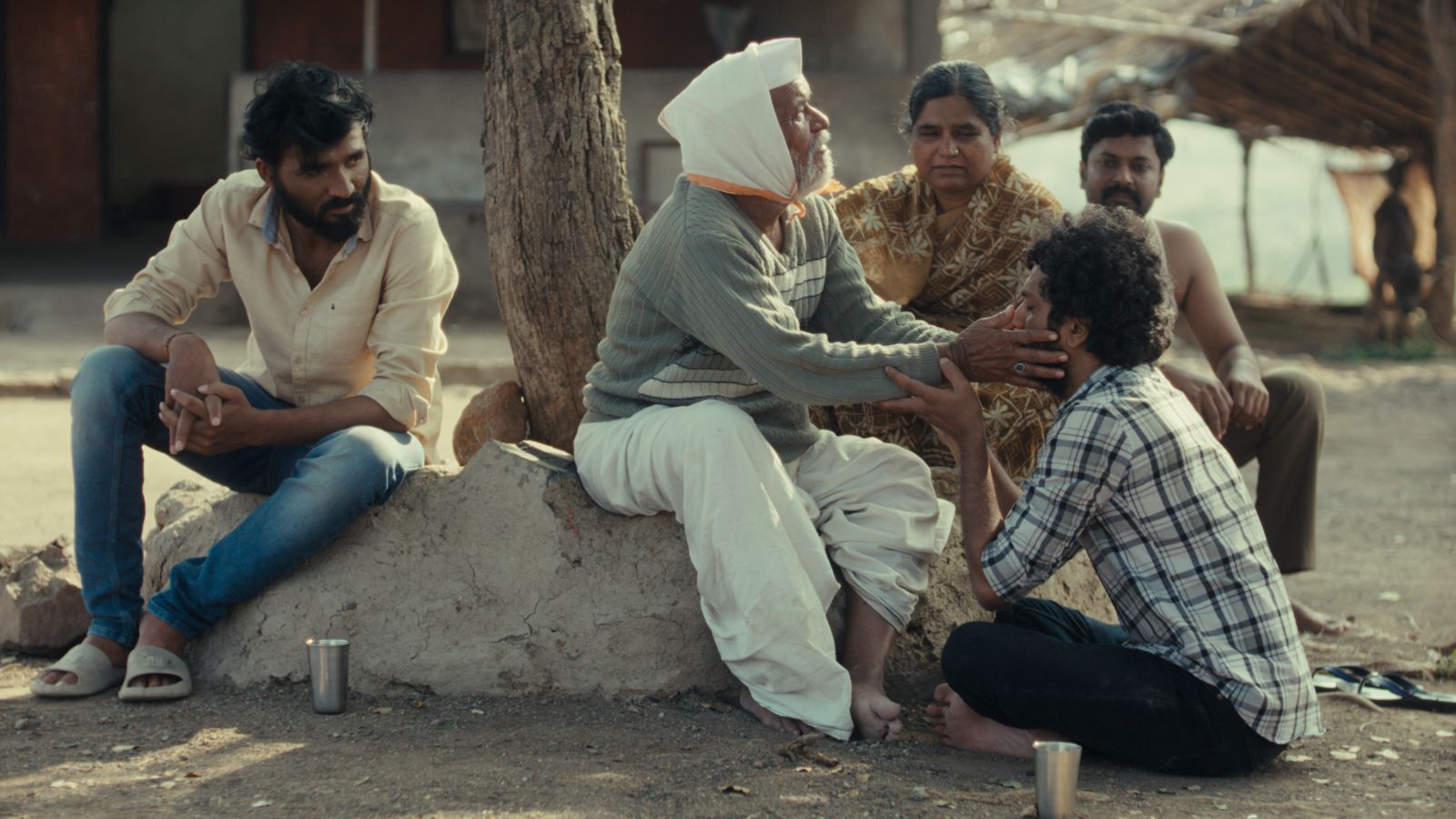
Cactus Pears (Sabar Bonda)
Western India’s stunning, cascading landscapes background Rohan Parashuram Kanawade’s debut feature of familial bereavement and queer longing that earned Sundance’s World Cinema Grand Jury Prize. A family consecrates the loss of its patriarch with a 10-day mourning period that strands Anand (Bhushaan Manoj) in the countryside he long ago deserted for Mumbai. Grief’s common phases (poring over old photos, sharing beloved memories) coexist with local rituals, all while Anand’s hidden desires materialize in a rekindled friendship with childhood companion Balya. Through these experiences, sensual discoveries, and Bhushaan Manoj’s ever-measured performance, Cactus Pears emerges as an exquisite character piece perfected by its heartrending finale.
Rohan Parashuram Kanawade’s Cactus Pears screens on April 9. New Directors/New Films takes place April 2-April 13. Explore the lineup and get tickets.


