FLC Announces “Robert Siodmak: Dark Visionary,” December 11-19
November 13, 2024
Read More
FLC and NYAFF Announce Lineup and Awards of the 25th New York Asian Film Festival, July 10–26
June 17, 2026
Mark Jenkin and Mary Woodvine on Their Sci-Fi-Tinged Rose of Nevada
June 12, 2026
Experience 10 Films Entirely on 70mm at “It’s All a Big Conspiracy,” July 1–9 at Film at Lincoln Center
June 11, 2026
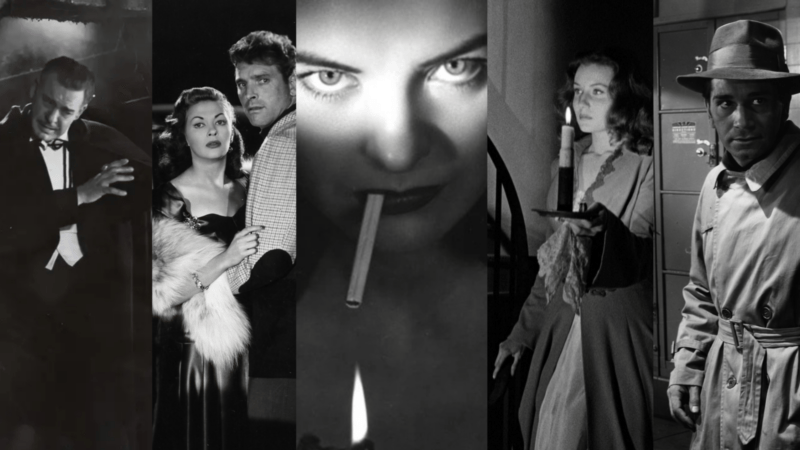
Son of Dracula, Criss Cross, Phantom Lady, The Spiral Staircase, and Cry of the City
New York, NY (November 13, 2024) – Film at Lincoln Center announces “Robert Siodmak: Dark Visionary,” a retrospective dedicated to one of Hollywood’s most enduringly influential yet too-little-celebrated helmers. The series will be presented by FLC from December 11 through December 19 and will feature 17 of the filmmaker’s most prominent films, with new 4K restorations of several significant titles.
Of all the great filmmakers who fled Europe amid the ascent of the Nazis in Germany and turned up in Hollywood, few did more to shape our sense of film genre than Robert Siodmak. Born to German Jewish parents at the dawn of the 20th century, Siodmak spent decades honing his chameleonic sensibility and influential style across a variety of studios and national cinemas. Perhaps his most vital contributions came within the domain of film noir—but each film that Siodmak directed, no matter the genre and no matter whether in Germany, France nor Hollywood, powerfully bears his imprint.
Siodmak’s career began when he worked for his cousin, producer Seymour Nebenzal, assembling silent films from stock footage of old films before co-directing his first feature film in 1929, the silent masterpiece People on Sunday. Following additional features that shaped his vision and helped him develop his own sense of style, his 1933 drama The Burning Secret would be condemned during the rise of Nazi Germany by Joseph Gobbels, Hitler’s minister of propaganda. After moving to France and further honing his craft for six years until Hitler again forced him out, Siodmak moved to California, where he would begin his slew of crime thrillers, which would ultimately be agreed upon by critics as classic landmarks of film noir.
FLC’s new retrospective includes 4K digital restorations of: Son of Dracula, Siodmak’s first film for Universal, starring Lon Chaney Jr. as the titular character; Phantom Lady, adapted from a novel by Cornell Woolrich, his first foray in the noir genre, which exemplifies his creativity and vision; The Suspect, starring Charles Laughton as the unfortunate villain at the center of a web of suspicious circumstances following his wife’s death; The Killers, adapted from Ernest Hemingway’s short story and starring film legends Burt Lancaster in his debut feature and Ava Gardner as the enticing yet deadly femme fatale; and Criss Cross, the companion film to The Killers, starring Lancaster as a truck driver pushed to the wrong side of the law.
Additional works that exemplify Siodmak’s undeniable influence and experimentation with the development of the noir genre include: Inquest, which would set the tone for film noir as a genre; Fly-By-Night, melding espionage thriller with screwball comedy and creating a blueprint for Siodmak’s later noirs; The Strange Affair of Uncle Harry, the fourth of his noirs with Universal; The Spiral Staircase, widely acknowledged as a precursor to the slasher genre; the psychologically objective The Dark Mirror, musing on the nature of identity and character; the gritty crime thriller Cry of the City; and The File on Thelma Jordon, starring legendary femme fatale Barbara Stanwyck.
In addition to his noir works, more examples of Siodmak’s versatility are seen in titles such as: The Crimson Pirate, a swashbuckling slapstick comedy featuring Burt Lancaster in one of his most memorable roles; The Burning Secret, the last film Siodmak directed before the Nazi seizure of power; People on Sunday, an unassuming, tranquil feature made in response to the big-budget films being made at the time; and Cobra Woman, a melodramatic camp classic that had a major influence on American avant-garde film and theater.
Organized by Dan Sullivan and Madeline Whittle.
Acknowledgements
Cassandra Moore, Universal
Tickets will go on sale on November 14 at 2:00pm, with an early access period for FLC Members starting November 14 at noon. Tickets are $17; $14 for students, seniors (62+), and persons with disabilities; and $12 for FLC Members. See more and save with an $119 All-Access Pass ($99 for Students) and 3+ Film Package ($15 for GP; $12 for students, seniors (62+), and persons with disabilities; and $10 for FLC Members).
FILMS & DESCRIPTIONS
All films screen in the Walter Reade Theater (165 W. 65th St.) unless otherwise noted.
People on Sunday
Robert Siodmak and Edgar G. Ulmer, 1930, Germany, 73m
German with English subtitles
Filmed on location in Berlin, using a cast of amateurs in roles based on their actual day jobs, People on Sunday sustains a lyrical tranquility as people swim, listen to music, flirt, and generally enjoy their time away from the daily grind. The film was an unassuming but groundbreaking response to the big-budget films being produced by UFA at the time, and boasted a crew of young German cineastes who would later become major filmmakers in Hollywood: Siodmak, Edgar G. Ulmer, Fred Zinnemann, and Billy Wilder. A timeless, seminal cinematic paean to the last days of Weimar Germany. Courtesy of Eye Filmmuseum.
Sunday, December 15 at 2:30pm
Inquest
Robert Siodmak, 1931, Germany, 90m
German with English subtitles
Based on a 1927 play co-written by the famous Weimar criminal defense attorney Max Alsberg, this early work of Siodmak’s (his third feature) anticipates the tonality of his later work as well as the aesthetic and thematic concerns that would come to define film noir as a genre. A prostitute is murdered at a boarding house in Berlin, and the judge overseeing the ensuing investigation naturally suspects her boyfriend—but little does he know that this case in fact resides a bit too close to home…. A proto-thriller par excellence, Inquest is a fascinating preview of things to come in Siodmak’s oeuvre. Courtesy of Murnau Stiftung.
Thursday, December 19 at 4:00pm
The Burning Secret
Robert Siodmak, 1933, Germany/Austria, 35mm, 87m
German with English subtitles
Atmospherically melding melodrama with psychodrama, this 1933 feature finds Siodmak adapting a 1913 novella by Stefan Zweig with an Oedipal twist. A mother and her 12-year-old son are staying at a lakeside hotel in Switzerland while on holiday, where the boy meets a dandyish race car driver who soon enough gravitates toward his mother. Suspecting a blooming affair, the boy grapples with his feelings of jealousy and fear that his parents’ marriage could be doomed. Siodmak’s final film before fleeing Germany, The Burning Secret was denounced by Nazi chief propagandist Josef Goebbels, with Goebbels singling Siodmak out as “a corrupter of the German family.” Print courtesy of Deutsche Kinemathek.
Sunday, December 15 at 8:30pm
Fly-By-Night
Robert Siodmak, 1942, U.S., 35mm, 74m
Siodmak’s second feature made in the U.S. uses a Hitchcockian conceit as a pretext for concocting a delightful, gripping curio that melds the espionage thriller and the screwball comedy. A young doctor (Richard Carlson) finds himself enmeshed in an obscure conspiracy plot when he crosses paths with an eccentric inventor who has recently escaped captivity at the hands of a network of Nazi spies. Circumstances inevitably lead our protagonist to put his life on the line in order to clear his name after being framed for murder. This tonally fascinating work feels like a dry run for Siodmak’s later pioneering film noirs.
Saturday, December 14 at 12:30pm
***4K Restoration***
Son of Dracula
Robert Siodmak, 1943, U.S., 80m
Dracula moves to New Orleans and causes a stir in Siodmak’s seminal work of horror, the third of Universal’s films revolving around Bram Stoker’s titular vampire noble. Count Alucard (Lon Chaney Jr.) accepts an invitation to the United States from Katherine Caldwell (Louise Allbritton), a plantation owner’s immortality-obsessed daughter, whom he quickly marries. But this proves to be a dark development when inexplicable and frightening events begin happening around town, mobilizing a small group of occultists and concerned family friends to try and stop their new neighbor/undead interloper. Somewhat misunderstood at the time of its release as a mere monster movie, Siodmak’s first film for Universal endures as a sophisticatedly constructed crime film haunted by the supernatural. 4K Restoration by Universal Pictures from the 35mm Nitrate Original Negative, and 35mm Nitrate Composite Fine Grain. Restoration services conducted by NBCUniversal StudioPost.
Sunday, December 15 at 4:30pm
Wednesday, December 18 at 8:30pm
***4K Restoration***
Phantom Lady
Robert Siodmak, 1944, U.S., 87m
Siodmak’s first foray into the genre that would come to define his artistry, Phantom Lady already evinces the hallmarks of the German director’s work within film noir, namely a consummately macabre sense of atmosphere and a gift for rendering his characters’ troubled subjectivities through the arresting interplay of image and sound. Adapted from a novel by Cornell Woolrich, the film stars Ella Raines as a secretary who must prove that her boss (Alan Curtis) has been wrongly accused of murdering his wife, stumbling through an obscure labyrinth in search of a mysterious woman whom he met shortly before his wife’s death and subsequently vanished. What seems to be a simple enough set-up, in Siodmak’s hands, yields an exemplary and absorbing work of light, shadow, and psychology. 4K Restoration by Universal Pictures from the 35mm Nitrate Composite Fine Grain, 35mm Safety Composite Fine Grain, and 35mm Nitrate Optical Sound Track Negative. Restoration services conducted by NBCUniversal StudioPost.
Wednesday, December 11 at 6:30pm – at the Elinor Bunin Munroe Film Center (144 W. 65th St.)
Saturday, December 14 at 2:30pm
Cobra Woman
Robert Siodmak, 1944, U.S., 35mm, 71m
A melodramatic adventure film featuring iconic turns by Maria Montez and Sabu, Siodmak’s delirious South Seas tale was, among other things, Kenneth Anger’s favorite film. Tollea (Montez) is kidnapped and taken to Cobra Island, where the natives tend to sacrifice visitors to their vengeful volcano god. But as it turns out, Tollea has a much closer connection to this strange, dangerous place than it initially seemed…. A camp masterwork, Cobra Woman is notable for its curiously profound influence on American avant-garde film and theater, inspiring the likes of Anger, Jack Smith, and Charles Ludlam, to name a few.
Saturday, December 14 at 8:45pm
Wednesday, December 18 at 2:00pm
***4K Restoration***
The Suspect
Robert Siodmak, 1945, U.S., 85m
A married man pines for a younger woman and sets in motion an increasingly knotty murder plot in this 1945 noir, adapted from pulp writer James Ronald’s 1939 novel, This Way Out. Charles Laughton stars as Philip, a henpecked shopkeeper who has eyes for a beautiful young stenographer (Ella Raines); after Philip’s wife dies under shady circumstances, both a blackmailer and a detective show up with their own distinct designs and promptly discover Philip’s secret. An exemplary noir with an oddly tender streak, The Suspect boasts one of the great casts within Siodmak’s oeuvre, especially Laughton as our hapless antihero. 4K Restoration by Universal Pictures from the 35mm Nitrate Original Negative, 35mm Nitrate Composite Fine Grain and 35mm Optical Sound Track Positive. Restoration services conducted by NBCUniversal StudioPost.
Thursday, December 12 at 8:45pm – at the Elinor Bunin Munroe Film Center (144 W. 65th St.)
Friday, December 13 at 6:30pm
The Strange Affair of Uncle Harry
Robert Siodmak, 1945, U.S., 35mm, 80m
The fourth of Siodmak’s Universal noirs also marked his second collaboration with Phantom Lady producer—and frequent Hitchcock screenwriter—Joan Harrison, then employed as the studio’s first female executive. George Sanders is at once disarmingly tender and unnervingly opaque as Harry Quincey, a mild-mannered bachelor descended from a once-prominent family in the New England town of Corinth. Employed as a designer at the local textile mill, Harry lives with his two grown sisters: widowed Hester (Moyna Macgill) and never-married Lettie (Geraldine Fitzgerald), a suave, bedridden beauty with a fiercely possessive attachment to her equally devoted older brother. The trio share a modestly comfortable, if directionless, existence in the fading family manse—until glamorous outsider Deborah (Ella Raines, in the third of her four outings with Siodmak) arrives from New York, disturbing the fragile psychic equilibrium of the siblings’ domestic status quo, and setting the stage for a profoundly unsettling study of obsession, jealousy, and the perils of codependency. 35mm preservation print courtesy of the UCLA Film & Television Archive.
Sunday, December 15 at 6:30pm
Thursday, December 19 at 2:00pm
The Spiral Staircase
Robert Siodmak, 1946, U.S., 35mm, 83m
Later celebrated as a key early precursor to the modern slasher film genre, Siodmak’s fifth noir for Universal was adapted by first-time screenwriter Mel Dinelli from a novel by Ethel Lina White, author of the source material for Hitchcock’s The Lady Vanishes). Dorothy McGuire gives a precisely calibrated, near-wordless turn as proto–final girl Helen, a mute orphan who, while working as a housemaid for the affluent Warren family in turn-of-the-century Vermont, finds herself in the crosshairs of a serial killer targeting local women with physical or mental disabilities. Lensed by Val Lewton cinematographer Nicholas Musuraca—whose mastery of richly atmospheric noir aesthetics dovetailed with Siodmak’s own affinity for the German Expressionist influences that informed his UFA filmmaking education—the film makes use of starkly textured chiaroscuro compositions to heighten the effect of a vividly cinematic narrative that draws heavily on the Gothic horror tradition. 35mm print courtesy of the UCLA Film & Television Archive.
Saturday, December 14 at 4:30pm
Wednesday, December 18 at 6:15pm
The Dark Mirror
Robert Siodmak, 1946, U.S., 35mm, 85m
Scripted and produced by prolific studio multihyphenate Nunnally Johnson (the screenwriter behind Fritz Lang’s genre-defining classic The Woman in the Window, who would go on to write and direct The Three Faces of Eve), The Dark Mirror is perhaps the most explicitly clinical of the psychologically inflected thrillers that Siodmak helmed during his years in Hollywood, providing the framework for a canny meditation on the fundamental, intractable mysteries of identity and personality. Olivia de Havilland stars in a tour-de-force dual performance as identical twin sisters Terry and Ruth Collins, one of whom has been implicated in a violent crime by multiple witnesses who saw her flee the scene—while the other can provide an airtight alibi. Having no way of knowing to which sister the alibi rightfully belongs, the investigating detective (Thomas Mitchell) entrusts a psychologist (Lew Ayres) with the task of sussing out the differences in their personae—bringing to the surface a lifetime’s worth of dangerously combustible resentments and regrets in the process. 35mm preservation print courtesy of the UCLA Film & Television Archive. Preservation funded by The Film Foundation, Paramount Pictures, and the Packard Humanities Institute.
Monday, December 16 at 3:15pm
Tuesday, December 17 at 6:00pm
***4K Restoration***
The Killers
Robert Siodmak, 1946, U.S., 103m
The stellar debut of an American movie icon. Ernest Hemingway, author of the classic short story so chillingly recreated in the opening reel of Siodmak’s noir classic, always cited The Killers as the best movie ever made from his work. Burt Lancaster’s first movie role, as “the Swede,” begins only moments before his death. He knows it’s coming and he doesn’t try to run. What he did and why it used him up is told in jagged flashbacks as an insurance investigator (Edmond O’Brien) looks into the Swede’s haunted past. Ava Gardner shines darkly as quintessential femme fatale Kitty Collins. 4K Restoration by Universal Pictures from the 35mm Nitrate Original Negative and 35mm Nitrate Composite Fine Grain. Restoration services conducted by NBCUniversal StudioPost.
Thursday, December 12 at 6:30pm – at the Elinor Bunin Munroe Film Center (144 W. 65th St.)
Friday, December 13 at 8:30pm
Cry of the City
Robert Siodmak, 1948, U.S., 35mm, 95m
Siodmak frequently used the noir genre almost as a means of moral-philosophizing, and this is perhaps nowhere better illustrated than in this gritty crime drama about two childhood best friends who take divergent paths: one becomes a cop (Victor Mature); the other, a cop killer (Richard Conte). The killer must grapple with confessing to a murder he did not commit in order to save his girlfriend from being framed for the crime. Shot mostly on location in New York City, the film features a thrilling score by Alfred Newman and is based on a masterful script by uncredited screenwriter Ben Hecht. 35mm print courtesy of the George Eastman Museum, lent by an anonymous collector.
Wednesday, December 18 at 4:00pm
Thursday, December 19 at 8:45pm
***4K Restoration***
Criss Cross
Robert Siodmak, 1949, U.S., 84m
Siodmak’s structurally sophisticated companion film to The Killers, which is also perhaps even more visually exciting (shot by the great DP Franz Planer), is told almost entirely through flashbacks. Burt Lancaster plays a truck driver whose passion for his ex-wife (Yvonne De Carlo) drives him to the wrong side of the law. Lancaster is typically excellent, but Dan Duryea steals the show as his tormentor and rival—his final expression, the last image in the film, is one of the signature moments of film noir. 4K Restoration by Universal Pictures from the 35mm Nitrate Original Negative, 35mm Nitrate Composite Fine Grain, and 35mm Nitrate Optical Sound Track Negative. Restoration services conducted by NBCUniversal StudioPost.
Wednesday, December 11 at 8:45pm – at the Elinor Bunin Munroe Film Center (144 W. 65th St.)
Saturday, December 14 at 6:30pm
The File on Thelma Jordon
Robert Siodmak, 1950, U.S., 100m
Six years after cementing her status as one of classical Hollywood’s preeminent interpreters of the femme fatale archetype in Billy Wilder’s Double Indemnity, Barbara Stanwyck joined forces with Siodmak for his ninth American noir, produced while the director was out on loan to Paramount nearly a decade into his contract with Universal. Happily married assistant district attorney Cleve Marshall (Wendell Corey) strikes up a drunken flirtation with the glamorous, enigmatic Thelma Jordon (Stanwyck) when she arrives unannounced at his office one night to report a break-in attempt at the well-appointed home of her elderly aunt Vera (Gertrude W. Hoffmann), for whom Thelma serves as live-in companion. Just as Thelma, initially reluctant to indulge Cleve’s advances, is beginning to warm up to them, Vera is found murdered—and Thelma, her sole inheritor, is fingered as the prime suspect. Working from an economical yet emotionally potent screenplay by Pulitzer Prize–winning playwright Ketti Frings, Siodmak and his stars deploy this classic genre premise to uniquely unsettling effect, imbuing each narrative twist and turn with an air of tragic, heartbreaking inevitability.
Monday, December 16 at 1:00pm
Thursday, December 19 at 6:30pm
The Whistle at Eaton Falls
Robert Siodmak, 1951, U.S., 96m
At the conclusion of Siodmak’s contract with Universal in 1951, before his return to Europe three years later, the director decamped to Columbia seeking a project in a different register, far afield from the noir mode of filmmaking that he had mastered during the prior decade. The resulting film was an intricately plotted social drama chronicling the struggles of a factory labor union in a small New Hampshire town amid the post-WWII production downturn, its narrative centered on Brad Adams (Lloyd Bridges), a respected worker and union leader with the plastics company that stands as the town’s last remaining economic engine. When the company’s owner dies in a plane crash en route to secure a critical business deal, his widow (Dorothy Gish, in her penultimate screen performance) enlists Brad to step in as president—just as the company’s financial straits have become impossible to ignore. Tasked with laying off many of his fellow workers to save the company from bankruptcy in the face of rising costs of production, Adams throws himself into the search for an alternative solution that would keep the company afloat while preserving his comrades’ livelihoods—hopefully ensuring the survival of his beloved hometown in the process. Courtesy of Flicker Alley. This brand-new 2K restoration was undertaken by the Louis de Rochemont estate and spearheaded by Tom H. March and David Strohmaier. Negative scanning was done by FotoKem Industries through the Library of Congress Motion Picture, Broadcasting and Recorded Sound Division facility in Culpeper, Virginia.
Friday, December 13 at 1:45pm
Sunday, December 15 at 12:30pm
The Crimson Pirate
Robert Siodmak, 1952, U.S./U.K., 35mm, 105m
And now for something completely different: Siodmak’s 1952 Technicolor adventure-comedy may seem a stark departure from his shadowier, more serious noirs, but it nevertheless furnished its star, Burt Lancaster, with one of his signature (and most personally cherished) performances. Lancaster stars as Captain Vallo, an 18th-century Caribbean corsair who gets tangled up in the intrigues and political unrest between two neighboring islands, setting the stage for all manner of comic hijinx and daring action scenes. The Crimson Pirate is both an exemplary film of its kind and a delightful send-up of that very genre, a terribly enjoyable concoction equal parts slapstick and swashbuckling.
Friday, December 13 at 4:00pm
Tuesday, December 17 at 8:15pm
FILM AT LINCOLN CENTER
Film at Lincoln Center (FLC) is a nonprofit organization that celebrates cinema as an essential art form and fosters a vibrant home for film culture to thrive. FLC presents premier film festivals, retrospectives, new releases, and restorations year-round in state-of-the-art theaters at New York’s Lincoln Center for the Performing Arts. FLC offers audiences the opportunity to discover works from established and emerging directors from around the world with a passionate community of film lovers at marquee events including the New York Film Festival and New Directors/New Films.
Founded in 1969, FLC is committed to preserving the excitement of the theatrical experience for all audiences, advancing high-quality film journalism through the publication of Film Comment, cultivating the next generation of film industry professionals through our FLC Academies, and enriching the lives of all who engage with our programs.
Film at Lincoln Center receives generous, year-round support from the New York State Council on the Arts with the support of the Office of the Governor and the New York State Legislature. For more information, visit filmlinc.org and follow @filmlinc on X and Instagram.
For press inquiries regarding Film at Lincoln Center, please contact:
John Kwiatkowski, Film at Lincoln Center, [email protected]
Eva Tooley, Film at Lincoln Center, [email protected]


