Experience 10 Films Entirely on 70mm at “It’s All a Big Conspiracy,” July 1–9 at Film at Lincoln Center
June 11, 2026
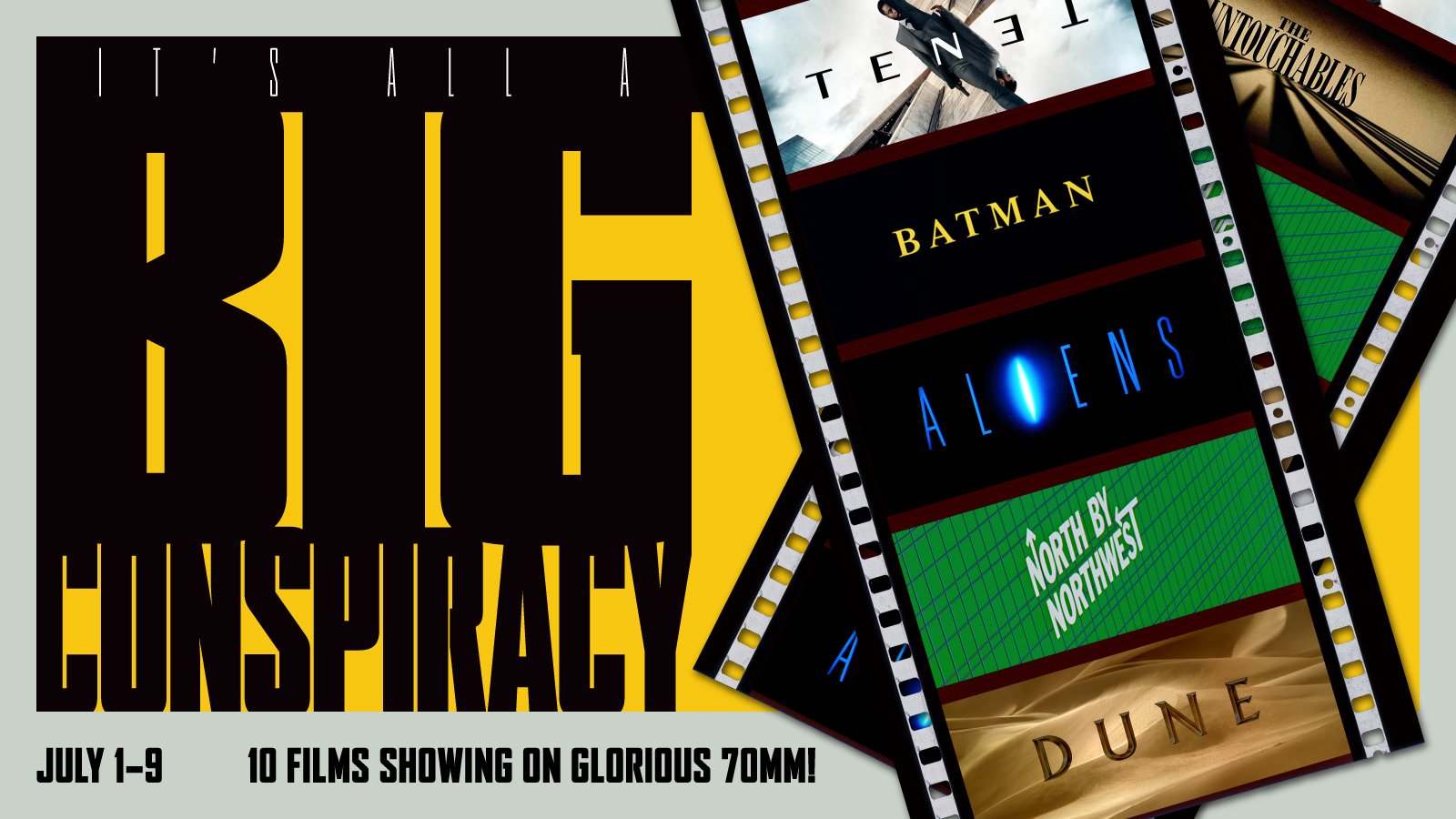
Film at Lincoln Center discloses “It’s All a BIG Conspiracy,” a 10-film program presented entirely on 70mm at the Walter Reade Theater from July 1 through 9. Exploring conspiracy across Hollywood genres, from espionage and sci-fi to superhero cinema, political biography, Shakespearean adaptation, crime drama, cult psychodrama, and the modern action blockbuster, the series includes the first New York City theatrical screening of Tim Burton’s Batman on 70mm since its original release in 1989.
Conspiratorial thinking has migrated from the margins toward one of the defining moods of our present—not merely the belief in a single grand secret plot but an ambient suspicion that the visible world is organized by forces beyond ordinary perception. Hollywood especially has made this suspicion feel so natural (amusing, even) that we often overlook how many of its most gripping pictures, far beyond the paranoid thriller canon, rely on the seductive notion that the world’s complexities ultimately yield to a secret, meticulously orchestrated logic. “It’s All a BIG Conspiracy” will put this idea under a magnifying glass with a program of 70mm films drawn to the allure of collusion as one of Hollywood’s most pliable and captivating storytelling maneuvers. Amplified by the grandeur of wide-gauge imagery and outsized soundscapes, these films will plunge us into worlds immersive enough to disarm our skeptical distance, yet detailed enough to reward near-forensic scrutiny.
The series brings together films by Alfred Hitchcock, David Lynch, James Cameron, Brian De Palma, Tim Burton, Spike Lee, Kenneth Branagh, Paul Thomas Anderson, Christopher Nolan, and Jordan Peele. From mistaken identity as Cold War statecraft (North by Northwest) to civic connivance in Chicago and Gotham City (The Untouchables, Batman), palace intrigue both Shakespearean and interstellar (Hamlet, Dune) to postwar cultic doctrine (The Master), state surveillance and the machinery of white supremacy (Malcolm X) to corporate cover-ups on a colonized moon (Aliens), time-traveling espionage (Tenet), and image-making as predation (NOPE), this July Fourth week invites you to peer beneath narratives whose darkly coordinated worlds feel uncannily at home in the American imagination… or simply surrender to the 5-perf spectacle.
Organized by Tyler Wilson.
Please note: Several films will be screened from the original release prints, which use a vintage magnetic soundtrack. Audio tracks are stored on magnetic stripes attached to the film print itself and are more prone to degrade than optical soundtracks. It will sound louder and richer compared to most 35mm prints and many digital sound systems, but because it’s an older analog format you’ll also hear the wear-and-tear of its many years going through projectors. This is part of the experience, so let every hiss, softness, pop, intermittent silence and visual imperfection remind you of the many audience members who saw this same print before you.
Tickets are on sale now. Tickets are $25; $22 for students, seniors (62+), and persons with disabilities; and $20 for FLC Members. Save $2 on each ticket with a 3+ Film Package.
Acknowledgements:
Film at Lincoln Center’s projectionists: Greg Sherman, Maeve Cavadini, Frank Hudec, Gregory Wolfe, and James Wolfe, and Tim White
FILMS & DESCRIPTIONS
All films will screen at the Walter Reade Theater (165 W. 65th St.)
North by Northwest
Alfred Hitchcock, 1959, U.S., 70mm, 136m
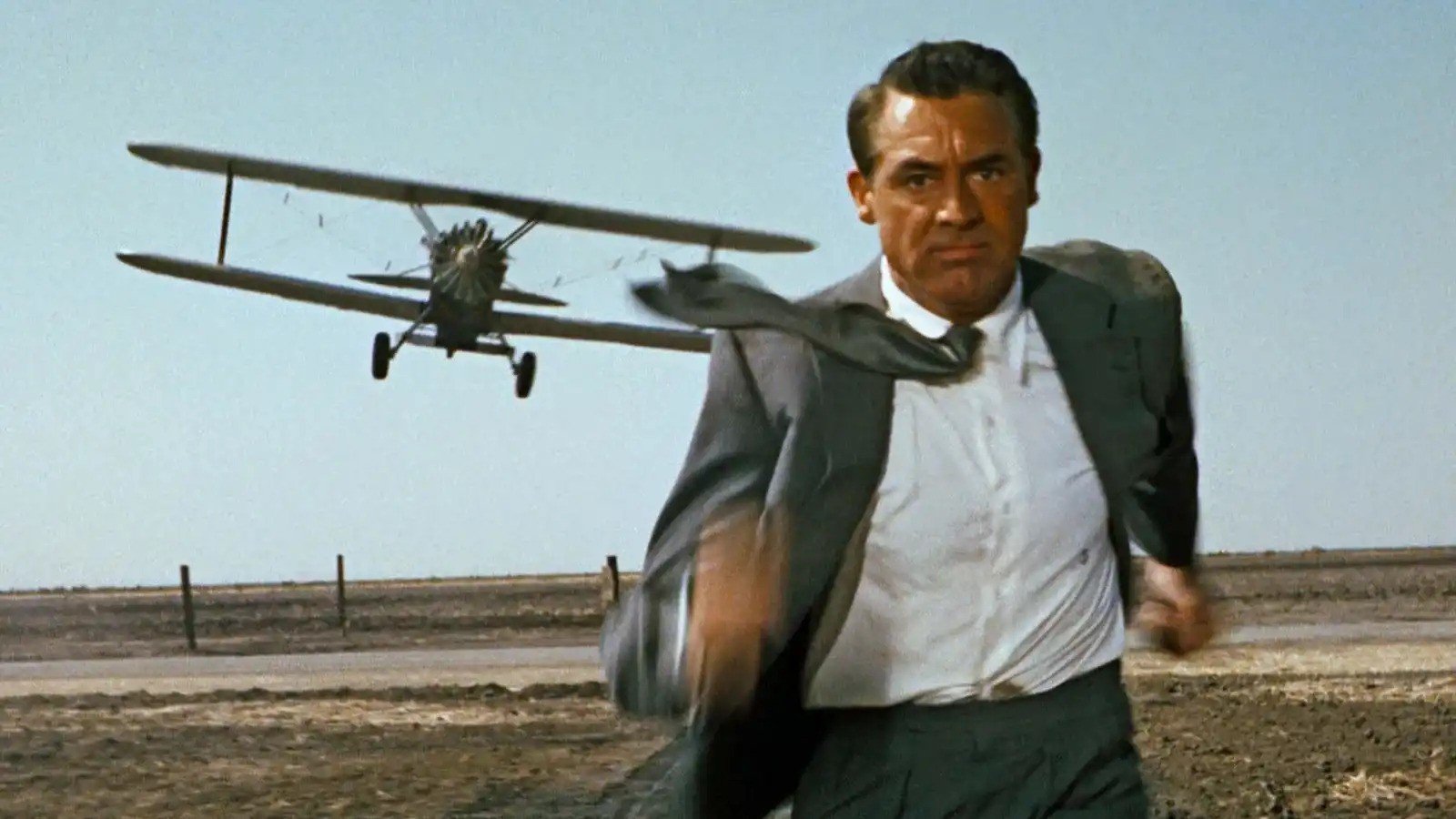
North by Northwest
Hitchcock brought the wrong-man espionage thriller into a new era with this stylish, brilliantly self-parodic chase across late-1950s America, where spies and Cold War anxieties now operate under corporate polish and Bergdorf Goodman. Cary Grant’s Roger Thornhill, a Madison Avenue man who looks to have been born wearing a suit, is mistaken for George Kaplan, a secret agent who doesn’t even exist, then chased from Manhattan to Mount Rushmore by James Mason’s silky smuggler Vandamm and Eva Marie Saint’s coolly unreadable Eve Kendall (who Hitchcock notably styled from pre-selected mannequin outfits). The ostensible conspiracy involves microfilm and Soviet agents in all but name, but Hitchcock’s decision to make Thornhill an advertising man gives this misrecognition road-movie-farce a far more stinging message about freedom from choice in the U.S. Mistaken by criminals, dismissed by police, framed in the press, maneuvered by his own government, and even mocked by his own mother, Thornhill survives an entire country built from masks and slogans only by learning to play the role written for him.
Filmed in 35mm VistaVision by Robert Burks and released in 1.85. Motion Picture Imaging scanned the original 8-perf 35mm VistaVision camera negative in 13K with all restoration work completed in 6.5K. The 70mm film print screening in this program was created in 2024 by filming out a new 65mm negative. The Film Foundation has given approval of the restoration.
Wednesday, July 8 at 6:00pm
Thursday, July 9 at 3:00pm
Dune
David Lynch, 1984, U.S., 70mm, 137m
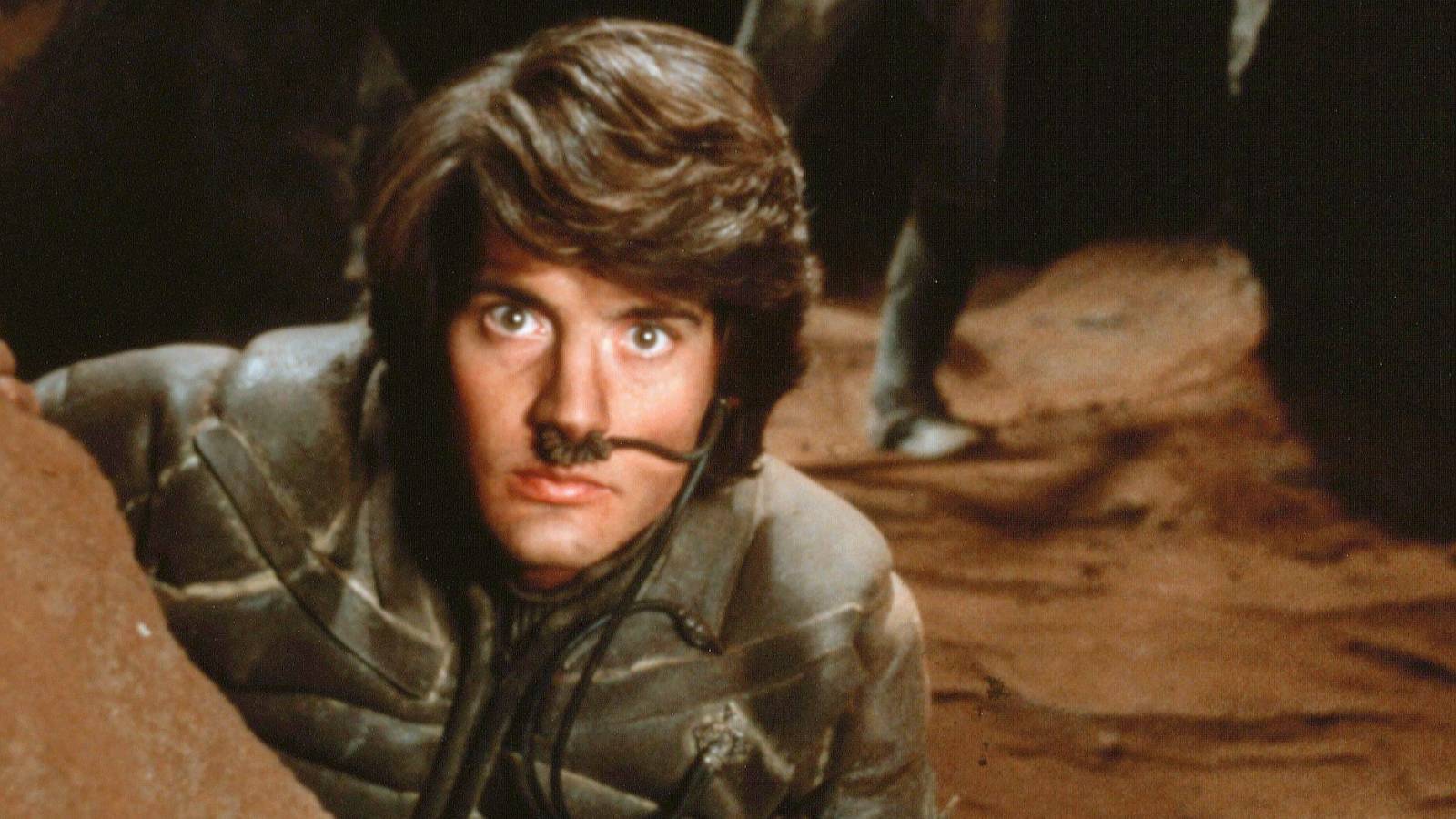
Dune. Courtesy of Universal Pictures.
At once wounded, compromised, majestic, and impossible to forget, David Lynch’s first “Universal Picture” remains one of the strangest monuments in American studio filmmaking. Kyle MacLachlan, in his first collaboration with the filmmaker, stars as noble heir Paul Atreides, sent to the desert planet Arrakis ostensibly to oversee his family’s stewardship of a valuable spice trade, only to uncover an imperial plot engineered to destroy his lineage. Frank Herbert’s original space-opera epic touched on everything from political manuvering to ecology and mystical consciousness, but Lynch—whose career-long fascination has always circled the disorienting and foreboding web of conspiracy, especially in Hollywood—converts the novelist’s cryptic mythology and palace intrigue into something altogether darker, stranger, and more tactile. Sometimes it’s stripped-down and brutally compressed, in other instances amplified by a weird, Academy Award-nominated soundscape (with music from Toto and Brian Eno), lavishly camp costumes, and optical manipulations and VFX that snap between the oneiric and grotesquely corporeal. Having lost creative control of the final cut, Lynch famously disowned this theatrical version (removing his name entirely from the television cut)—an experience difficult to ignore when considering his second film made with Universal, Mulholland Drive.
Filmed in Todd-AO 35 anamorphic by Freddie Francis, with additional VistaVision effects work, and enlarged to 70mm as part of its original theatrical release in 1984.
Friday, July 3 at 9:00pm
Monday, July 6 at 6:00pm
Aliens
James Cameron, 1986, U.S., 70mm, 137m
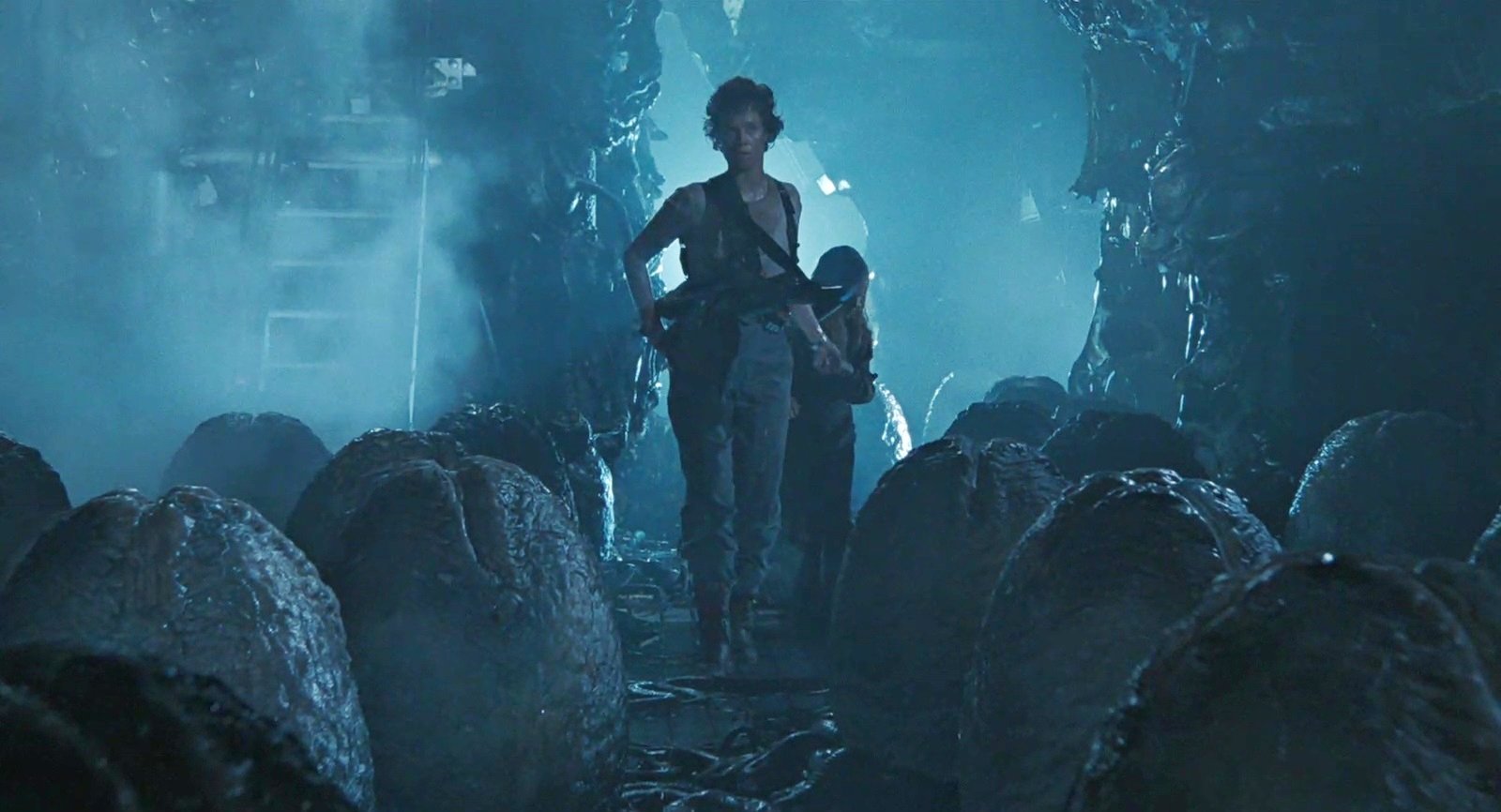
Aliens
Ridley Scott originated this extremely durable franchise as a claustrophobic, haunted-house horror set in space, and then James Cameron came in and mutated it into a maximalist, hardware-obsessed search-and-destroy war epic, screening at FLC on a 70mm-blow-up print that hasn’t screened in New York City since its original theatrical run in 1986. An unabashedly on-the-nose evocation of the trauma and hubris of Vietnam, Aliens places Sigourney Weaver’s battle-hardened (combat-junkie?) Ripley alongside a swaggering squad of Marines dispatched to a colonized moon, where foolhardy bravado and high-tech weaponry clash disastrously with alien enemies that dominate the terrain and the terrifying intimacy of close combat. The true horror, however, lies not just in the monstrous xenomorphs, but more insidiously in—SPOILER ALERT!—Burke (Paul Reiser), the bland middle manager of the military-industrial complex, Weyland-Yutani, whose concealed agenda turns Ripley, young Newt, the colonists, and even the aliens themselves into expendable test subjects all because of the ruthless calculus of a corporate business plan. So, which species is worse?
Filmed in 35mm spherical by Adrian Biddle using Moviecam equipment and enlarged to 70mm for select first-run engagements in 1986.
Friday, July 3 at 6:00pm
Thursday, July 9 at 9:00pm
The Untouchables
Brian De Palma, 1987, U.S., 70mm, 119m
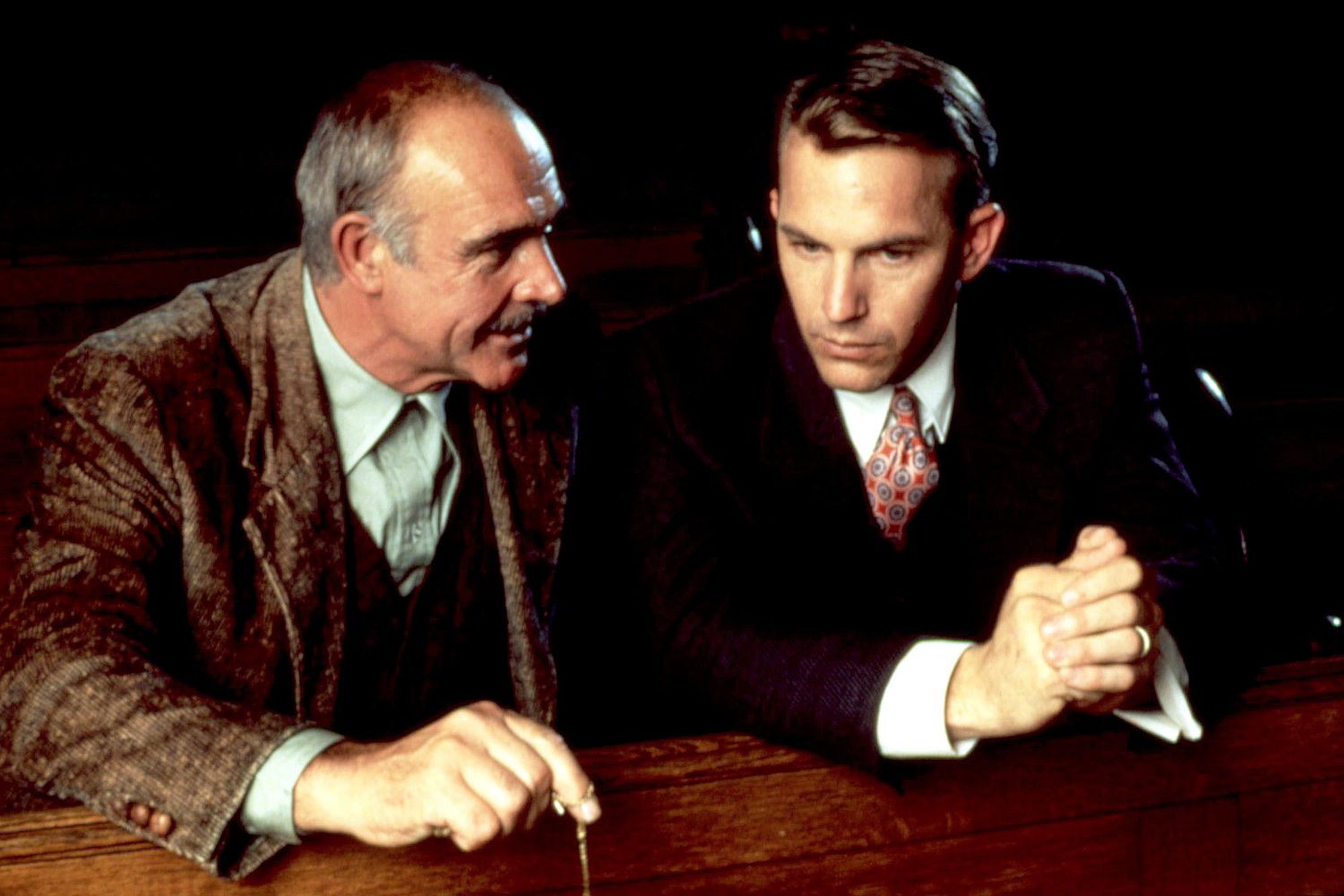
The Untouchables
Federal law under 18 U.S.C. § 371 requires conspirators to agree either to commit an offense against the U.S. or defraud it, with at least one party taking a concrete step toward that goal. In Prohibition-era Chicago, Treasury agent Eliot Ness (Kevin Costner) arrives determined to bring down Al Capone, only to discover that the gangster’s reach extends far beyond any one man. Brian De Palma transformed a TV property into a subversive crime epic drenched in pulp, melodrama, the western and, of course, a few dashes of Hitchcockian perversity, showing Capone (Robert De Niro, going full pudgy psychopath) not merely as a villain but as the visible face of an over-greased criminal system cloaked behind tailored suits, marble lobbies, opera boxes, and police badges. Even an elevator, in one of the film’s many bravura sequences, becomes a killing chamber, underscoring how criminal collusion occupies every corner of civic life. The brilliance of David Mamet’s screenplay is seeing how it counters Capone’s conspiracy with Ness’s secret posse—Sean Connery (in an Oscar-winning role), Andy Garcia, and Charles Martin Smith—who must themselves conspire outside the law to uphold it.
Filmed in 35mm Panavision by Stephen H. Burum and enlarged to 70mm for select first-run engagements in 1987
Wednesday, July 1 at 9:00pm
Tuesday, July 7 at 5:00pm
Batman
Tim Burton, 1989, U.S., 70mm, 126m
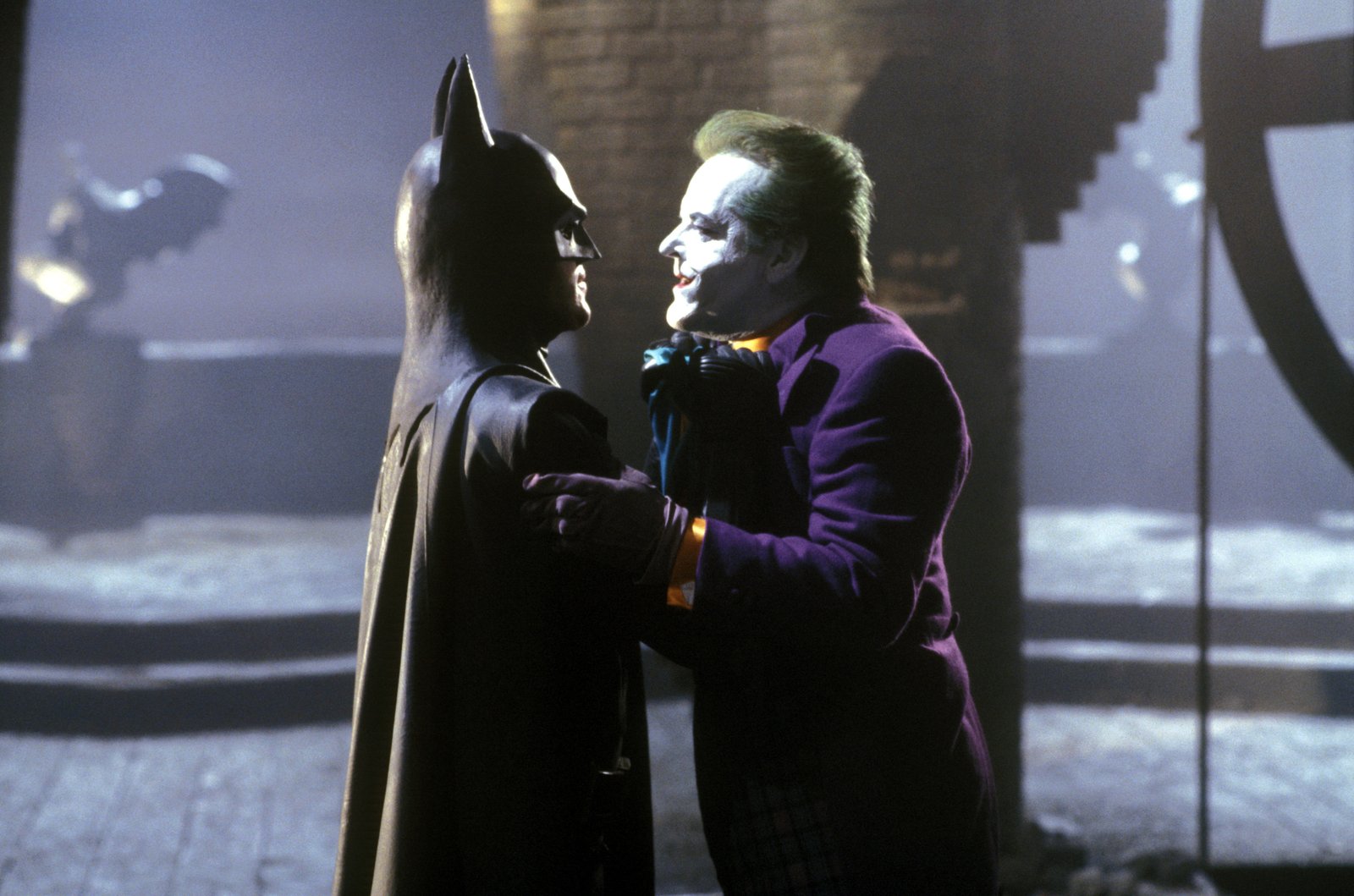
Batman. Courtesy of Warner Bros.
Conspiracy may not be the first word that comes to mind for Tim Burton’s foundational, strangely singular superhero blockbuster, yet Gotham City is undeniably a place where everything important unfolds behind a facade, a mask, or a logo. The police deny Batman’s existence even as their commissioner covertly collaborates with him; other cops are entangled in Carl Grissom’s organized crime ring operating through the corporate front Axis Chemicals; the mayor insists on keeping the bicentennial celebration alive while citizens are murdered by toxic consumer products concocted by the Joker, a flamboyant homicidal performance artist hellbent on exposing the city’s “real” ugliness. Released amid the merger drama that created Time Warner, and returning to FLC as Warner Bros. anticipates another new era, Batman—whose 70mm-blow-up print hasn’t screened in New York City since its original theatrical run in 1989—fundamentally redefined franchise filmmaking at the same time it imagined the nightmare version of a consumer culture literally killing customers with a smile. Starring Michael Keaton, Jack Nicholson, Kim Basinger, Jack Palance, and featuring a few wonderful songs by Prince.
Filmed in 35mm Panavision by Roger Pratt on 35mm Panavision and enlarged to 70mm for select first-run engagements in 1989.
Wednesday, July 1 at 6:00pm
Thursday, July 2 at 8:45pm – Extended introduction by Michael Uslan (originator/executive producer of the Batman films)
Friday, July 3 at 3:00pm
Saturday, July 4 at 12:30pm
Sunday, July 5 at 8:45pm
Malcolm X
Spike Lee, 1992, U.S., 70mm, 202m
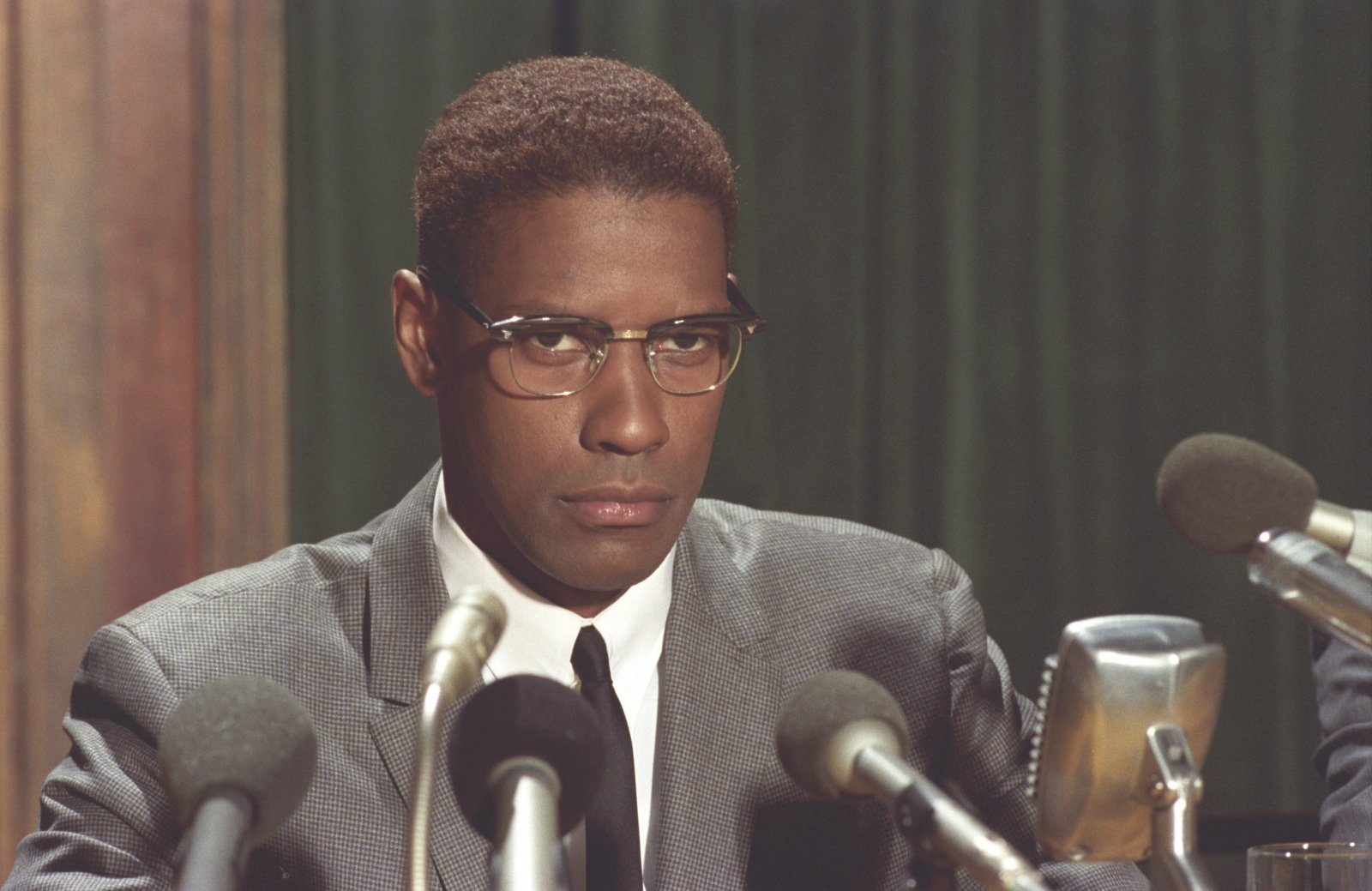
Malcolm X. Courtesy of Warner Bros.
“Read behind the words.” Begun with an early screenplay by James Baldwin and Arnold Perl, then passed through years of stalled drafts and would-be directors, Malcolm X became, in Spike Lee’s hands, a globe-trotting studio epic pitched between civil-rights biopic and post–Rodney King indictment of the U.S.. Denzel Washington gives commanding form to Malcolm’s great original personality, as Lee structures the biography as a chain of rebirths born out of hubris, moving through distinct eras of Malcolm Little, Detroit Red, Malcolm X, and finally el-Hajj Malik el-Shabazz. Without euphemism, the film plainly articulates state-sanctioned (especially Merriam-Webster-sanctioned) history itself as a conspiracy; whiteness as an organized, hidden-in-plain-sight power with pedagogical, carceral, sexual, and economic tendrils; and how Black political consciousness emerges in direct opposition to a constantly threatened, terrorized, and surveilled state of being. By deploying prestige biopic conventions and big-budget ambitions—the production became the first American commercial film allowed to shoot on-location in Mecca—despite industrial pressure to make the film smaller and cheaper, Lee smuggled a radical analysis of an American life that remains vital, moving, provocative, and unsparing as ever.
Filmed in Super 35 by Ernest Dickerson and enlarged to 70mm for select first-run engagements in 1992.
Saturday, July 4 at 3:30pm
Tuesday, July 7 at 7:30pm
Hamlet
Kenneth Branagh, 1996, U.K./U.S., 70mm, 242m
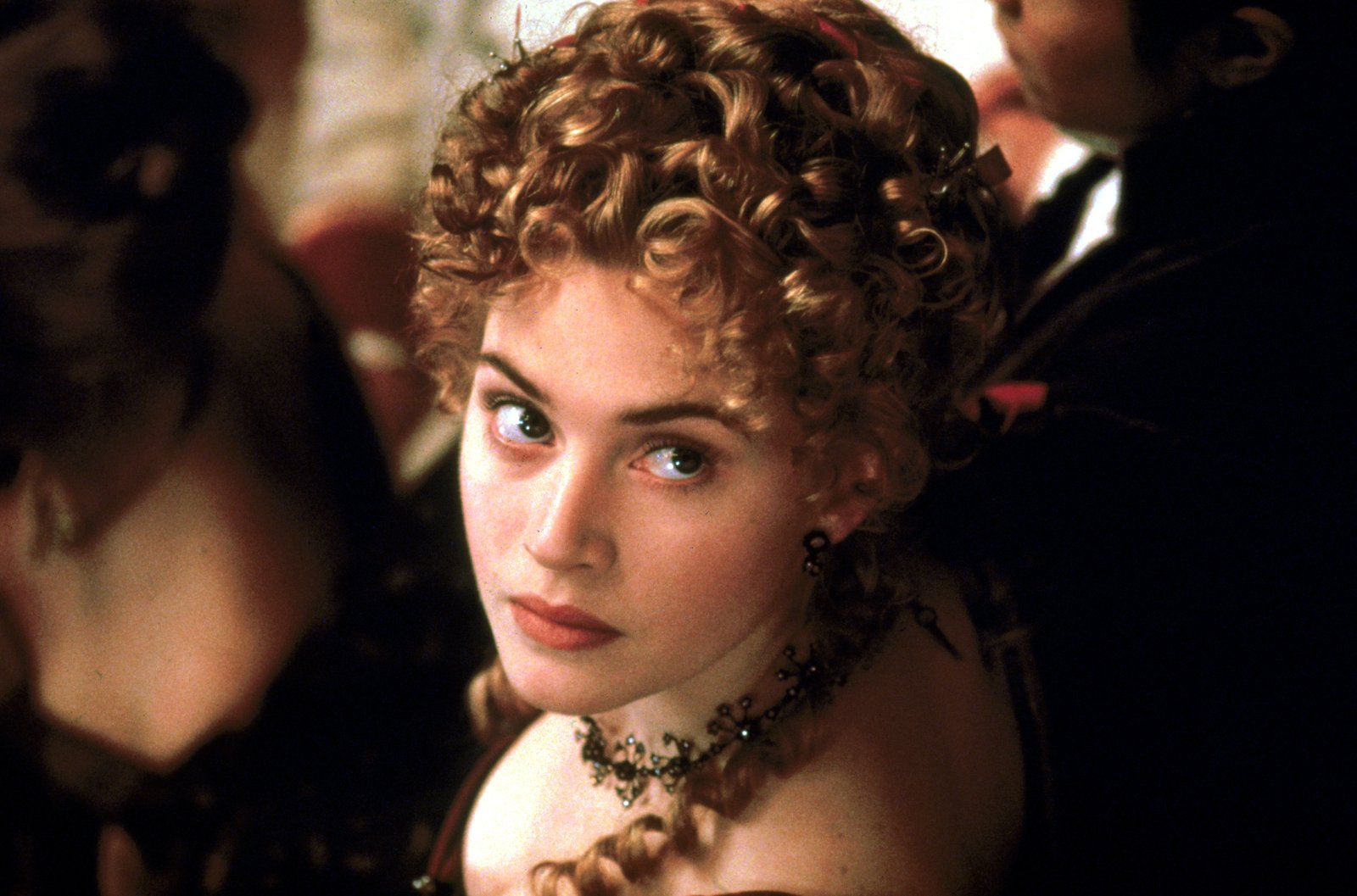
Hamlet
Having established himself, with the Oscar-winning Henry V and Much Ado About Nothing, as a consummate interpreter of the Bard, writer-director-actor Kenneth Branagh made one of the great all-or-nothing wagers in modern literary cinema: a 70mm film version of Shakespeare’s longest—and arguably greatest—play, using the complete unabridged text. The result is a glorious cinematic feast, updating the play’s setting to the 19th century and trading the dark, noirish look of previous adaptations for bold, vibrant colors and visual pageantry. Yet beneath this splendor remains the original conspiratorial premise of a king secretly murdered, his brother’s crime concealed under the guise of legitimate succession, and a court compelled to function in spite of it all. Branagh’s opulent, mirrored sets literalize this intrigue, continually positioning characters within two-way mirrors and secret corridors that reinforce the pervasive sense of surveillance in the source text. Released by Columbia Pictures into a U.S. preoccupied with Whitewater, FBI scandals, and anti-government extremism intensified by the Oklahoma City bombing, the 1996 adaptation gave soaring, intricate poetry to institutional mistrust. Branagh is superb as the troubled Danish prince, while the all-star supporting cast includes Julie Christie, Kate Winslet, Derek Jacobi, Robin Williams, and many more. The film was nominated for four Academy Awards, including Best Adapted Screenplay, Art Direction, Costume Design, and Score.
Screenings will include a 15-minute intermission (following Scene IV of Act IV).
Filmed in 65mm Panavision Super 65 by Alex Thomson and released in 70mm prints for select first-run engagements in 1992.
Sunday, July 5 at 12:00pm
Monday, July 6 at 1:00pm
The Master
Paul Thomas Anderson, 2012, U.S., 70mm, 137m
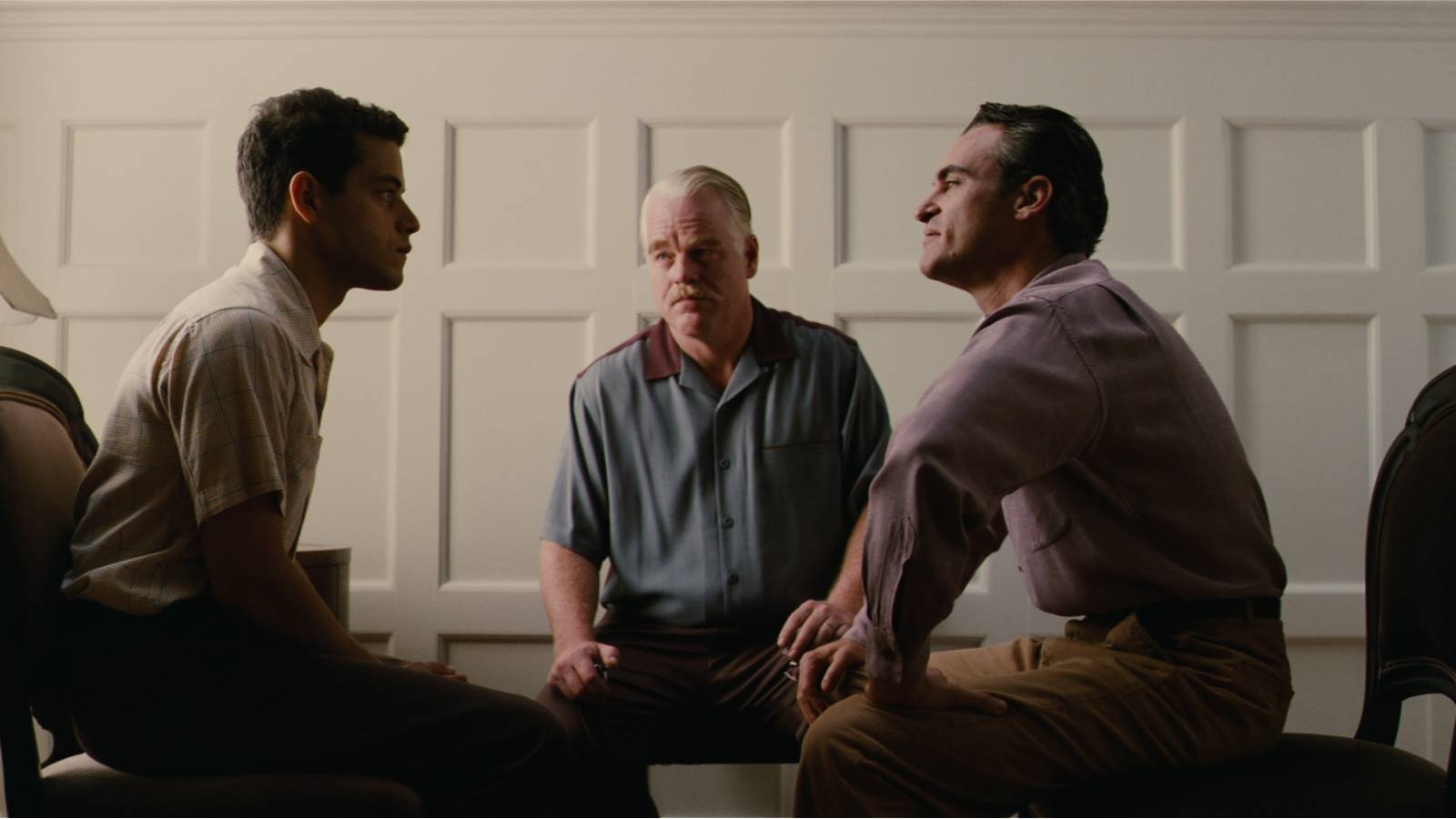
The Master. Courtesy of Lionsgate.
A cult exposé, a postwar psychodrama about power, and a two-hander featuring career-best performances from Philip Seymour Hoffman and Joaquin Phoenix—The Master may be all these things, yet Paul Thomas Anderson himself has described it as being closer to a love story between one man who wants to save another, to “hug him and hold him in his pocket,” but perhaps also craves “the thrill of being bitten by him.” Freddie Quell, a WWII veteran rendered grotesquely singular by Phoenix, falls under the paternal, erotic, therapeutic, and commercial sway of Lancaster Dodd (Hoffman), leader of a mystic movement known as The Cause, with his wife Peggy (Amy Adams) embodying its disciplinary intelligence behind Dodd’s showmanship. Despite Scientology becoming the subject of serious institutional scrutiny by the early 2010s, Anderson was less interested in tabloid scandal than in Dianetics’ seductive, dangerous promise to a “victorious” postwar U.S., particularly the allure of secret past-life transgressions and obfuscated language accessible only to initiates. Beguiling and elliptical, The Master explores those who want to control and be controlled, to explain and be understood, and how a closed belief system can exploit a very human hunger for coherence and consolation.
Filmed by Mihai Mălaimare Jr almost entirely in 65mm Panavision, with small amounts of 35mm material. Film at Lincoln Center is screening from one of the 5-perf 70mm prints struck for its 2012 theatrical release.
Saturday, July 4 at 8:00pm
Monday, July 6 at 9:00pm
Wednesday, July 8 at 3:00pm
Tenet
Christopher Nolan, 2020, U.S., 70mm, 150m
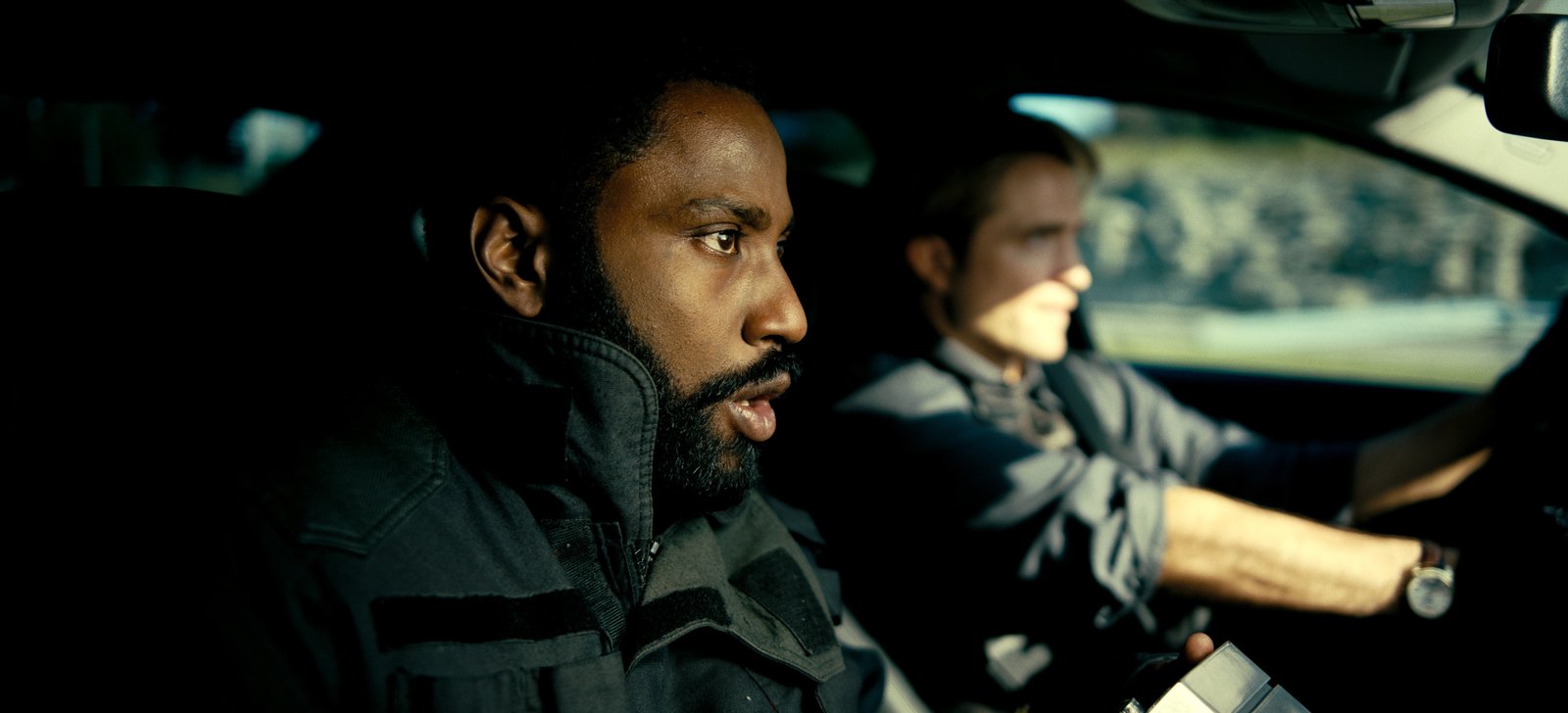
Tenet. Courtesy of Warner Bros.
Don’t try to understand it… An original, $200 million-plus action film released in the thick of a worldwide disaster, Christopher Nolan’s “quantum Cold War thriller” remains one of the strangest objects ever to occupy the center of 21st-century studio moviemaking. It is a time-travel blockbuster that, in practice, the film industry asked to help reverse the collapse of theatrical moviegoing itself. John David Washington stars as an unnamed operative recruited by Tenet, a clandestine organization seeking to prevent a dying oligarch (Kenneth Branagh), armed with a time inversion device, from ending the world. From its palindromic structure and deliberately murky dialogue submerged beneath Ludwig Göransson’s blaring, flipped score to its dense, hermetic plot and nested conspiracies, the film seems designed to resist first-pass consumption. Spycraft is lavishly labyrinthine, a marriage story becomes a police-state horror, and the protagonist ultimately finds himself revealed as the future architect of the very machinery he’s been navigating. Especially resonant as a pandemic-era release, Tenet arrived in a world already fractured by asynchronous experiences of time, and—perhaps most frighteningly—a new era in which everyone’s actions can be indexed and weaponized by unseen forces downstream.
Filmed by Hoyte van Hoytema using large-format 65mm cameras in both 5-perf 65mm Panavision and 15-perf IMAX formats. FLC is screening from one of the 5-perf 70mm prints struck for its 2020 theatrical release.
Friday, July 3 at 12:00pm
Sunday, July 5 at 5:15pm
Wednesday, July 8 at 9:00pm
NOPE
Jordan Peele, 2022, U.S., 70mm, 130m

NOPE
Jordan Peele’s sci-fi-horror outing transposes the alien-invasion thriller to America’s wide-open West, where the family behind Haywood Hollywood Horses—descendants of the anonymous Black rider in Eadweard Muybridge’s proto-cinematic motion studies—finds itself battling not only the threat lurking in the sky but the industry that has long ago erased them. After their father (Keith David) dies mysteriously, the devoted, taciturn OJ (Daniel Kaluuya) and his restless sister Emerald (Keke Palmer) attempt to capture evidence of the phenomenon above their ranch while their neighbor Jupe (Steven Yeun), a former child star turned Western theme park impresario, makes his own spectacle of it. Peele has described NOPE as a film about “our addiction to spectacle” and the “insidious nature of attention,” and its conspiracies (like the best of them) are scattered as breadcrumbs throughout his wonderful third feature. Linking cinema’s erased Black origins, child-stardom trauma, and Hollywood’s exploitative labor hierarchies, the film quite literally reveals how an industry built on spectacle masquerades as entertainment while it, in truth, swallows people whole.
For more on Peele’s own framing of these ideas, see FLC’s 2023 series The Lost Rider: A Chronicle of Hollywood Sacrifice, curated by Peele around NOPE’s concerns with image-taking, child stardom, Hollywood exploitation, and the erased Black rider at cinema’s origins.
Filmed by Hoyte van Hoytema using both 5-perf 65mm and 15-perf IMAX 65mm cameras. FLC is screening from one of the 5-perf 70mm prints struck for its 2022 theatrical release.
Thursday, July 2 at 6:00pm
Tuesday, July 7 at 2:00pm
Thursday, July 9 at 6:00pm
FILM AT LINCOLN CENTER
Film at Lincoln Center (FLC) is a nonprofit organization that celebrates cinema as an essential art form and fosters a vibrant home for film culture to thrive. FLC presents premier film festivals, retrospectives, new releases, and restorations year-round in state-of-the-art theaters at New York’s Lincoln Center for the Performing Arts. FLC offers audiences the opportunity to discover works from established and emerging directors from around the world with a passionate community of film lovers at marquee events including the New York Film Festival and New Directors/New Films.
Founded in 1969, FLC is committed to preserving the excitement of the theatrical experience for all audiences, advancing high-quality film journalism through the publication of Film Comment, cultivating the next generation of film industry professionals through our FLC Academies, and enriching the lives of all who engage with our programs.
Rolex is the Official Partner and Exclusive Timepiece of Film at Lincoln Center.
Film at Lincoln Center receives generous, year-round support from the New York City Department of Cultural Affairs in partnership with the City Council, and the New York State Council on the Arts with the support of the Office of the Governor and the New York State Legislature. American Airlines is the Official Airline of Film at Lincoln Center. For more information, visit filmlinc.org and follow @filmlinc on X, Instagram, and Bluesky.
For press inquiries regarding Film at Lincoln Center, please contact:
John Kwiatkowski, Film at Lincoln Center, [email protected]
Eva Tooley, Film at Lincoln Center, [email protected]


