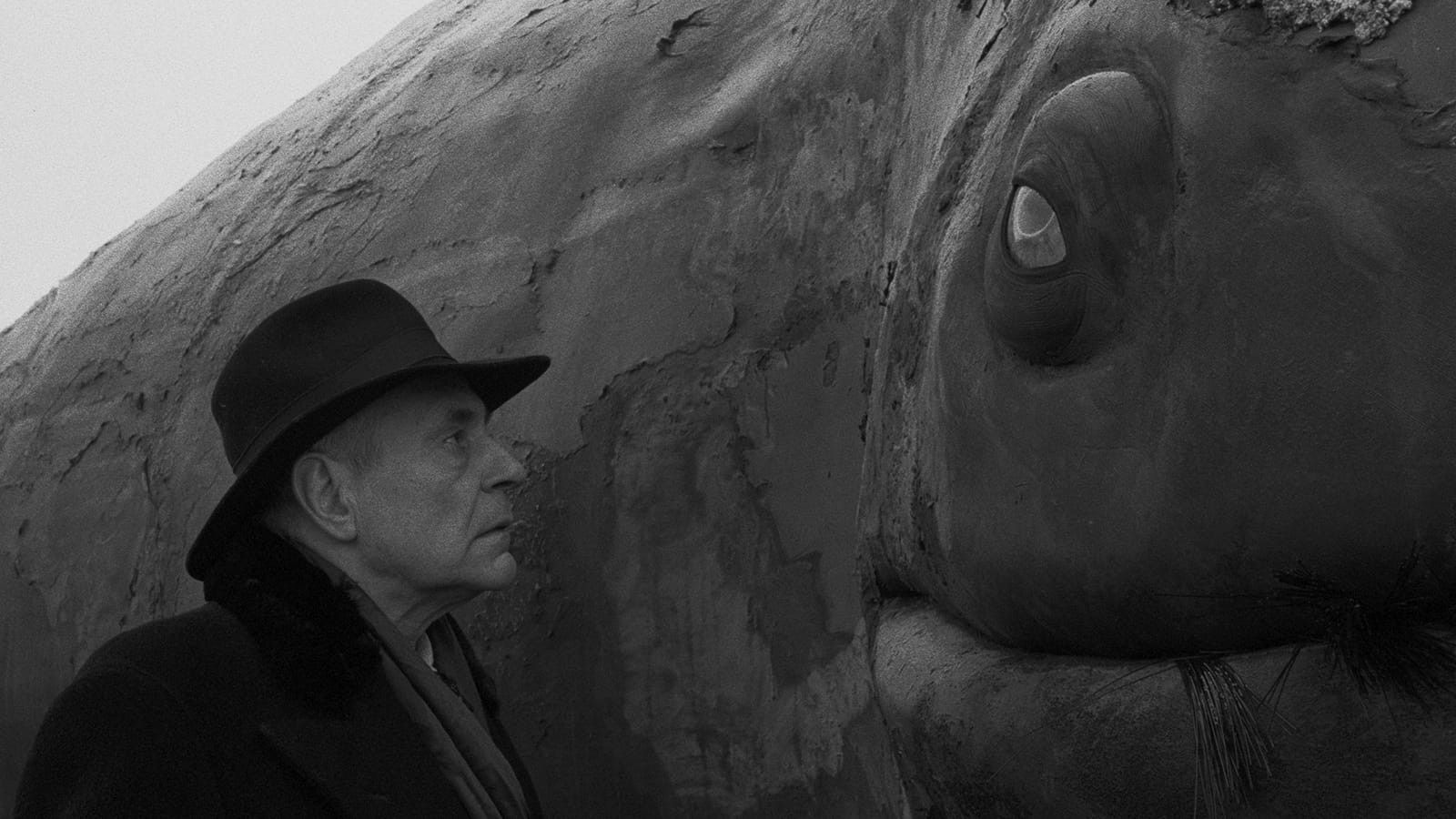
Farewell to Béla Tarr
March 27–April 2, 2026
A tribute to the late Hungarian filmmaker whose singular body of work—among the most rigorous and influential in modern cinema—demands to be seen on the big screen.
Béla Tarr
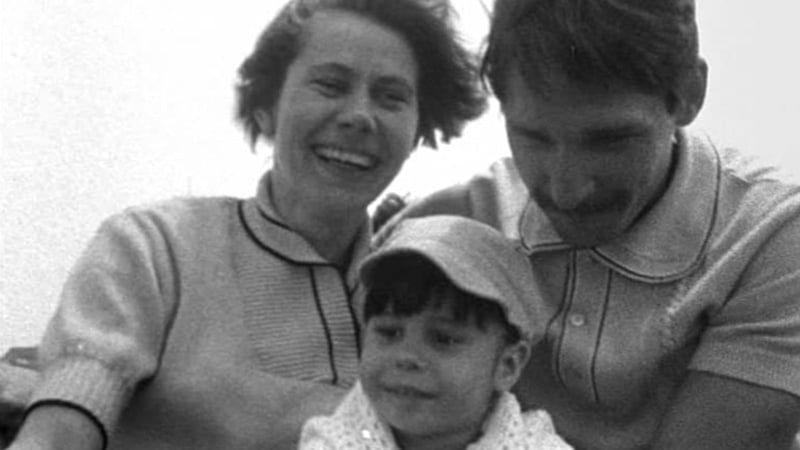
1979|
Hungary|
105 minutes|
Hungarian with English subtitles
Béla Tarr’s striking debut, made at age 22, immerses us in the suffocating life of a multigenerational Budapest household during a housing crisis, revealing the real-time tension and command of duration that would define his later work.
Béla Tarr
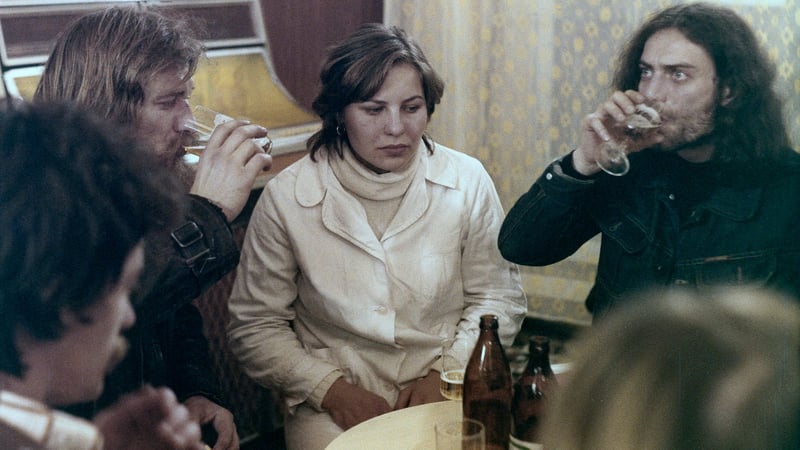
1981|
Hungary|
128 minutes|
Hungarian with English subtitles
Shot in color with raw handheld immediacy, The Outsider widens Béla Tarr’s social canvas, following a young violinist whose fragile ambitions buckle under economic strain and personal irresponsibility.
Béla Tarr
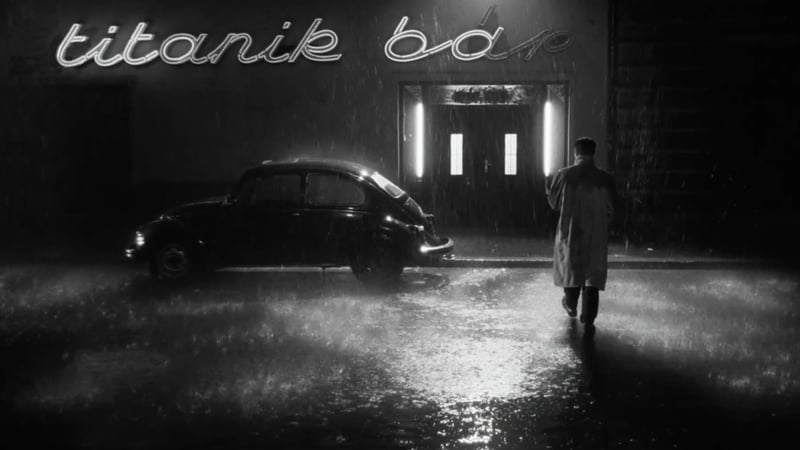
1988|
Hungary|
121 minutes|
Hungarian with English subtitles
The first of Béla Tarr’s six collaborations with novelist László Krasznahorkai is a highly stylized, black-and-white film noir, focusing on the efforts of a dour loner to steal back his estranged lover from her debt-addled husband.
Béla Tarr
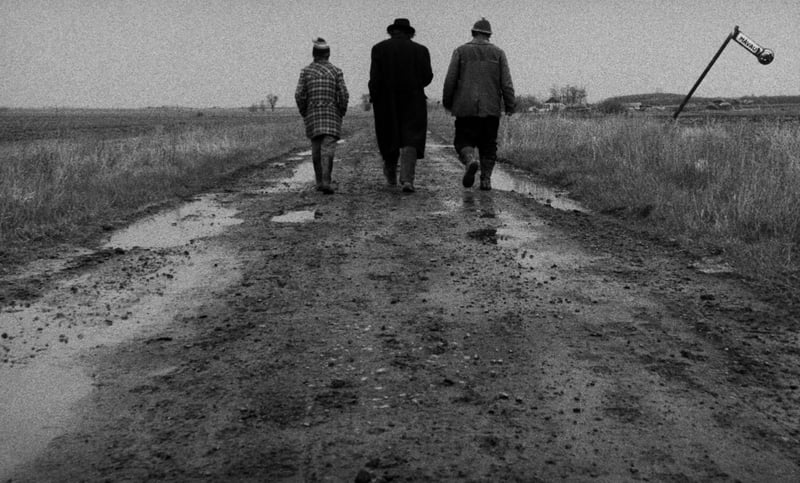
1994|
Hungary / Germany / Switzerland|
439, plus one 20-minute intermission and one 30-minute intermission|
Hungarian with English subtitles
A 7.5-hour epic structured in 12 interlocking chapters, Béla Tarr’s international breakthrough follows the collapse of a rural collective and the seductive promises of a returning prophet. Screening in three parts with one 20-minute intermission and one 30-minute intermission.
Béla Tarr
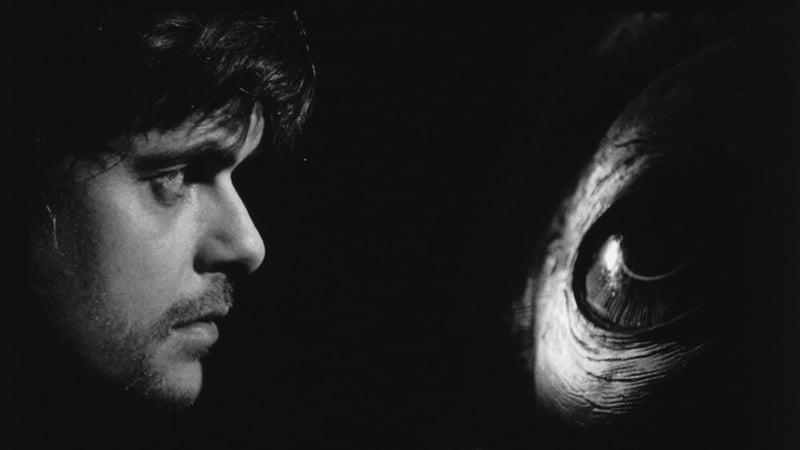
2000|
Hungary / Germany / France|
145 minutes|
Hungarian with English subtitles
Directed with Ágnes Hranitzky and adapted from a novel by László Krasznahorkai, Werckmeister Harmonies stands among the defining achievements of Béla Tarr’s late period and remains one of his most widely celebrated works.
Béla Tarr

2007|
Hungary / Germany / France / Italy|
137 minutes|
English, French, and Hungarian with English subtitles
In his penultimate film, codirected with Ágnes Hranitzky, Béla Tarr adapts a Georges Simenon thriller about a railway switchman who retrieves a suitcase filled with stolen money, which gradually estranges him from his wife (Tilda Swinton) and daughter.
Béla Tarr
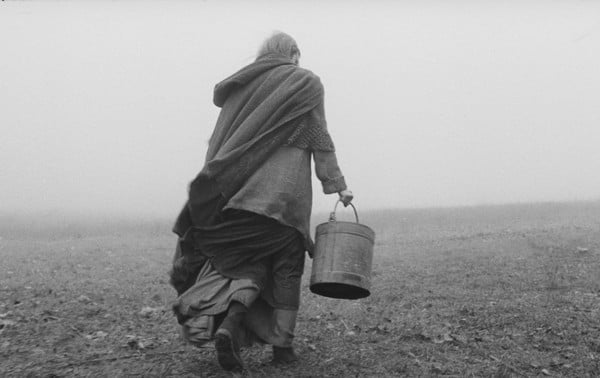
2011|
Hungary / France / Germany / Switzerland|
146 minutes|
Hungarian with English subtitles
Composed in rigorously measured long takes and photographed in stark black and white, Béla Tarr’s final feature is an elemental meditation on endurance, exhaustion, and the limits of belief.
About the Series
Few filmmakers reshaped our sense of cinematic time as radically as Béla Tarr. “Film isn’t the story,” he once said. “It’s mostly picture, sound, a lot of emotions.” Across a body of work at once severe and deeply humane, Tarr turned duration into structure, forging a cinema in which slowness and circularity exposed lives caught in unbreakable patterns. With his passing in January 2026, Film at Lincoln Center returns to a filmmaker whose singular body of work stands among the most rigorous and influential in modern cinema, tracing Tarr’s evolution from the bracing immediacy of his striking debut to the elemental starkness of his final work.
Tarr emerged in the late 1970s with unflinching portraits of working-class Hungary under its late Kádár era, as in The Family Nest and The Outsider. In the decades that followed, working in close creative partnership with editor and later co-director Ágnes Hranitzky, as well as novelist László Krasznahorkai and composer Mihály Víg, his cinema deepened in scope and intensity. Films such as Damnation, Sátántangó, Werckmeister Harmonies, and The Man from London unfold in extended black-and-white takes, their rain-soaked towns and gathering crowds held in sustained attention as narrative momentum recedes and atmosphere gathers weight and presence—an approach carried to its austere conclusion in The Turin Horse.
This March, join us at the Walter Reade Theater to encounter these major works in the space they demand, and to gather in remembrance of a filmmaker who trusted the image, the sound, and the time it takes to truly see.
Organized by Florence Almozini and Tyler Wilson.
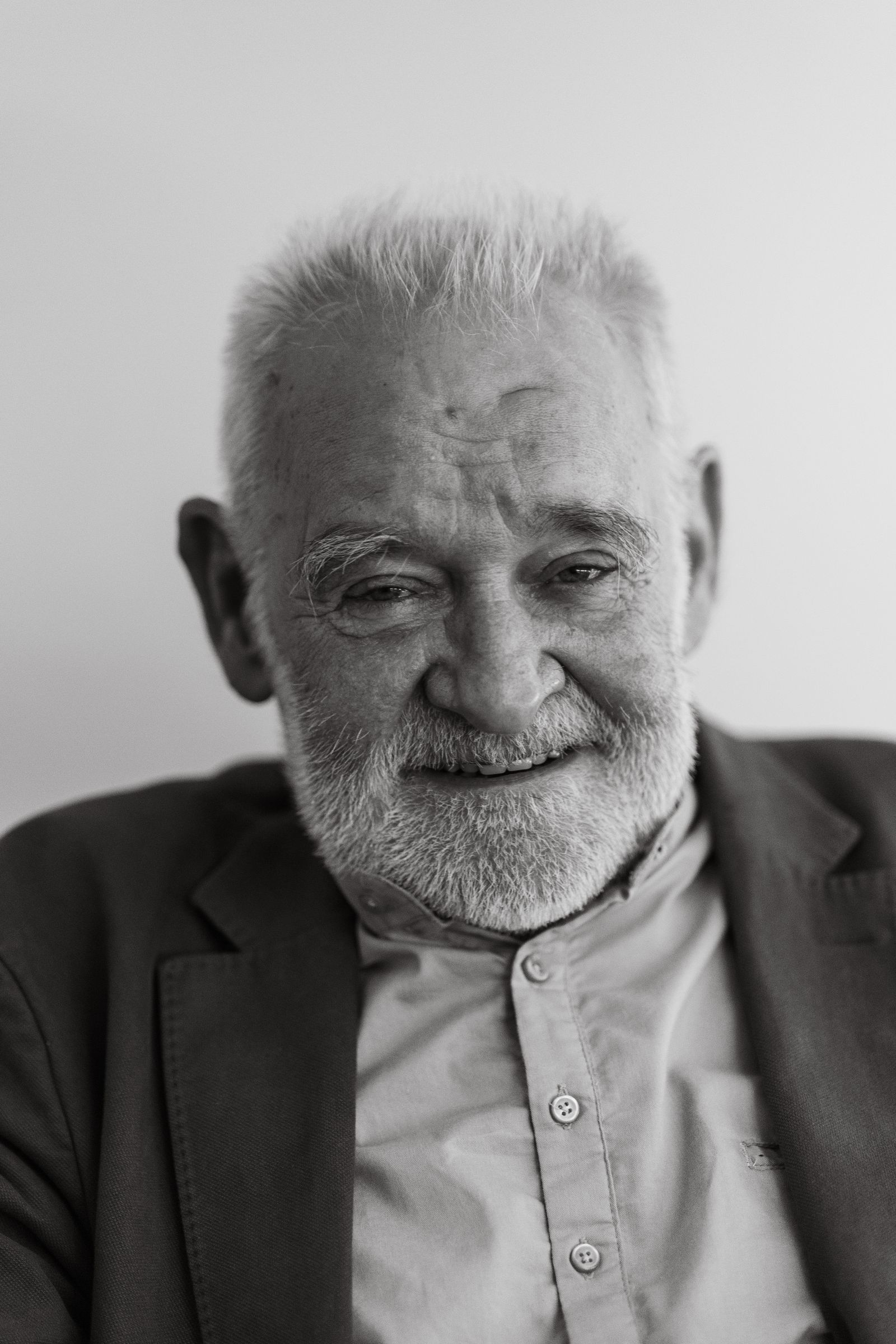
Béla Tarr at Film at Lincoln Center in 2023. Photo by Arin Sang-urai.
In memory of Béla Tarr, director and cinematographer Fred Kelemen (who shot Tarr’s featuresThe Man From London and The Turin Horse) has shared his personal memories of working with the great Hungarian filmmaker below.
The films of Béla Tarr as well as the ones of my own and of some others that do not immediately offer reassurance, soothing relief, carefree ease or even instant hope, are often described as “dark,” even “gloomy.” They are not gloomy, they shine, and their darkness allows us to see. They lead into a depth behind, beneath, above, or within the very surface that is overlaid with its dazzlingly bright reflections and blinding glimmers, concealing what is hidden and kept silent, especially by those who want us to believe that everything is fine, that is, for our “own good”, in order to distract us from their true intentions.
In these times of hypocritical moralists, deceitful prophets, exploitative saviours and deadly ideologies, it is necessary to dare to go beyond the dazzling lights, beyond the dizzying spectacle, with its deafening drum rolls, to enter the clear, quiet darkness that opens to us, where the reward of patience is the image of man slowly revealed to the eye and the beating of his heart slowly heard – in his wounds, his fear, his despair, his fragility, his longing, his beauty, his audacity and his creativity.
Praise to the benevolent darkness, which heals the inflamed gaze and allows to see.
Béla Tarr and I entered our connection in this material world with a gaze 36 years ago in Berlin, and we left it with closed eyes 36 days ago in Budapest. Some days after my last visit to Béla at the hospital, he passed away on the morning of my birthday. Between the first silent gaze exchanged by two men, strangers to each other, in a café in Berlin and the closed-eyes silent farewell of two friends and artistic collaborators at a hospital in Budapest stretches a long path of joy, passion and hope, exhaustion, struggles and despair, in defense of an art which is so endangered that every moment of a lazy, cowardly compromise can bring it down and hence extinguish it.
As there was a first feature film of Béla – “Családi tüzfészek” (“Family Nest”) (1979) – there was, of course, a last feature film of him – “A torinói ló” (The Turin Horse) (2011). At the last shooting day, before shooting the last scene, the last shot of The Turin Horse, Béla and I walked for a long time silently, aimlessly, at the film’s location on the wasteland between the house and the lonely tree, like two stray dogs. Suddenly we both started to speak in the same moment just two words: “So sad.” Then we fell into silence again, both feeling the melancholy of this moment shortly before the shooting of the last scene of this last feature film together, and finally walked to the set saying “Let’s shoot!”
It was already decided before the work on The Turin Horse started that Béla would not shoot a film anymore after. The short Muhamed (10 min.) (2016), which we shot in Sarajevo for Béla’s exhibition Till the End of the World at the “Eye” Film Museum in Amsterdam, was just an afterglow. And our filmic work Missing People (98 min.), shot in Vienna in 2019, was not called to be a feature film but presented as an installation at the “Vienna Festival” (“Wiener Festwochen”) six times only.
So in 2011, when The Turin Horse had its world premiere at the Berlin International Film Festival, Béla left the “film world”. No other film was contributed to it by him. But he did not disappear. He established the “Film Factory” in Sarajevo, where he and I worked with students from 2012 till 2016 and he continued to encourage young filmmakers to find and walk their individual artistic paths by giving workshops and masterclasses worldwide. Béla left the so-called “film world” 15 years ago, which is a loss since then, at least for the ones who did not reject or even act against his work – the resistance and obstacles were massive sometimes – but his death 20 days ago is a painful loss now for the ones who were close to him through the shared work as students or by bonds of friendship or love.
Franz Kafka once wrote: “A book must be the axe for the frozen sea within us. I believe that.” Equivalently, a film must be the axe for the frozen sea within us. That is what I believe, and it certainly is what Béla believed. Let’s not get tired or discouraged, distracted or corrupted, let’s not be cowardly or afraid, let’s not give up on doing again and again the liberating creative work of breaking the ice.
Without light in the darkness, you cannot make movies.”
—Béla Tarr


