The Devil Finds Work: James Baldwin on Film
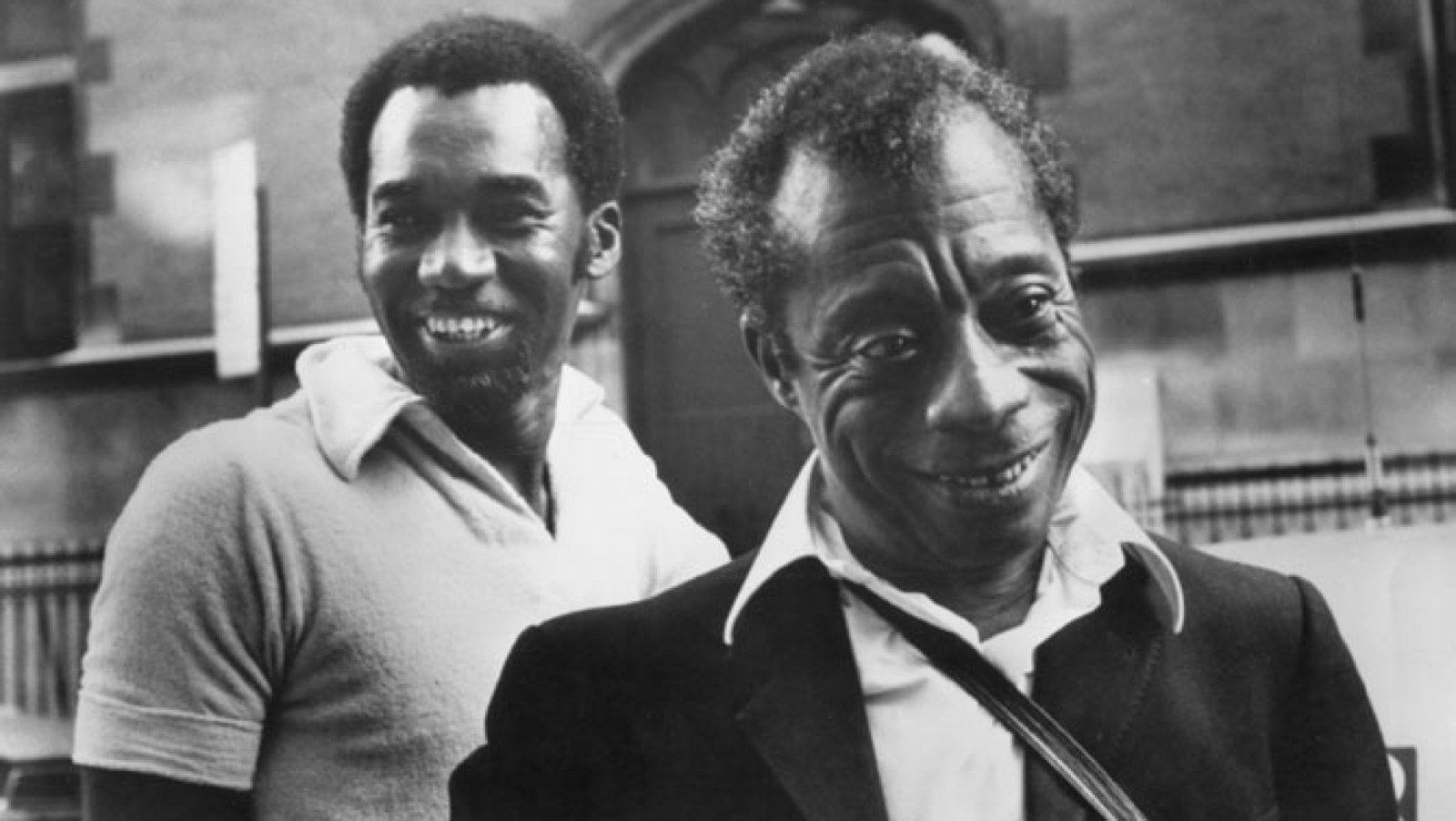
Co-presented with Columbia University School of the Arts Office of Community Outreach and Education, this series is a survey of television appearances, documentaries, and key films in which the author, playwright, and activist James Baldwin (1924-1987) appeared or that compelled his analysis. The series takes its cue from The Devil Finds Work, Baldwin’s powerful, under-appreciated 1976 book-length essay on American cinema, and seeks to situate this major writer as a keen film critic wholly unafraid to throw off the veil and excavate the deep and often troubling nature of the national fascination with celluloid.
In This Series
126 minutes
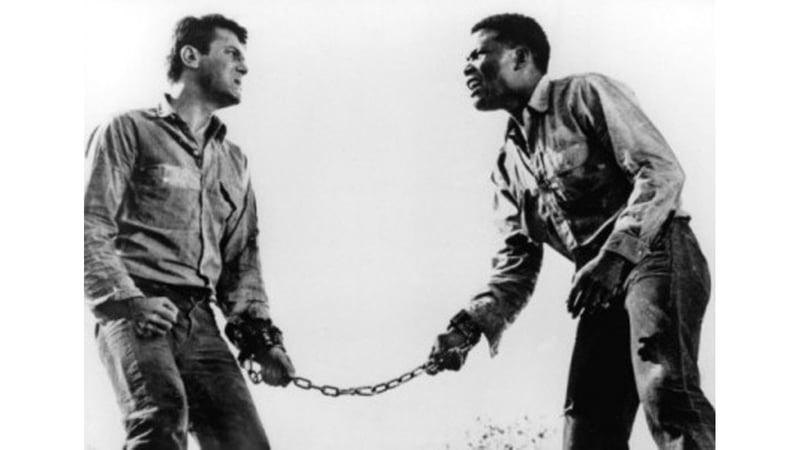
A huge hit when it was released, The Defiant Ones, which Baldwin analyzes extensively in The Devil Finds Work, stars Sidney Poitier and Tony Curtis as escaped convicts who are literally yoked together. My Childhood Part 2: James Baldwin’s Harlem features Baldwin narrating how his early years in Harlem made him alive to the forces at work in the city and American society to manage the black population.

An illustrated discussion and presentation of clips of films discussed by Baldwin in The Devil Finds Work, including The Exorcist, In the Heat of the Night, Guess Who’s Coming to Dinner, and The Defiant Ones.
Stan Lathan

1984|
USA|
96 minutes
This poignant adaptation of James Baldwin’s first novel restages the conflict of religion, sexuality, race, and poverty in 1920s and 1930s Harlem that shaped so much of the author’s political, spiritual, and moral convictions.

USA / UK|
108 minutes
I Heard It Through the Grapevine, in which James Baldwin retraces his time in the South during the Civil Rights Movement, is paired with the short James Baldwin from Another Place (Sedat Pakay, 13m), which finds Baldwin in Istanbul musing about race, the American fascination with sexuality, insights into his interrupted writing decade in the country, and more.
William Miles
1981|
USA|
240 minutes
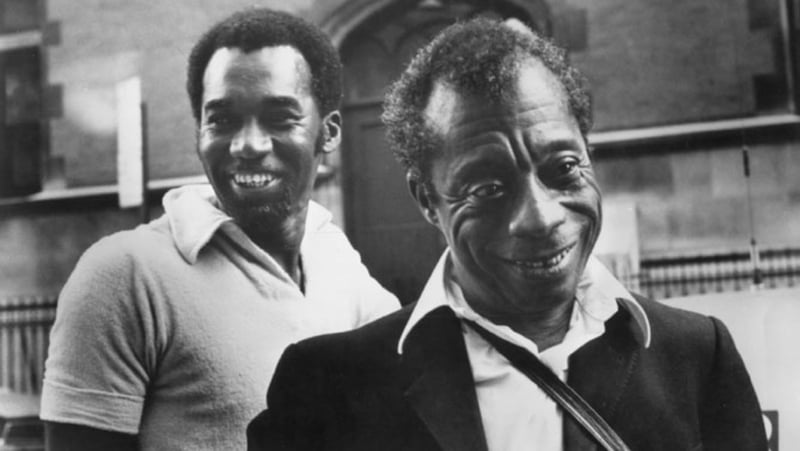
Baldwin is interviewed for William Miles’s landmark epic documenting the early settlement of the Village of Harlem in the 17th century, to the specter of urban renewal and redevelopment in the 1970s. The film chronicles the centuries of change and political and artistic expression that has made this complex hamlet the capital of urban America.
1987|
USA|
45 minutes
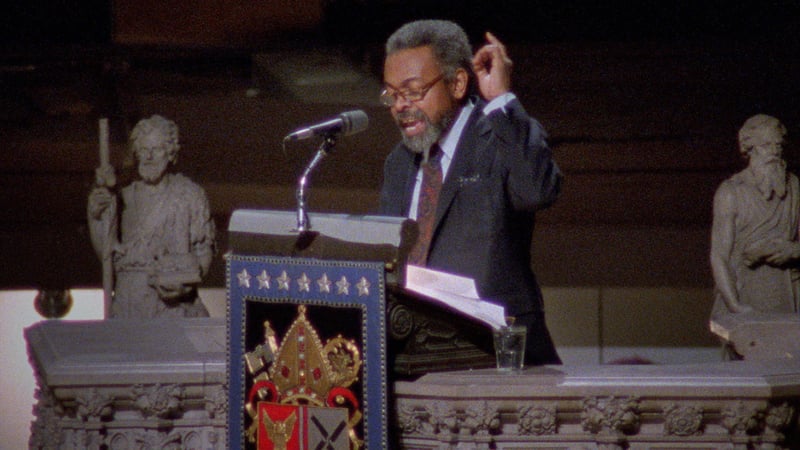
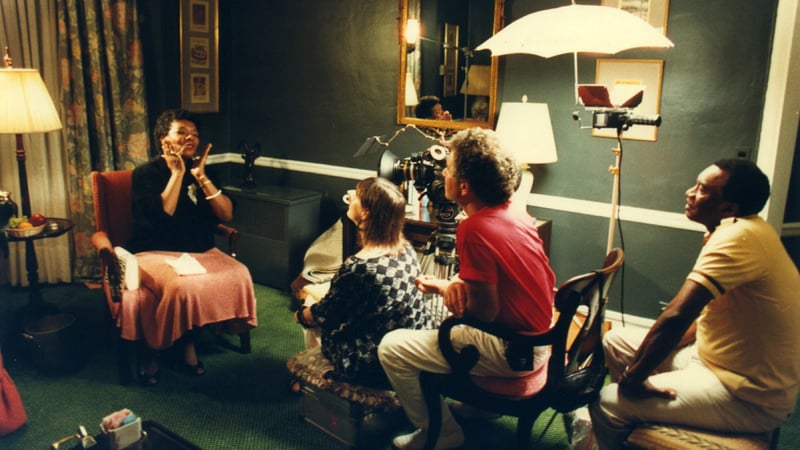
Never-before-seen raw footage from Baldwin’s 1987 funeral service at the Cathedral of St. John the Divine (only portions were shown in The Price of a Ticket), featuring eulogies from Maya Angelou and Amiri Baraka and powerful drumming led by Nigerian master Babatunde Olatunji.
Karen Thorsen
1989|
USA|
86 minutes
For years the authoritative film biography of James Baldwin, this newly restored and remastered documentary gathers together scores of rare archival footage of Baldwin and his contemporaries to shape this remarkable account of his life and work.

A selection of clips featuring Baldwin in discussion and debate with his contemporaries, including William F. Buckley, Marlon Brando, and Harry Belafonte, along with speeches and commentary documented for television—both inside the studio and out—over his long career as America’s foremost insightful and prescient public intellectual.
79 minutes
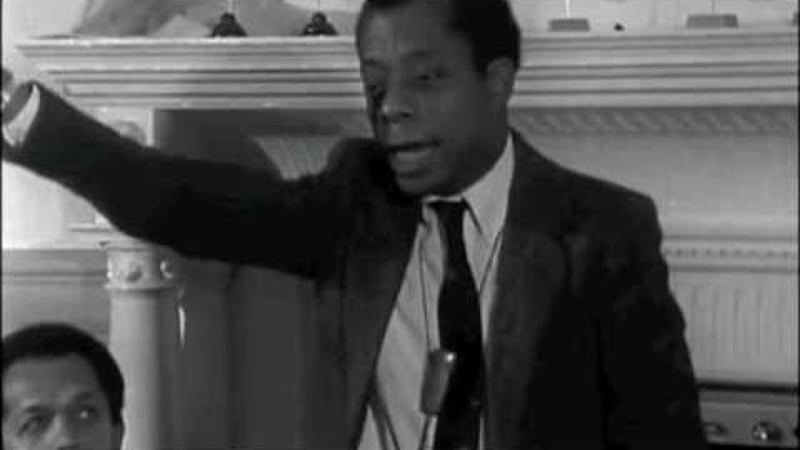
James Baldwin in Paris is an extremely rare film document of Baldwin in symbolic Parisian locations wrestling with being a role model to black youths and denouncing Western colonialism. Baldwin’s Nigger features the activist and author speaking and responding to questions at the West Indian Student Center in London about race and identity in America.
Ingmar Bergman
1953|
Sweden|
95 minutes
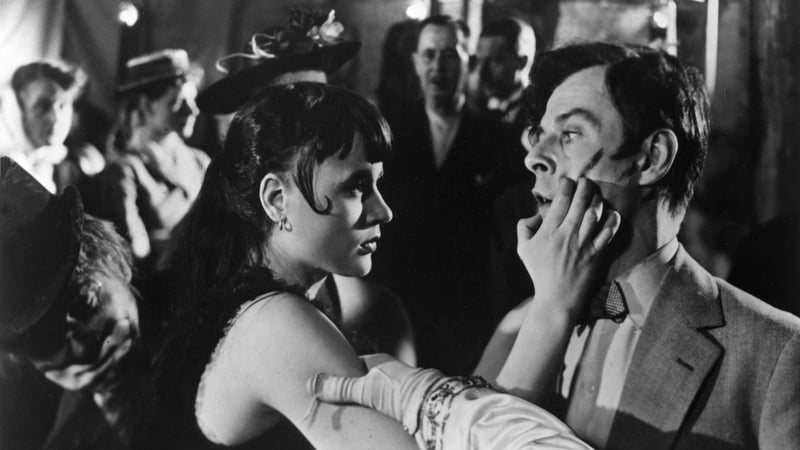
For Baldwin, Sawdust and Tinsel was the best film directed by Ingmar Bergman, which he characterized as “moving” and “uncannily precise and truthful.” We will screen a release print of the film under the original U.S. title The Naked Night.
Pierre Chenal
1951|
Argentina / USA|
104 minutes|
English, Spanish with subtitles
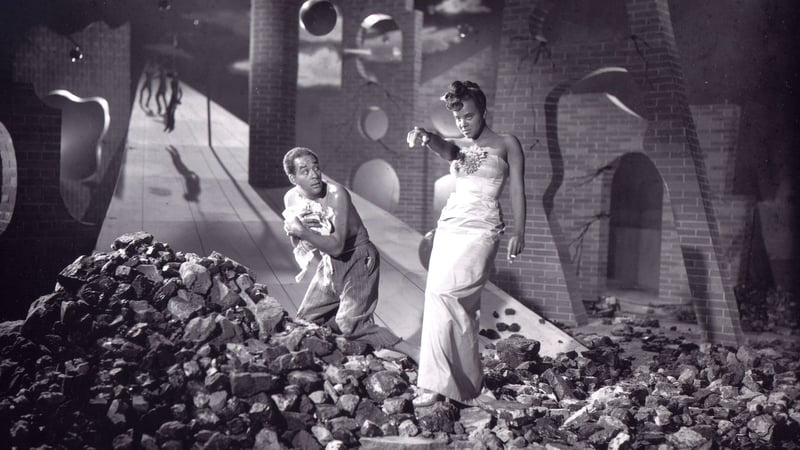
Based on the terrifically successful 1940 novel by Richard Wright (the subject of Baldwin’s first major essay, “Everybody’s Protest Novel”) and shot in Argentina, this striking work tells the story of the accidental death of a white Chicago heiress at the hands of a young black man from the South Side.

117 minutes
Take This Hammer captures Baldwin’s devastating 1963 tour of San Francisco as dispossession and despair engulfed communities under siege by the forces of gentrification and urban renewal. The Negro and the American Promise is a series of three interviews for Boston public television, with Baldwin, Martin Luther King Jr., and Malcolm X commenting on race in America and one another’s ideas and philosophies. Free screening!
Jack Conway
1935|
USA|
128 minutes
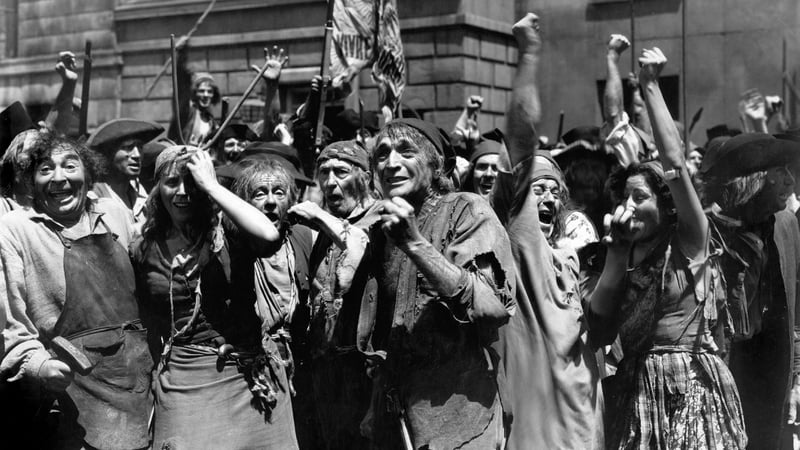
In the beginning of The Devil Finds Work, Baldwin extensively discusses A Tale of Two Cities, recalling how “haunted” he was by Dickens’s novel, reading it “over and over and over again,” seeing himself and his family’s lives and struggles mirrored in the quest for freedom that characterized the French Revolution.
See more and save with a 3+ Film Package!
Probing the set of assumptions that govern American cinematic expectations, James Baldwin’s 1976 book-length essay, The Devil Finds Work, is as much preoccupied with the seductive and distorted power of American cinema as it is with the complex racial politics that inform such cultural production. From his intriguing identification with Bette Davis, to piercing analyses of Guess Who’s Coming to Dinner, In the Heat of the Night, and The Exorcist, to an extended discussion of The Defiant Ones, Baldwin lays bare our subconscious investments and confirms that “cinema is the language of our dreams.”
The violent embrace of categories and the aversion to real human life and passions are for Baldwin evident everywhere in American cinema. In his characteristic declarative manner, Baldwin recalls a “Negro” traditional that intones, “I can’t believe what you say, because I see what you do,” and continues: “No American film, relating to blacks, can possibly incorporate this observation. This observation . . . denies, simply, the validity of the legend which is responsible for these films: films which exist for the sole purpose of perpetuating the legend.” With historical sweep and specificity, Baldwin narrates the competing and entangled set of interests that frustrate honest American filmmaking. The web of impulses and anxieties that consumes the nation and drives the production of such films is almost entirely bound up in the profit imperative on one hand, and a deep psychic need for the “preservation of innocence” on the other. The suspension of disbelief and the inexplicable narrative turns that lurch the viewer from “one preposterous proposition to another” places one at the mercy of plots of fantastical national fictions.
Baldwin’s analysis in The Devil Finds Work begins with the early depictions of racial and class difference on display in 19th-century literature and grows directly out of his experience of reading Charles Dickens’s A Tale of Two Cities and his “obsession” with Uncle Tom’s Cabin, “trying,” as he laments, “to find something out, sensing something in the book of immense import for me.” The scenes of righteous indignation, cross-racial longing, biting sentimentality, and a violent coming to racial and economic terms that Baldwin considers function not only to reproduce American attitudes at particular historical moments, but also work to distract the national imagination from the necessary moral reckoning with the thorny and too often fatal history of the country. For, ultimately, Baldwin “suspected, dreadfully,” that this world of make-believe was connected to his own reality, must “have something to do with me.”
This survey is an attempt to assemble and reflect on Baldwin’s early and lasting fascination with American cinema. The series will feature his numerous appearances on television; filmic documents of his sojourns in Paris, Istanbul, San Francisco, and London; film adaptations of novels that preoccupied Baldwin, such as A Tale of Two Cities and Native Son; and a screening of Ingmar Bergman’s Sawdust and Tinsel (aka The Naked Night), which Baldwin singled out for praise. Documentaries in which he played a significant part or of which he was the subject, such as I Heard It Through the Grapevine, James Baldwin’s Harlem, Take This Hammer (screening in an extended “director’s cut’), and the newly remastered The Price of a Ticket, will also be featured. The survey will close with never-before-seen raw footage from Baldwin’s 1987 funeral service at the Cathedral of St. John the Divine (only portions of which were seen in The Price of a Ticket), with stirring eulogies from Maya Angelou and Amiri Baraka.
Special Thanks:
Pat Hartley; Lynanne Schweighofer (Library of Congress); Chris Chouinard (Park Circus); Brian Belovarac (Janus Films); Ron Simon (The Paley Center for Media); Jack Hazan; Fleur Buckley and George Watson (British Film Institute); Sedat Pakay; Ashley Clark; Elena Rossi-Snook and Johnny Gore (New York Public Library for the Performing Arts); Brian Graney (The Black Film Center/Archive, Indiana University); Jennifer Bertani (WNET); Gloria Miles; Kristie Nakamura (Warner Bros. Classics); Alex Cherian (San Francisco Bay Area Television Archive); Marcia Sells (Columbia University); Christina Rumpf (Columbia University); Karen Thorsen & Douglas K. Dempsey; and Shola Lynch (Schomburg Center for Research in Black Culture).


