Celebrating the Australian Film Revival
Responsible for launching the careers of a fiercely talented generation of directors (Bruce Beresford, George Miller, Phillip Noyce, Fred Schepisi and Peter Weir), actors (Bryan Brown, Judy Davis, Mel Gibson, Jacki Weaver), cinematographers and other craftspeople, the Australian Film Revival of the 1970s was the last major “new wave” to erupt in the wake of France’s “nouvelle vague,” but also one of the most prolific. We are pleased to present this comprehensive overview, featuring a mix of established classics and forgotten gems, in beautiful restored prints courtesy of the National Film and Sound Archive. Series programmed by Scott Foundas.
Tim Burstall

1973|
Australia|
95 minutes
In this hugely popular sex comedy that set Australian box-office records, an unassuming chap discovers from an early age that, despite ordinary looks, he is irresistible to women from all walks of life.
Phillip Noyce

1977|
Australia|
60 minutes
Director Phillip Noyce in person!
A racist white drifter (Bill Hunter) and a young Aboriginal man (activist Gary Foley) set off on an impromptu road trip in this impressive debut feature by future Hollywood action maestro Phillip Noyce. Screening with God Knows Why, But it Works (Phillip Noyce, 1976, Australia, 16mm; 49m).
Fred Schepisi

1978|
Australia|
103 minutes
Director Fred Schepisi in person at Friday screening!
A half-caste white/Aboriginal man is pushed by white Australian society towards a violent outburst in Fred Schepisi’s powerful adaptation of Thomas Keneally’s acclaimed novel.
Fred Schepisi

1976|
Australia|
107 minutes
Director Fred Schepisi in person!
In Fred Schepisi’s striking, semi-autobiographical debut feature, a 13-year-old boy comes of age in a Catholic seminary where the Brothers find themselves torn between vows and human desire.
Bruce Beresford
1976|
Australia|
90 minutes
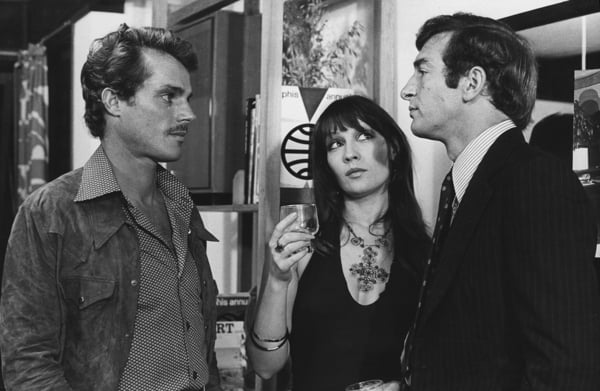
As a drunken election-night party wears on, the disillusionment of the attendees rises to the fore in Bruce Beresford’s accomplished film version of David Williamson’s corrosively satirical play.
Print courtesy of the National Film and Sound Archive of Australia’s Kodak/Atlab Collection.
Michael Thornhill

1977|
Australia|
101 minutes
Director Michael Thornhill in person!
Two best mates cruise the streets of the New South Wales suburbs in this lyrical 1970s coming-of-age story—an Aussie Dazed and Confused.
Bruce Beresford

1978|
Australia|
101 minutes
A headstrong country girl clashes with the staid traditions of a haughty Melbourne boarding school in this handsome adaptation of Henry Handel Richardson’s 1910 novel.
George Miller
1979|
Australia|
88 minutes
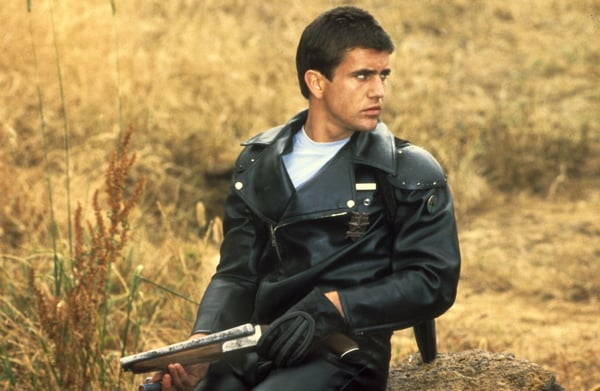
ER doctor turned filmmaker George Miller’s hell-on-wheels vision of the future notched a novel international action hit for the burgeoning Australian cinema, while giving new meaning to the notion of a “road movie.”
Screening with George Miller's rarely-shown short Violence in the Cinema Part 1.
Bruce Beresford

1978|
Australia|
92 minutes
The employees of an armored-car company plot a brazen inside job in this searing, edge-of-your-seat heist picture from director Bruce Beresford.
Gillian Armstrong

1979|
Australia|
100 minutes
A willful young woman of no particular means (Judy Davis, in her first leading role) dreams of becoming a writer at the end of the 19th century in director Gillian Armstrong’s remarkable debut feature.
Tom Jeffrey
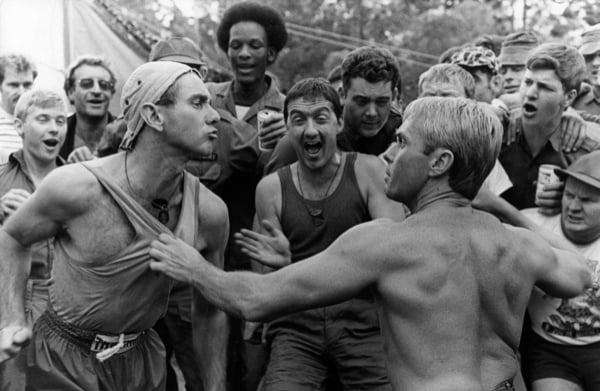
1979|
Australia|
92 minutes
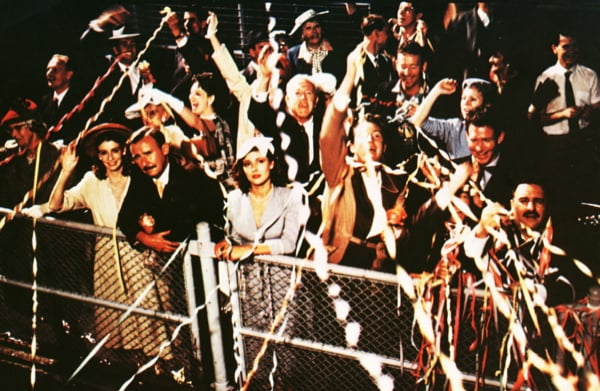
Australia’s answer to M*A*S*H, director Tom Jeffrey’s popular military comedy was the first film to address the country’s involvement in the Vietnam war.

Peter Weir

1975|
Australia|
107 minutes
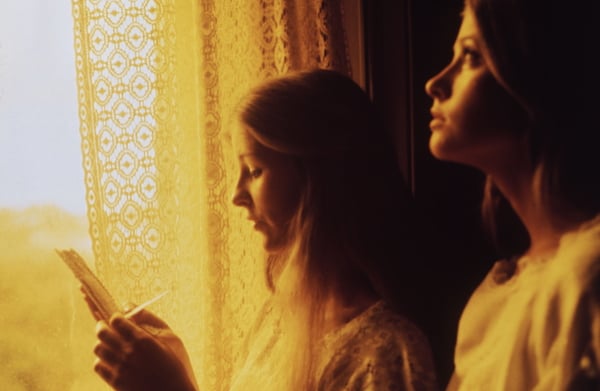
In Peter Weir’s defining work of the Australian New Wave, a field trip to the Australian bush goes mysteriously, hypnotically awry for the denizens of an all-girls boarding school.
John Power
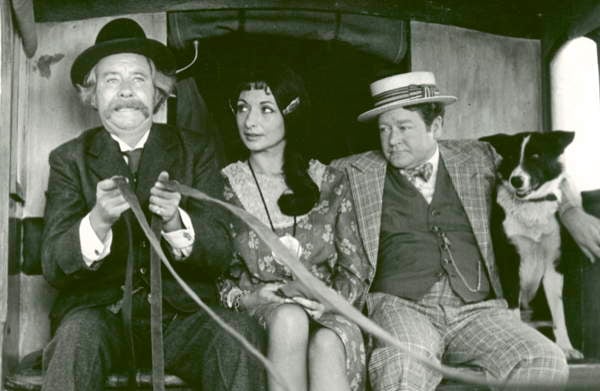
1977|
Australia|
99 minutes
The great John Meillon (Crocodile Dundee) shines as a traveling film projectionist journeying across rural backwaters in the 1920s in this Aussie precursor to Cinema Paradiso.
Ken Hannam
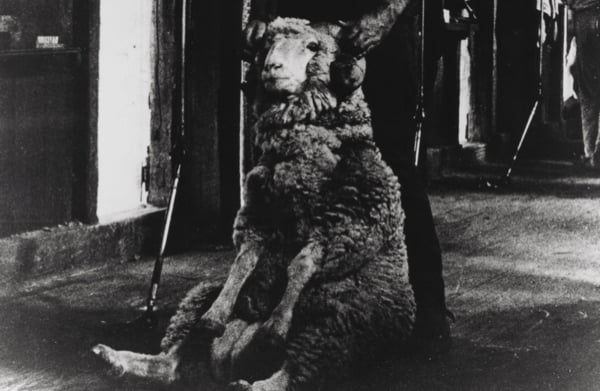
1975|
Australia|
94 minutes
Jack Thompson gives a torrential performance as a hard-living professional sheep shearer in the first Australian film to achieve widespread international recognition.
Michael Powell
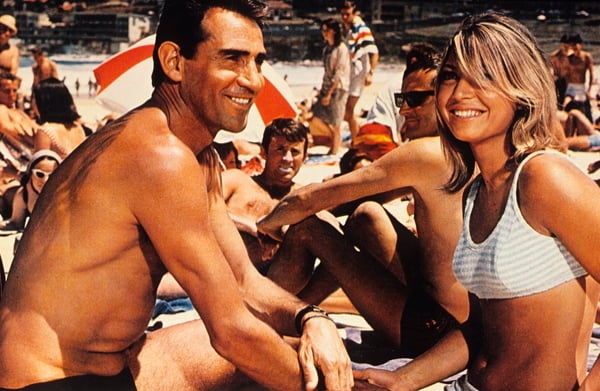
1966|
Australia|
112 minutes
An important precursor to the coming film revival, this rarely screened madcap comedy from legendary British filmmakers Michael Powell and Emeric Pressburger follows an FOB Italian immigrant on his journey to become a “real” Australian.
Brian Hannant
1971|
Australia|
90 minutes
A compilation of three early shorts by emerging Aussie filmmakers—including Peter Weir’s award-winning “Michael”—each focused on the lives of young people trying to find their places in the world.
Save with a three film package!
When the term “new wave” was coined to describe the group of French critics-turned-filmmakers who exploded onto the scene in the early 1960s, it quickly became shorthand for a series of similarly brash, youth-driven film movements concurrently emerging around the globe, from Japan (Shōhei Imamura, Nagisa Oshima, Seijun Suzuki) to Czechoslovakia (Milos Forman, Jiří Menzel, Ivan Passer) to the “new” Hollywood cinema ushered in by Bonnie and Clyde and Easy Rider. Then there is Australia, where, beginning in the early 1970s and lasting throughout the decade, a sudden resurgence of national film production resulted in yet another “new wave”—the last of this particular era, and one of the most prolific.
Though some of the world’s earliest narrative films were made in Australia—including one, Soldiers of the Cross, that predated Edwin S. Porter’s The Great Train Robbery by three years—the closing of domestic studio facilities in the 1940s, combined with an absence of government funding for film production, all but ran local film production aground by the late 1960s. But with the creation, in 1971, of the Australian Film Development Corporation, everything changed virtually overnight. Shaking the national film industry out of its mothballed stasis, the Australian New Wave (or Australian Film Revival) launched the careers of a fiercely talented generation of directors (Bruce Beresford, George Miller, Phillip Noyce, Fred Schepisi, Peter Weir) and actors (Bryan Brown, Judy Davis, Mel Gibson, Jacki Weaver), to say nothing of cinematographers (including the future Oscar-winners Russell Boyd, John Seale and Dean Semler), production designers and other craftspeople. Many of the films competed at prestigious festivals including Berlin and Cannes, and it wasn’t long before Hollywood caught on to the rich talent pool available to them “down under”—a love affair that continues unabated to this day.
In a year when Australia promises to deliver two of the most heavily anticipated films in recent memory, Baz Luhrmann’s The Great Gatsby and George Miller’s Mad Max: Fury Road, we are pleased to present this comprehensive overview of a most extraordinary decade in Aussie filmmaking. This series was made possible with the invaluable assistance of the National Film and Sound Archive, Australia and is dedicated to the memory of Jan Sharp, a great friend to the Film Society and a pioneer figure in Australian documentary filmmaking. Series programmed by Scott Foundas.


