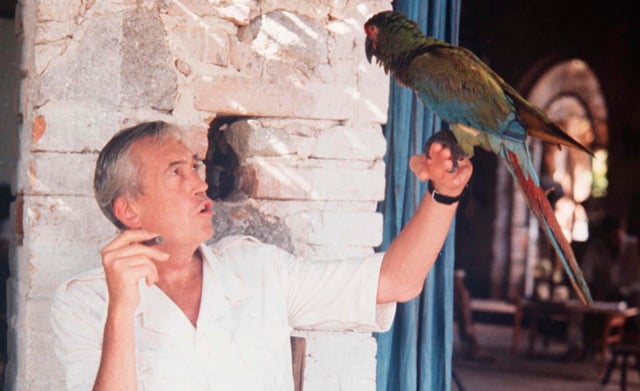
Let There Be Light: The Films of John Huston
A renaissance man unbound to genre and a painterly stylist attuned to the look of each scene, Huston was one of the greatest filmmakers of Hollywood’s golden age: an artist of great toughness, conviction, and eloquence; a master storyteller; a hardened cynic; a reluctant romantic; a stellar director of actors, and a brilliant actor himself.
John Huston
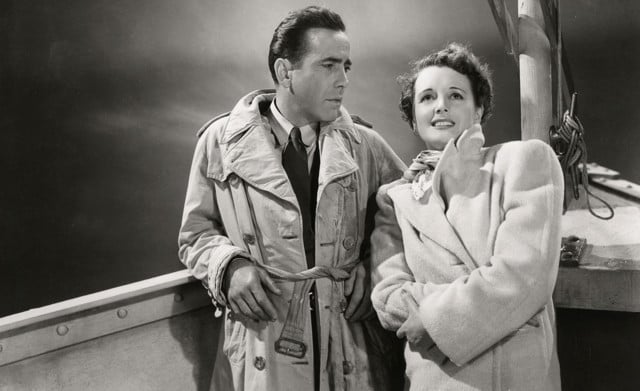
1942|
USA|
97 minutes
Huston’s third feature reteams much of the Maltese Falcon cast and crew, but it never actually crosses the Pacific—the locale changed from Pearl Harbor to Panama when the plot’s scenario became a reality before it could be filmed.
John Huston
1951|
USA|
105 minutes
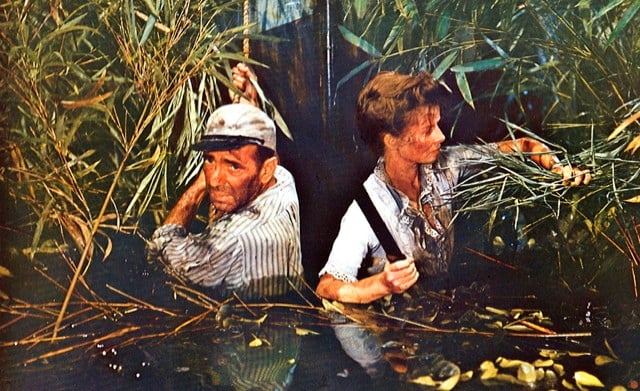
Arguably the director’s most popular film pairs Bogart and Katharine Hepburn as a crude Canadian skipper and the uptight missionary who helps him steer the titular vessel downriver to torpedo a German gunboat.
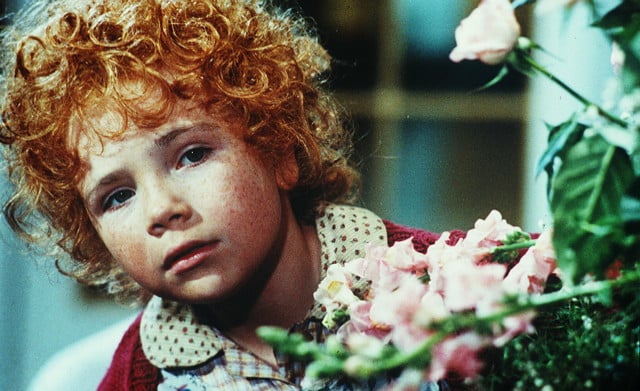
John Huston
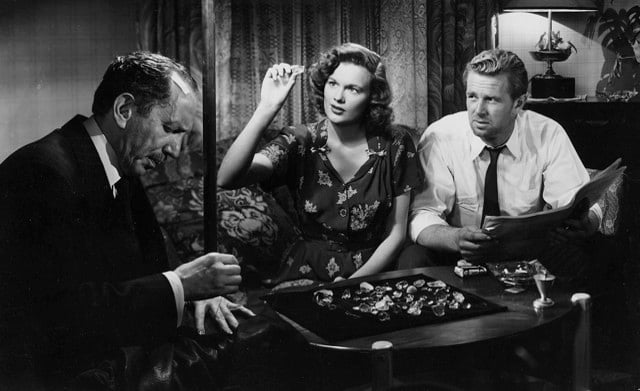
1950|
USA|
112 minutes
Huston returns to his noir roots with another tale of unlikely partners, delivering what may well be the great American heist movie.
John Huston
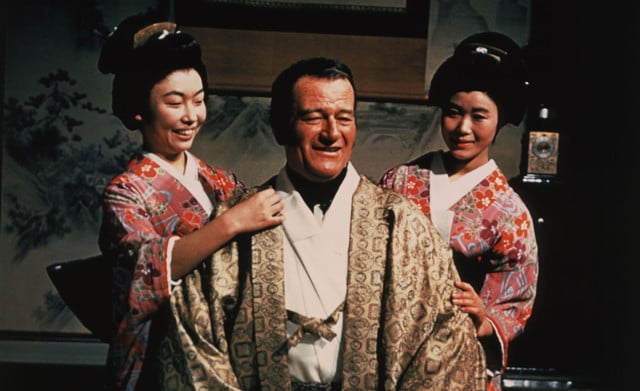
1958|
USA|
105 minutes
This 19th-century costumer about the U.S. Ambassador to Japan offers the twin pleasures of Huston’s still compositions, inspired by the setting, and John Wayne’s say-what? casting in the lead.
John Huston
1953|
USA|
89 minutes
Screening added on January 8!
Called the first camp movie by no less than Roger Ebert, Beat the Devil offers a wry send-up of noir classics, taking special aim at Huston’s own Maltese Falcon (with Bogart and Peter Lorre spoofing their roles and Jennifer Jones stealing the show playing against type).
John Huston

1966|
USA|
174 minutes
Commissioned by Dino De Laurentiis, Huston’s mammoth adaptation of the first half of the book of Genesis found the director summing up a career’s worth of thinking on the conflict between faith and doubt.
John Huston

1967|
UK / USA|
131 minutes
Producer Charles K. Feldman assembled a dream cast—Peter Sellers, Orson Welles, Woody Allen, David Niven, Deborah Kerr—for this omnibus James Bond satire, now a cult classic. Huston, who also makes a brief appearance on-screen, directed one of the segments.

John Huston

1987|
UK / Ireland / USA|
83 minutes
Introduction by director of photography Fred Murphy on December 26!
Adapted from the magisterial final story in James Joyce’s Dubliners, Huston’s final film is one of the medium’s great swan songs, a work of quiet grandeur and impeccable grace.
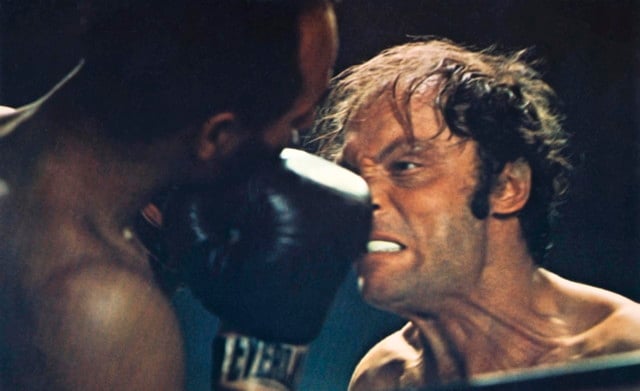
John Huston

1962|
USA|
140 minutes
Jean-Paul Sartre was the original screenwriter on Huston’s fascinating, profoundly strange Sigmund Freud biopic, a sort of cross between a psychological drama and an expressionist horror movie, featuring a subtle, melancholic central performance by Montgomery Clift.
John Huston
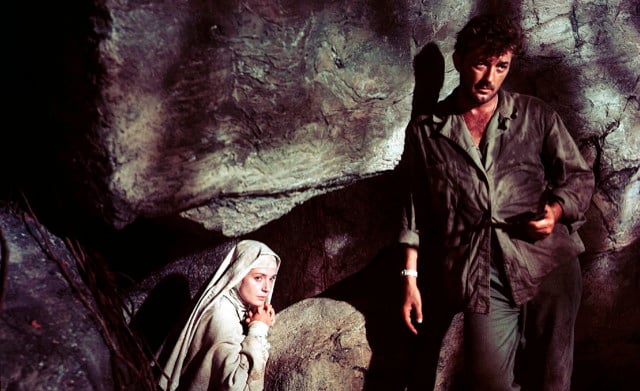
1957|
USA|
108 minutes
Star chemistry ignites Huston’s World War II drama of a rough-hewn marine (Robert Mitchum) and a novice nun (Deborah Kerr) marooned on a Japanese-occupied island in the South Pacific.
John Huston

1942|
USA|
97 minutes
Huston’s sophomore feature is a drama of two sisters, one good and one evil, with a high-voltage turn by Bette Davis and a powerful subplot indicting racism.

John Huston

1970|
USA|
120 minutes
Jean-Pierre Melville raved over Huston’s grim, fiercely sharp-witted Cold War–era spy thriller, in which a group of American intelligence agents travel undercover to Moscow under the leadership of a deposed officer.
John Huston

1946|
USA|
58 minutes
Introduction by journalist/author Mark Harris at the 6:00pm screening.
Huston’s landmark study of psychologically scarred veterans was banned for decades by the Army, but now stands as a trenchant early depiction of Post Traumatic Stress Disorder. Screening with: Winning Your Wings (1942, 18m, 6:00pm screening only) and Independence (1976, 30m).
John Huston
1972|
USA|
120 minutes
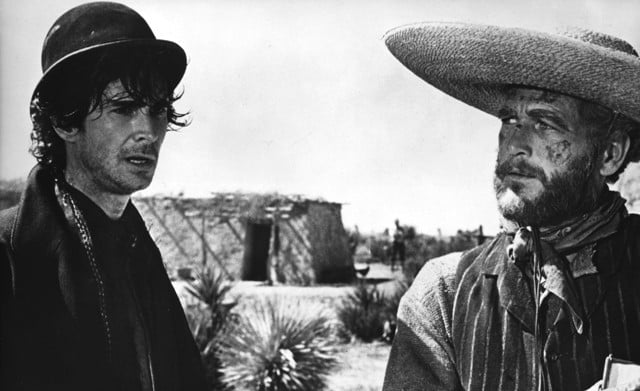
Huston’s final Western is an ambling, charming shaggy-dog story peppered with outbursts of violence, anchored by a performance by Paul Newman at the height of his powers, and buttressed by a stellar supporting cast including Ava Gardner, Stacy Keach, and John Huston himself.
John Huston

1963|
USA|
98 minutes
This deft, elusive whodunit takes place in postwar Britain, but its logic of concealment, mystery, and deception suggests a 19th-century detective story. With guest appearances by Tony Curtis, Frank Sinatra, Robert Mitchum, and Burt Lancaster.
John Huston

1973|
USA|
98 minutes
Huston reteamed with Paul Newman for this labyrinthine spy thriller scripted by the legendary action director Walter Hill: a nostalgic love letter from an aging filmmaker to a dying genre.
John Huston
1941|
USA|
100 minutes
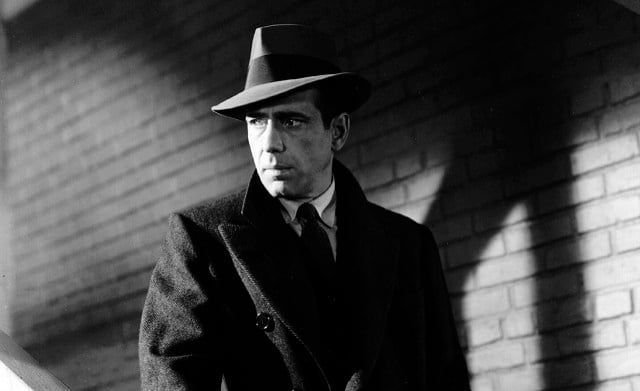
“The stuff that dreams are made of”: Huston’s directorial bow cemented Humphrey Bogart’s stardom in this quintessential noir tale of a priceless statuette and the dastardly parties pursuing it.
John Huston

1975|
UK / USA|
129 minutes
Huston had the biggest popular success of his late career with this rip-roaring adventure story, which teamed Sean Connery and Michael Caine as a pair of raffish, conquest-mad British imperialists.
John Huston

1961|
USA|
124 minutes
The final film for stars Marilyn Monroe and Clark Gable, and Huston’s lone collaboration with Arthur Miller, is a tough, ambiguous morality play about a principled divorcée torn between her love for an aging cowboy and her attachment to the natural world he wants to control.

John Huston

1952|
USA|
119 minutes
Due to a damaged print, the first nine minutes of the film will be digitally projected.
A vibrant foray into the bohemian districts of late-19th-century Paris and the titular cabaret as habituated by diminutive artist Henri de Toulouse-Lautrec.
John Huston

1964|
USA|
125 minutes
Richard Burton, Deborah Kerr, and Ava Gardner lead the near-flawless cast of Huston’s adaptation of Tennessee Williams’s play about a reverend thrown out his parish for sexual misconduct and sent into exile as a tour guide in Mexico.
John Huston

1985|
USA|
130 minutes
Unfortunately, Anjelica Huston will no longer be in person at this screening.
Anjelica Huston won an Oscar for her sly, scene-stealing work in her father’s penultimate film, about the romantic entanglements of a New York hit man, which has the irreverent spunk of a debut and the reflective, generous voice of a swan song.
John Huston

1951|
USA|
69 minutes
Under Huston’s direction, Stephen Crane’s Civil War novel, about a callow Yankee who flees his company during battle and is haunted by feelings of cowardice, becomes a memorable coming-of-age tale that’s epic in feel, despite running just over an hour.
John Huston
1967|
USA|
108 minutes
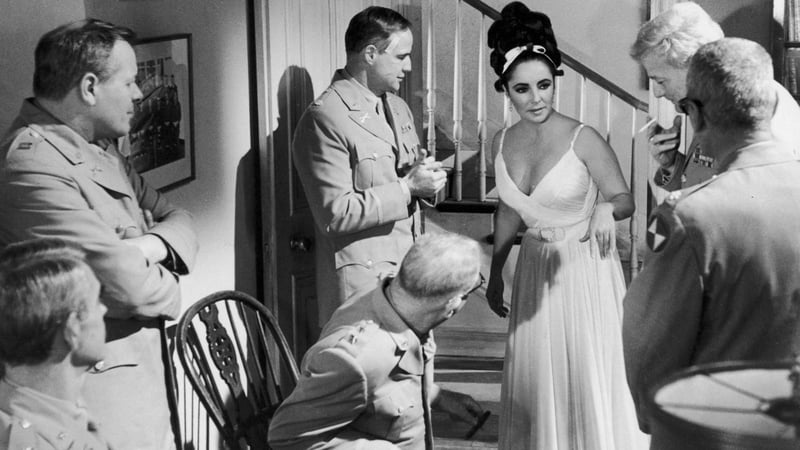
“Overflowing with gothic atmosphere, Reflections in a Golden Eye circles around the stoic, marble-mouthed Major Weldon Penderton (Marlon Brando). He silently pines for a mysterious young soldier (Robert Forster, in his first major role) who has secrets of his own, like a penchant for naked horseback riding and a peculiar fixation with the negligee of the Major’s wife, Leonora (Elizabeth Taylor).
John Huston
1945|
USA|
47 minutes
The first color film by Huston (narrated by the director) juxtaposes combat footage of the Aleutian campaign with scenes depicting the tedium of army life. Screening with: The Battle of San Pietro (1945, 32m).
John Huston
1958|
USA|
121 minutes
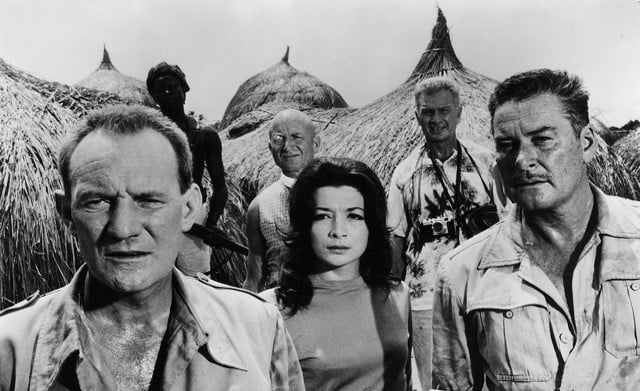
Never one to choose easy projects, Huston took on Romain Gary’s treatise on the sanctity of wild animals, blending action and philosophy in this chronicle of an environmentalist’s crusade to preserve the lives of elephants in French Equatorial Africa.
John Huston
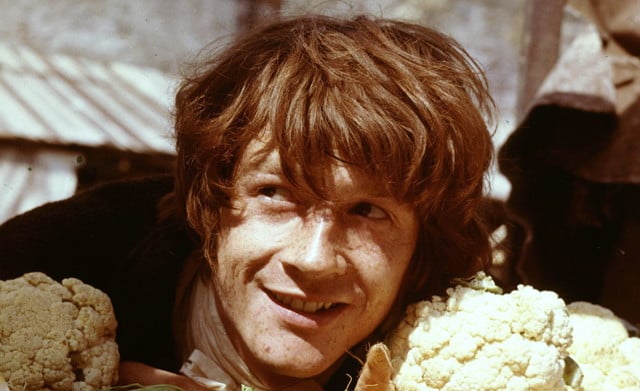
1969|
USA|
95 minutes
Taking a turn for the picaresque, Huston made this fleet-footed, sharply observed, and consistently underrated adventure story adapted from the fanciful death-row autobiography of Scottish rogue David Haggart.
Ovidio G. Assonitis

1977|
Italy / USA|
102 minutes
One of Huston’s oddest screen appearances found him starring—alongside Shelley Winters (!) and Henry Fonda (!!)—in this gloriously goofy creature feature, produced one year after Jaws by veteran horror director Ovidio G. Assonitis.
Paul Thomas Anderson

2007|
USA|
158 minutes
Huston’s fingerprints are all over Paul Thomas Anderson’s parable of self-determinism carried to baleful extremes, with a central performance, modeled on Huston’s speaking voice, that captures both his magnetism and his unfathomability.
John Huston

1948|
USA|
126 minutes
A decisive portrait of avarice and a bona fide American classic, Huston’s adaptation of B. Traven’s novel earned him Oscars as both writer and director, and a supporting actor trophy for his dad Walter as one of the film’s three rapacious gold miners.
John Huston

1984|
USA|
112 minutes
This shattering adaptation of Malcolm Lowry’s dense modernist novel is one of the most sensitive and well-observed depictions of alcoholism in film history, anchored by Albert Finney’s towering lead performance.
John Huston
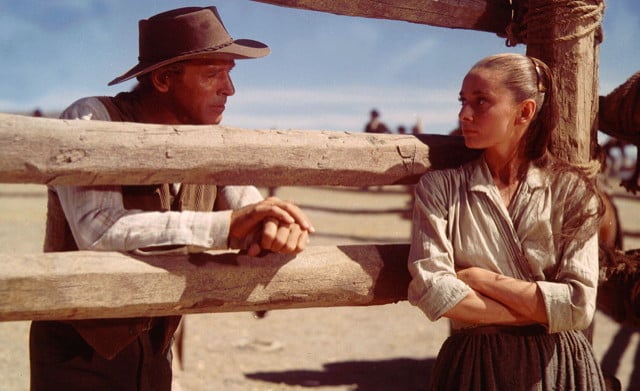
1960|
USA|
125 minutes
Huston hoped to make a frank statement on racial prejudice in America with this saga of a frontier family and their adopted Indian daughter; though it fell short of his expectations, it remains a sober and intelligent film with fine performances.

John Huston
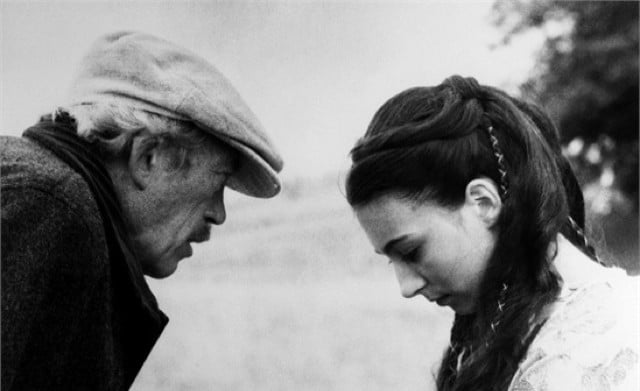
1969|
USA|
90 minutes
Two lovers act out a brief, doomed romance while their world comes apart around them in Huston’s oblique 14th-century take on the “make love not war” generation.
John Huston

1949|
USA|
109 minutes
Among the grittiest, most offbeat films of Huston’s studio period, We Were Strangers depicts in documentary-like fashion a band of Cuban revolutionaries, led by an American expat (John Garfield) and a revenge-seeking girl (Jennifer Jones).
Clint Eastwood

1990|
USA|
112 minutes
On both sides of the camera, Clint Eastwood limns one of his most complex creations: John Wilson, a dauntless filmmaker (based on Huston) who ventures into Africa as much to test his masculinity as to get a great film in the can.
John Huston

1979|
USA|
106 minutes
Brad Dourif gives the performance of his career as a proselytizing atheist in Huston’s indelible, hilarious, and deeply challenging adaptation of Flannery O’Connor’s debut novel.
December 19 – January 11
Long before striding in front of the camera to show Jack Nicholson’s character in Chinatown what men at the right place and time are capable of, John Huston established himself as one of the 20th century’s most accomplished film artists. With over a decade of writing credits by the time he assumed the director’s chair, he would later add producing and acting to his arsenal, racking up 15 Oscar nominations that spanned five decades and four categories. (Father Walter and daughter Anjelica both earned statuettes under his baton, making for one of the medium’s most formidable and collaborative dynasties.) He has been called “cinema’s Ernest Hemingway… never afraid to tackle tough issues head on,” and though he was by no means a “message man” like Stanley Kramer, a glance at his filmography reveals incisive treatments of racism, sexual identity, religion, alcoholism, psychoanalysis, and war. A renaissance man unbound to genre, Huston was also a painterly stylist attuned to the look of each scene. From his iconic debut, The Maltese Falcon, to his magisterial final work, The Dead, his films continuously circle back to questions of faith and doubt, concealment and revelation, failure and victory, empathy and the limits of consciousness. And though one of Huston’s great talents was for finding robust, flexible cinematic vocabularies for literary texts, his films were consistently imbued with a wise, reflective, open-minded voice entirely his own.
Special holiday pricing: $10 General Public / $7 Student, Senior & Member. Plus, see five or more films for just $5 each with our even more discounted Discount Package!
From Sam Spade to Annie, read up on John Huston's rogue-loving films with Film Comment magazine's 88-page digital anthology, just $2.99.
John Huston by Lillian Ross, seven pieces from the New Yorker collected for the first time, will be on sale exclusively at our theaters during the retro for just $10.


